







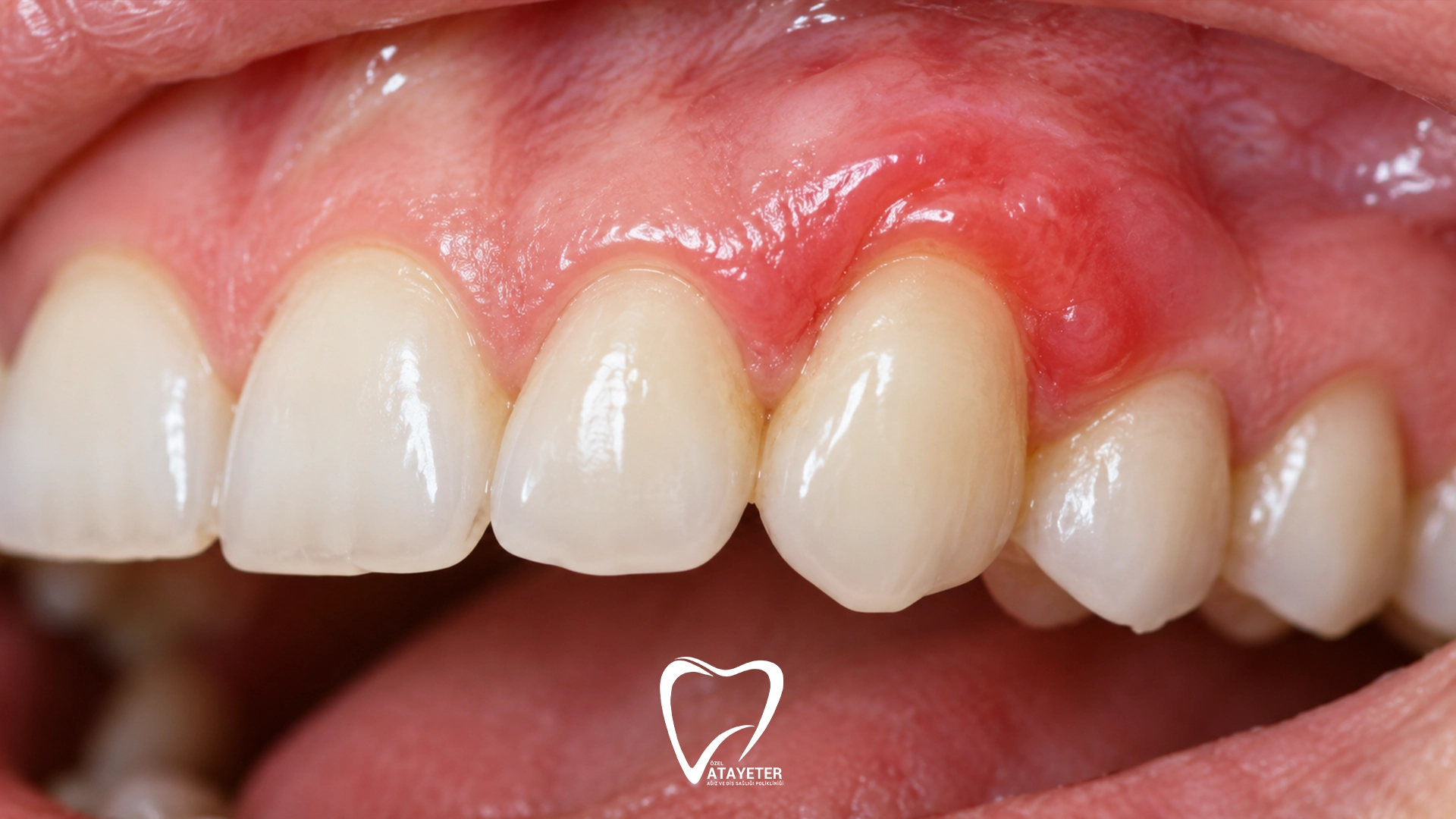
Why Are My Gums Swollen? Causes and Treatment Options
Swollen gums are one of the most common problems related to oral and dental health. In some people, the condition may appear as mild sensitivity, while in other cases it may be accompanied by symptoms such as pain, redness, bleeding, bad breath, or discomfort while chewing. For this reason, why are my gums swollen is one of the most frequently searched questions among people experiencing gum sensitivity.
Swollen gums may not always be caused by a single factor. Poor oral hygiene, plaque and tartar buildup, gum disease, infections, improper tooth brushing techniques, certain systemic conditions, or hormonal changes may all contribute to gum swelling.
Some cases of gum swelling may improve on their own within a short period of time, while persistent or recurring swelling should be evaluated by a dentist. Professional assessment may be especially important if swelling is accompanied by severe pain, pus, fever, a bad taste in the mouth, bad breath, or facial swelling.
At Atayeter Oral and Dental Clinic, the teeth, gums, and surrounding oral tissues can be evaluated to determine the underlying cause of swollen gums and create a personalized treatment plan.
Why Are My Gums Swollen?
The answer to the question why are my gums swollen may vary from person to person. However, one of the most common causes is bacterial plaque that accumulates on the teeth and along the gumline.
When teeth are not cleaned regularly and properly, a sticky layer of bacteria known as plaque can develop. Over time, this plaque may irritate the gum tissue and cause redness, sensitivity, and swelling.
Untreated plaque can harden and turn into tartar. Tartar cannot be completely removed by brushing alone and may require professional dental cleaning.
There are also several other possible causes of swollen gums.
These may include:
- Gingivitis
- Tartar buildup
- Periodontal diseases
- Dental abscesses
- Wisdom tooth problems
- Improper tooth brushing
- Incorrect flossing technique
- Trauma inside the mouth
- Hormonal changes
- Certain medications
- Smoking and tobacco use
- Nutritional deficiencies
- Conditions related to the immune system
Therefore, in order to accurately answer why are my gums swollen, the location of the swelling, how long it has been present, and any accompanying symptoms should be evaluated.
Can Gingivitis Cause Swollen Gums?
One of the most common causes of swollen gums is gingivitis, which refers to inflammation of the gums.
Gingivitis most commonly develops when bacterial plaque accumulates on the surfaces of the teeth and irritates the gum tissue.
Symptoms of gingivitis may include:
- Red gums
- Swelling
- Bleeding while brushing
- Bleeding while flossing
- Bad breath
- Gum sensitivity
Gingivitis can often be managed when detected at an early stage. However, if left untreated, it may progress to more advanced forms of gum disease.
For this reason, professional evaluation is important when gum swelling persists for a long period of time.
Can Tartar Cause Gum Swelling?
Yes. Tartar buildup is one of the important causes of swollen gums.
Bacterial plaque that accumulates on the teeth can mineralize over time and harden into tartar.
When tartar accumulates especially near the gumline, it may continuously irritate the gums.
This may lead to problems such as:
- Gum swelling
- Redness
- Bleeding
- Bad breath
- Gum recession
Because tartar is hard and firmly attached to the teeth, it cannot usually be completely removed at home with a toothbrush alone. Professional tartar removal may be required.
Therefore, plaque and tartar buildup should be among the first factors considered in people searching for why are my gums swollen.
Can a Dental Abscess Cause Gum Swelling?
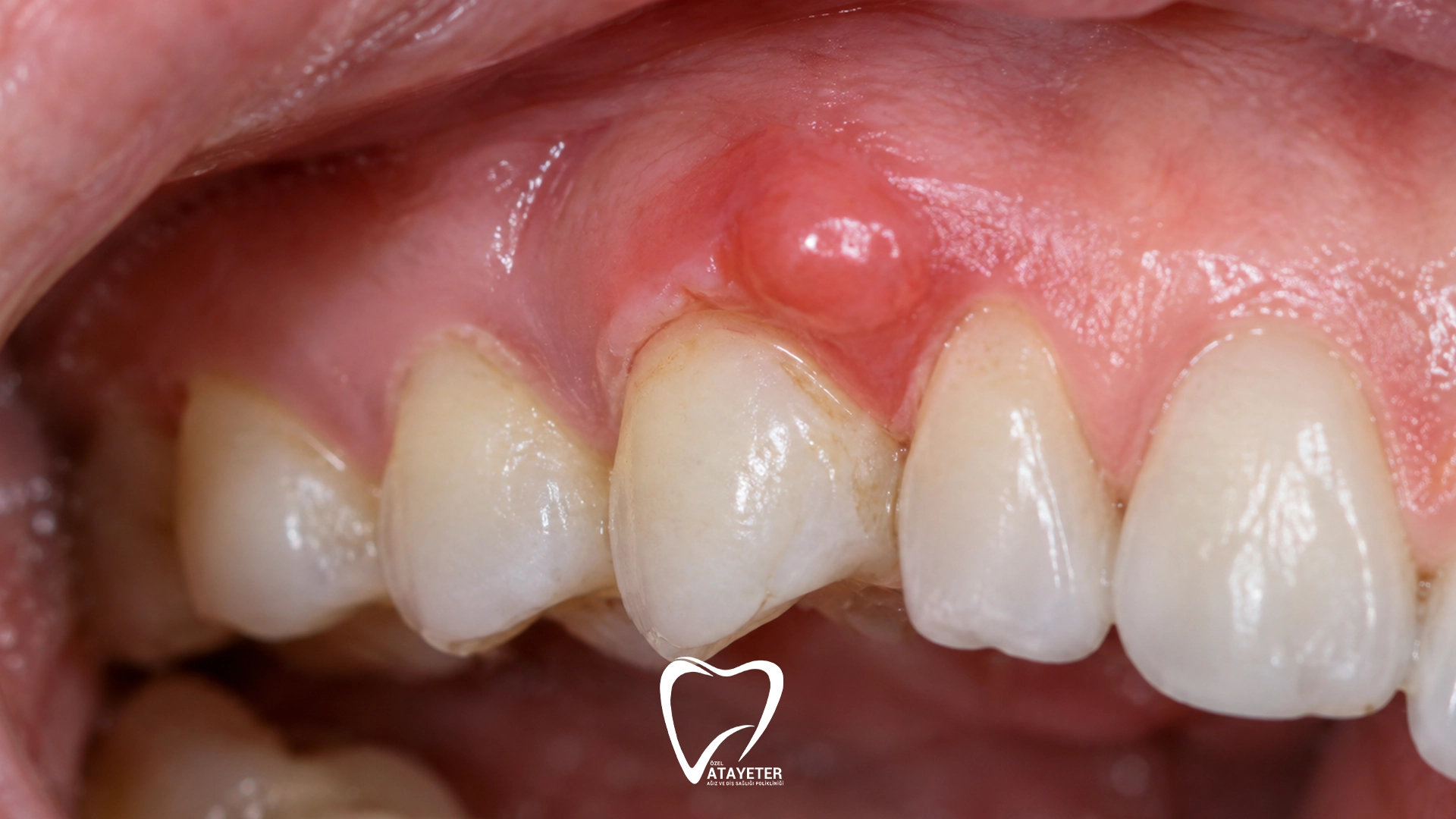
A dental abscess may develop as a result of an infection in a tooth or the surrounding tissues.
In cases of an abscess, swelling may appear in a specific area of the gums.
Other possible symptoms include:
- Severe toothache
- Throbbing pain
- Sensitivity to hot and cold
- Pain while chewing
- A bad taste in the mouth
- Pus or discharge
- Facial swelling
- Fever
A dental abscess is generally not a condition that should be expected to disappear on its own.
If there is rapidly increasing swelling of the face or jaw, difficulty swallowing, or difficulty breathing, urgent medical evaluation may be necessary.
Can Wisdom Teeth Cause Swollen Gums?
Gum swelling may occur when wisdom teeth begin to erupt.
Food particles and bacteria may accumulate around partially erupted or impacted wisdom teeth.
In this situation, inflammation may develop in the gum tissue surrounding the wisdom tooth.
Symptoms may include:
- Swelling of the gums in the back of the mouth
- Pain
- Difficulty opening the mouth
- Tenderness while chewing
- Bad taste or bad breath
Therefore, wisdom tooth problems may be one possible answer to the question why are my gums swollen.
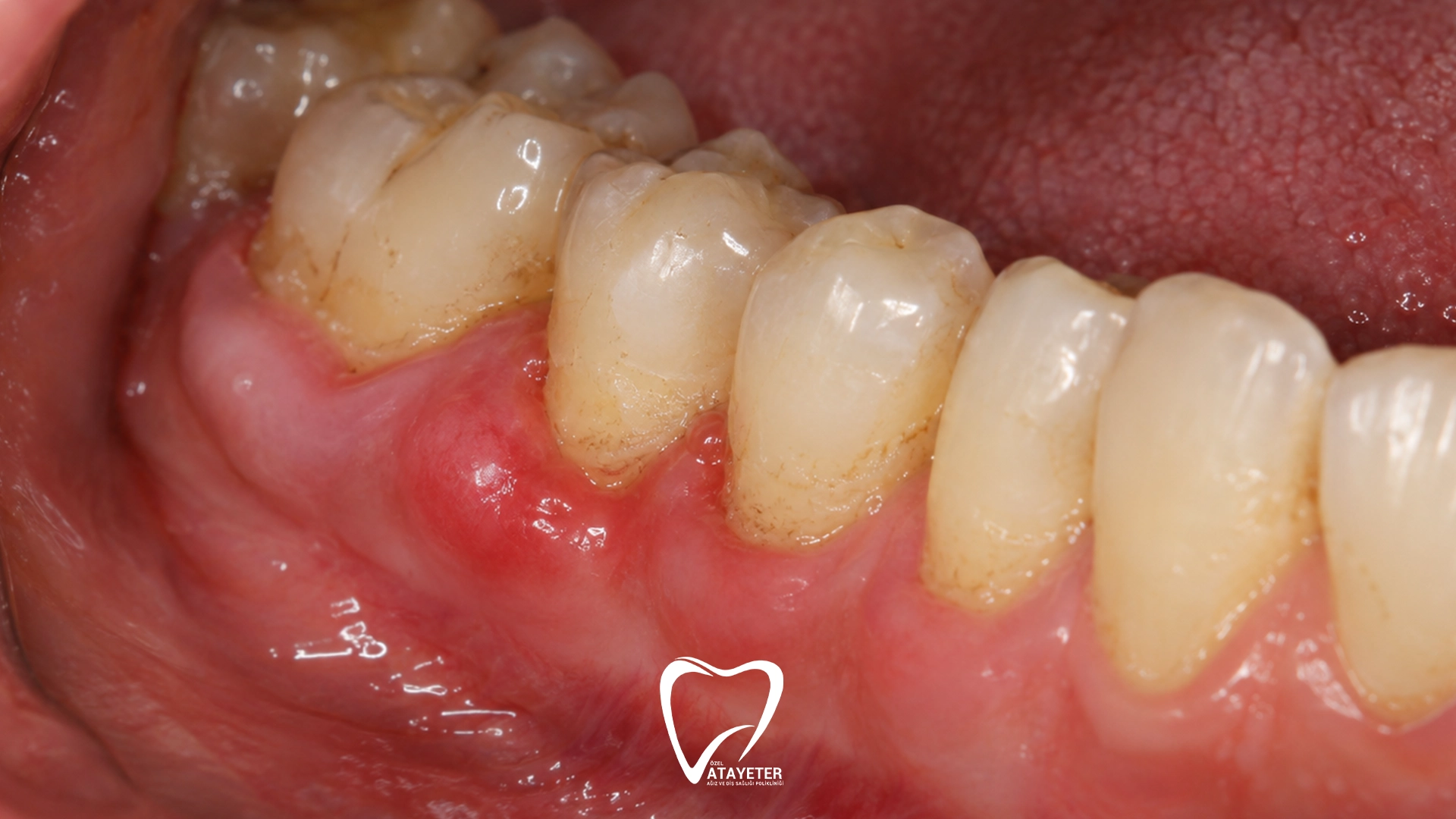
Why Is the Gum Around One Tooth Swollen?
Gum swelling does not always affect the entire mouth. Sometimes, it may occur only around a single tooth.
Possible causes of swelling around one tooth include:
- Food trapped between the teeth
- A localized gum infection
- Dental abscess
- Inflammation in a periodontal pocket
- Trauma caused by hard foods
- Incorrect flossing technique
If the swelling does not improve within a few days or is accompanied by pain, discharge, or sensitivity, dental evaluation is recommended.
Can Brushing Your Teeth Cause Swollen Gums?
Proper tooth brushing helps protect gum health.
However, using a toothbrush with very hard bristles or brushing with excessive pressure may irritate the gum tissue.
This may lead to sensitivity, redness, and sometimes localized swelling.
Teeth should generally be cleaned gently using an appropriate toothbrush.
For the most suitable brushing technique, it may be helpful to ask a dentist for personalized recommendations.
Is Gum Swelling Normal When Flossing?
People who have not used dental floss for a long time may initially notice mild bleeding or sensitivity.
However, flossing incorrectly or too aggressively may cause trauma to the gums.
Dental floss should not be forced between the teeth or used in a way that damages the gum tissue.
If swelling or bleeding continues despite regular oral care, a dental check-up may be necessary to evaluate for gum disease.
Can Hormonal Changes Cause Swollen Gums?
Hormonal changes may make the gums more sensitive to bacterial plaque.
For example, some people may experience increased gum sensitivity, redness, and bleeding during pregnancy.
Similar changes in the gum tissue may occur during other periods of hormonal fluctuation.
However, before assuming the problem is caused by hormones, oral hygiene and possible gum disease should also be evaluated.
Why Do Gums Swell During Pregnancy?
Hormonal changes during pregnancy may increase the gum tissue’s response to plaque.
As a result, pregnant patients may experience:
- Gum swelling
- Redness
- Bleeding while brushing
- Gum sensitivity
Routine oral and dental health checks should not be neglected during pregnancy.
The timing and method of necessary dental treatments should be evaluated by the dentist and, when appropriate, the patient’s physician.
Can Smoking Cause Swollen Gums?
Smoking and other tobacco products may negatively affect oral health.
Tobacco use may interfere with the natural defense mechanisms of gum tissue and increase the risk of periodontal disease.
Interestingly, some smokers may notice less gum bleeding. This does not mean that gum disease is absent.
For this reason, people who smoke should not neglect regular dental check-ups.
Can Vitamin Deficiency Cause Swollen Gums?
Poor or unbalanced nutrition may affect the overall health of oral tissues.
Certain vitamin and mineral deficiencies may influence gum health.
However, it is not accurate to conclude that a person has a specific vitamin deficiency based only on gum swelling.
If gum swelling persists for a long time, dental and periodontal causes should be evaluated first.
If necessary, additional medical tests may be recommended by a healthcare professional.
Why Do Gum Swelling and Bleeding Occur Together?
Gum swelling and bleeding may occur together, especially in cases of gingivitis.
When gum tissue becomes inflamed, it may become more sensitive and may bleed easily during brushing or flossing.
Completely stopping oral hygiene because the gums are swollen or bleeding may make the problem worse.
Instead, appropriate oral care methods recommended by a dentist should be followed.
Repeated gum bleeding should not be considered normal and the underlying cause should be investigated.
Why Do Swollen Gums Hurt?
The question why are my gums swollen becomes especially important when pain is also present.
Possible causes of swelling and pain occurring together include:
- Gum infection
- Dental abscess
- Wisdom tooth infection
- Gum disease
- Trauma
- A foreign object or food particle trapped between the teeth
The severity of pain does not always indicate how serious the underlying problem is.
For this reason, painful gum swelling that lasts more than a few days or becomes progressively worse should be evaluated by a dentist.
What Helps Swollen Gums?
Many people with swollen gums look for home remedies that may provide relief.
However, it is important to identify the underlying cause of the swelling first.
To support general oral care:
- Brush your teeth regularly.
- Clean between the teeth using appropriate methods.
- Do not neglect oral hygiene.
- Avoid touching, squeezing, or irritating the swollen area.
- Avoid smoking and tobacco products.
- Drink enough water.
However, these measures should not be considered a substitute for professional dental treatment.
If the swelling is caused by an infection, abscess, or advanced gum disease, dental intervention may be necessary.
How Do Swollen Gums Go Away?
Just as patients wonder why are my gums swollen, they also frequently ask how the swelling can be reduced.
Treatment depends entirely on the underlying cause.
For example, if gum swelling is related to plaque and tartar buildup, professional dental cleaning and regular oral care may be necessary.
If there is a dental abscess, treatment may need to focus on the source of the infection.
If the problem is related to a wisdom tooth, the position of the tooth and the surrounding tissues should be evaluated before determining the appropriate treatment.
Therefore, it is important to treat the underlying cause rather than simply trying to temporarily reduce the swelling.
Is Salt Water Good for Swollen Gums?
Rinsing with warm salt water may provide temporary relief for some people.
However, salt water does not eliminate the underlying cause of gum swelling.
Conditions such as tartar buildup, dental abscesses, or periodontal disease may require professional dental treatment.
It may also be helpful to ask a dentist whether specific oral care products are suitable for your individual needs.
How Many Days Does Gum Swelling Last?
The duration of gum swelling depends on its cause.
Swelling caused by minor trauma or temporary irritation may decrease within a few days.
However, if the swelling is related to gingivitis, tartar, an abscess, or another oral health problem, it may continue or recur without proper treatment.
For this reason, swelling that lasts longer than a week, frequently returns, or becomes progressively worse should be evaluated.
Is Gum Swelling Dangerous?
Not every case of gum swelling indicates a serious health problem.
However, some cases may be associated with infection or advanced gum disease.
Professional evaluation is especially recommended when the following symptoms are present:
- Severe pain
- Rapidly increasing swelling
- Swelling of the face or jaw
- Fever
- Pus or discharge
- Bad taste in the mouth
- Difficulty opening the mouth
- Difficulty swallowing
- Difficulty breathing
Difficulty swallowing or breathing may require urgent medical evaluation.
Can Gum Swelling Come Back?
Yes.
If the underlying cause of the swelling is not eliminated, swollen gums may recur.
For example, in a person with repeated plaque and tartar buildup, temporarily reducing the swelling alone may not provide a lasting solution.
For long-term gum health, the following are important:
- Regular tooth brushing
- Cleaning between the teeth
- Routine dental check-ups
- Professional dental cleaning when needed
Why Do Children Get Swollen Gums?
Children may also experience gum swelling.
Possible causes in children include:
- Inadequate tooth brushing
- Gingivitis
- Eruption of primary or permanent teeth
- Tooth decay
- Trauma
If gum swelling in a child is accompanied by fever, severe pain, or facial swelling, dental evaluation is recommended.
How Can Swollen Gums Be Prevented?
Since poor oral hygiene is one of the common answers to the question why are my gums swollen, maintaining regular oral care is important for prevention.
To support gum health:
- Brush teeth regularly using the correct technique.
- Clean between the teeth.
- Do not neglect tongue cleaning.
- Avoid smoking and tobacco use.
- Follow a balanced diet.
- Attend routine dental check-ups.
- Have professional cleaning when tartar is present.
These habits may help prevent not only swollen gums but also many other oral and dental health problems.
When Should You See a Dentist for Swollen Gums?
Mild, short-term gum swelling does not always indicate a serious condition.
However, the swelling should be evaluated by a dentist if it:
- Does not improve within a few days
- Keeps coming back
- Bleeds frequently
- Causes severe pain
- Is associated with pus or discharge
- Is accompanied by tooth mobility
- Causes swelling of the face or jaw
Early intervention in gum problems may help protect both gum health and natural teeth.
Frequently Asked Questions
Why are my gums swollen?
One of the most common answers to why are my gums swollen is plaque and tartar buildup. Gingivitis, periodontal disease, infections, abscesses, wisdom tooth problems, and trauma may also cause gum swelling.
Can swollen gums go away on their own?
Some mild swelling caused by temporary irritation may improve on its own. However, professional treatment may be necessary when swelling is caused by infection, tartar, or gum disease.
How long do swollen gums last?
The duration depends on the cause. Mild irritation may improve within a few days, while swelling caused by infection or gum disease may continue until the underlying problem is treated.
Should you pop a swollen gum?
No. Swollen gums or a dental abscess should not be punctured, squeezed, or popped at home. Doing so may increase the risk of spreading infection or damaging the surrounding tissue.
Can swollen gums cause tooth loss?
Short-term gum swelling alone does not directly mean that tooth loss will occur. However, advanced periodontal disease may gradually damage the bone and tissues that support the teeth. For this reason, persistent or recurring gum problems should not be ignored.
Are swollen gums a sign of infection?
Not always. However, if swelling is accompanied by pain, pus, a bad taste, fever, or facial swelling, the possibility of infection should be evaluated.
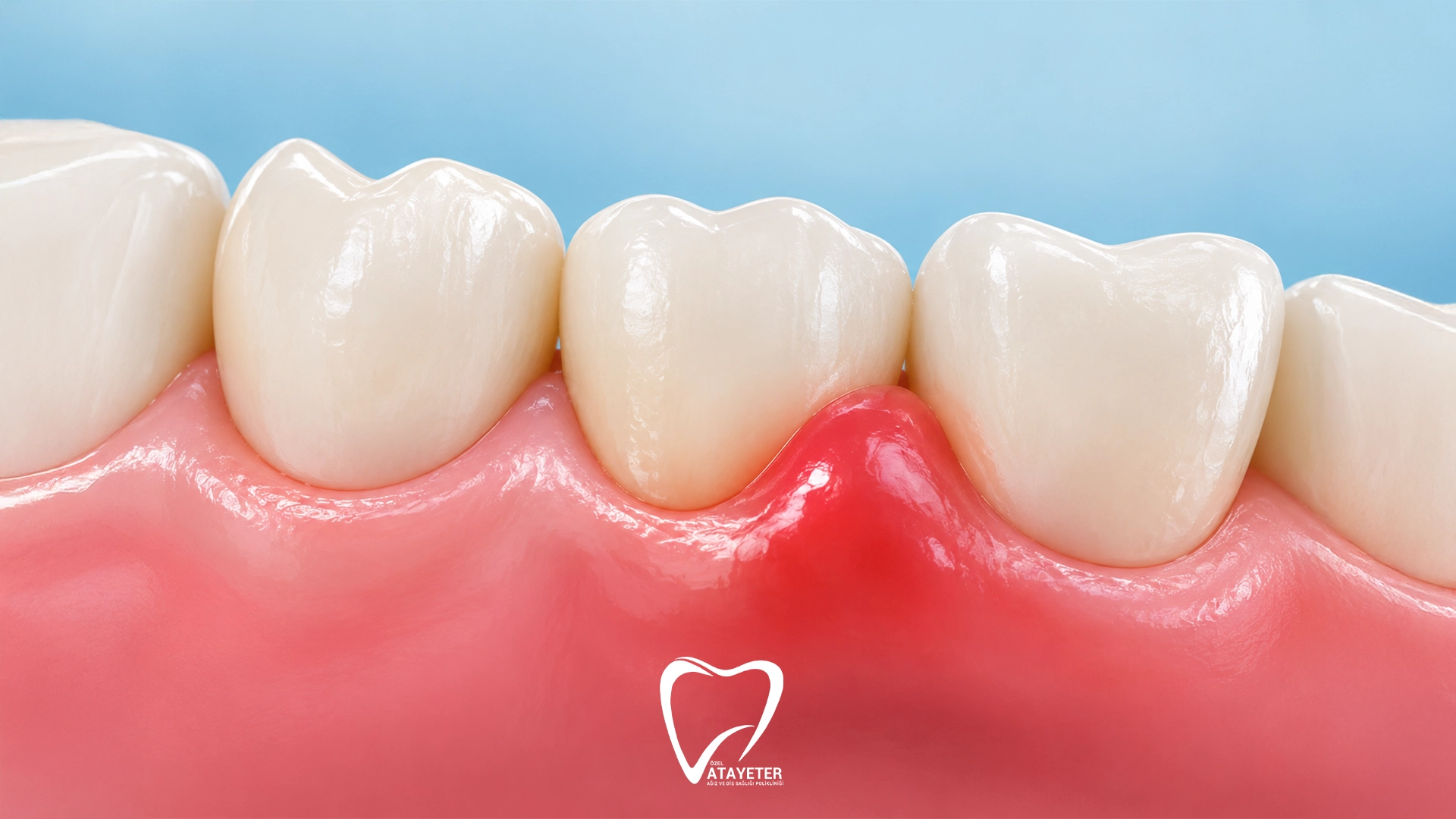
Why Are My Gums Swollen? Summary
In conclusion, there is no single answer to the question why are my gums swollen.
The most common causes of gum swelling include:
Plaque and tartar:
These may irritate the gum tissue and contribute to inflammation.
Gum disease:
Gingivitis and more advanced periodontal problems may cause swelling, redness, and bleeding.
Dental infections and abscesses:
These may cause localized and painful swelling.
Wisdom teeth:
Problems related to eruption or infection may cause swelling in the back of the mouth.
Trauma and improper oral care:
Aggressive brushing or injury to the gums may cause temporary swelling.
Therefore, an oral and dental examination may be necessary to provide a personalized answer to why are my gums swollen.
Persistent, recurring, painful, or bleeding gums should not be ignored.
At Atayeter Oral and Dental Clinic, the possible causes of gum swelling can be evaluated and personalized treatment options can be planned to support gum and dental health.
If you are experiencing gum swelling, bleeding, sensitivity, or bad breath, a dental examination may help identify the source of the problem.
This content is intended for general informational purposes only and does not replace diagnosis or personalized treatment. If you experience gum swelling or other oral health problems, consult your dentist.
Metindeki enfeksiyon, apse, yirmilik diş, gingivitis, periodontal hastalıklar ve acil değerlendirme gerektiren belirtiler İngilizce sürümde de korunmuştur. Pasted markdown