
Why Does a Root Canal-Treated Tooth Hurt Again?
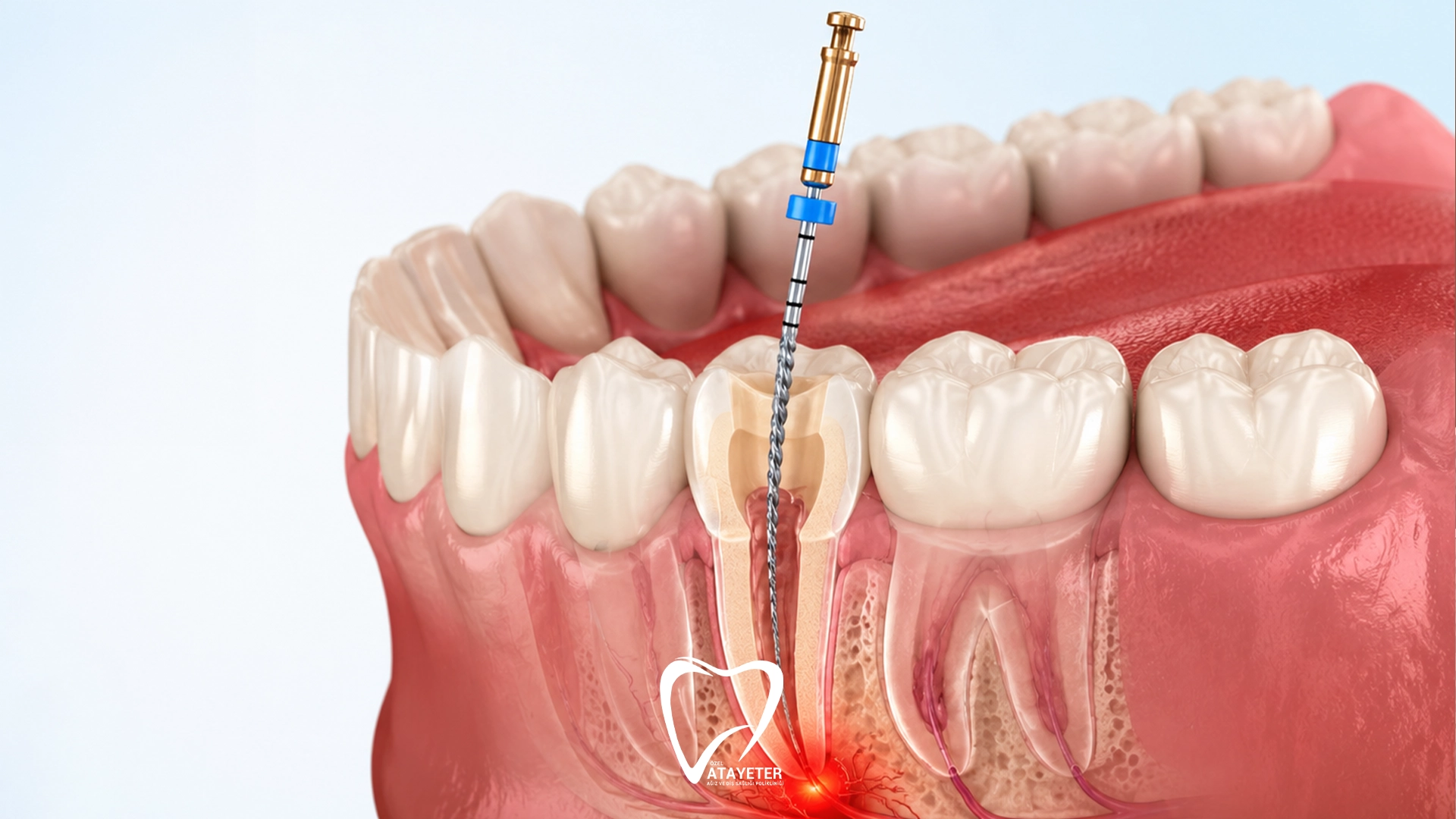
Root canal treatment is a dental procedure based on removing infected or damaged pulp tissue from inside the tooth, disinfecting the root canals, and then sealing them with special filling materials. In many cases, root canal treatment helps control the infection causing the pain and allows the tooth to remain in the mouth. However, in some patients, pain may return days, weeks, months, or even years after the treatment has been completed.
At this point, one of the most frequently asked questions is:
Why does a root canal-treated tooth hurt again?
In fact, not every case of pain after root canal treatment is caused by the same problem. The timing and severity of the pain, whether it becomes worse while chewing, sensitivity to hot and cold, the presence of swelling, and the previous procedures performed on the tooth can all help identify the possible cause.
In this guide prepared for Atayeter Dental Clinic, we will discuss in detail why pain can occur after root canal treatment, which symptoms may be considered normal, when you should visit a dentist, and when retreatment may become necessary.
What Is Pain After Root Canal Treatment?
Pain after root canal treatment can be described as pain, tenderness, pressure, or discomfort while chewing in a tooth that has previously undergone root canal therapy.
Because the living nerve tissue inside the tooth is removed during root canal treatment, many people assume that the treated tooth should never hurt again. However, a tooth consists of more than just the nerve tissue inside it.
Around the tooth root, there are:
- Bone tissue
- Periodontal ligament
- Gum tissue
- Surrounding nerve structures
Inflammation, infection, or changes in pressure in these tissues may cause pain to return in a tooth that has undergone root canal treatment.
Why Does a Root Canal-Treated Tooth Hurt Again?
There is no single answer to the question, “Why does a root canal-treated tooth hurt again?”
The most common causes include:
- Temporary post-treatment sensitivity
- Persistent infection at the root tip
- A missed root canal
- Incomplete cleaning of the root canals
- Inadequate root canal filling
- A crack or fracture in the tooth
- A filling or crown that is too high
- Leakage from an old restoration
- Problems in the gums or surrounding tissues
- Development of a new infection
Let us examine these causes one by one.
Is Pain After Root Canal Treatment Normal?
A certain degree of sensitivity immediately after root canal treatment is not always unusual.
Especially if the tissues surrounding the root were affected during treatment, patients may experience the following for a few days:
- Sensitivity while chewing
- Pain when pressure is applied to the tooth
- Mild throbbing
- Tenderness in the surrounding tissues
This type of pain after root canal treatment may be part of the healing process.
However, if the pain gradually becomes more severe, lasts for a long time, or is accompanied by other symptoms such as swelling, the tooth should be reevaluated.
1. Persistent Infection at the Root Tip
The main purpose of root canal treatment is to remove infected tissue and bacteria from the root canals.
However, in some cases, the infection may not be completely eliminated.
This is especially possible if:
- The infection has been present for a long time
- There is a large lesion at the root tip
- The root canal anatomy is complex
- Bacteria remain in areas that are difficult to reach
In such cases, inflammation may continue in the tissues around the root tip.
The patient may then feel pain especially when biting down on the tooth or chewing food.
If pain after root canal treatment persists for a long time, the root tip area should be evaluated radiographically.
2. A Missed Root Canal
The anatomy of root canals is not always simple.
Some teeth may contain more than one canal, and additional canals can be very narrow or difficult to detect.
For example, some molars may have more root canals than expected.
If one of these canals is not detected during treatment, infected pulp tissue or bacteria may remain inside it.
Over time, the infection in this area may progress and lead to pain after root canal treatment.
In such cases, root canal retreatment may be considered.
3. Incomplete Cleaning of the Root Canals
Successful root canal treatment requires more than simply removing the nerve tissue inside the tooth.
The root canals must be:
- Mechanically cleaned
- Disinfected with appropriate solutions
- Shaped
- Filled with suitable materials
If bacteria or infected tissue remain inside the canal, a new infection may develop after treatment.
This problem may become noticeable particularly when pain after root canal treatment begins weeks or months later.
4. Inadequate Root Canal Filling
One of the final stages of root canal treatment is filling the cleaned canals with special materials.
This filling should seal the canal to an appropriate length and density.
Problems may occur if the root canal filling:
- Does not extend sufficiently toward the root tip
- Contains empty spaces
- Is not compact enough
Bacteria may multiply again in these areas.
As a result, infection may develop around the root.
This is one of the possible causes of pain after root canal treatment.
5. A Crack or Fracture in the Tooth
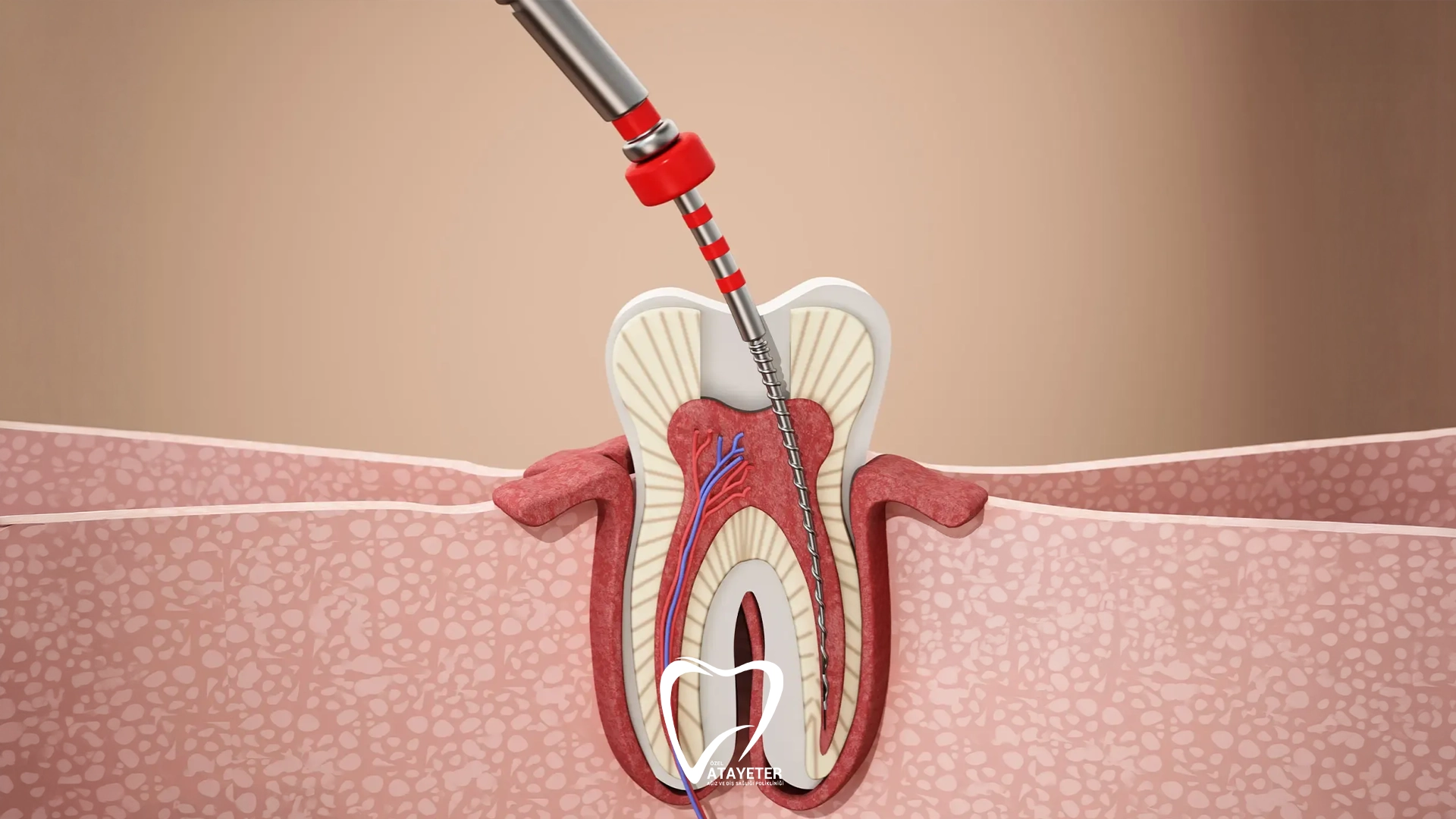
Teeth that have undergone root canal treatment may become more vulnerable to fracture over time, especially when they have already lost a large amount of tooth structure.
The risk of cracking or breaking may be higher in back teeth with significant structural damage.
A crack in the tooth may not always be visible to the naked eye.
A cracked tooth may cause:
- Sharp pain while chewing
- A stabbing sensation when biting
- Sensitivity in a specific area
- Intermittent pain
In this situation, the pain may not be directly related to the root canal treatment itself, but rather to a structural problem in the tooth.
6. A Filling or Crown That Is Too High
After root canal treatment is completed, the tooth is usually restored with a filling or crown.
If the restoration is slightly higher than the surrounding teeth, excessive pressure may be placed on that tooth while chewing.
This can cause tenderness in the periodontal ligament surrounding the root.
Patients often describe the problem by saying:
“My tooth hurts when I bite down.”
or:
“It hurts when pressure is placed on that tooth while eating.”
This type of pain after root canal treatment may often improve after the bite is adjusted.
7. Leakage From the Filling or Crown
The success of root canal treatment does not depend only on how well the root canals are filled.
The upper part of the tooth must also be sealed effectively against bacteria.
Over time:
- A filling may break
- Gaps may form around the filling
- A crown may become loose
- Decay may develop underneath the crown
This can allow bacteria from the mouth to enter the internal structures of the tooth again.
As a result, a tooth that previously underwent root canal treatment may become infected again.
Why Does a Root Canal-Treated Tooth Hurt Years Later?
Some patients have no problems immediately after root canal treatment, but pain develops years later.
In this situation, several possible causes should be considered.
These may include:
- Leakage from an old filling
- Decay under a crown
- Development of a tooth crack
- Reactivation of infection inside the canal
- A new infection at the root tip
These conditions may cause pain after root canal treatment even years later.
For this reason, pain that develops later should not be ignored, even if the tooth remained problem-free for many years.
Why Does a Root Canal-Treated Tooth Hurt While Chewing?
Pain during chewing is an important symptom.
Possible causes include:
- Inflammation at the root tip
- A high filling or crown
- A crack in the tooth root
- Infection in the tissues around the root
- Periodontal problems
If pain after root canal treatment while chewing lasts more than a few days, a dental evaluation may be necessary.
Why Does Swelling Occur in a Root Canal-Treated Tooth?
If swelling accompanies the pain, infection should be considered more carefully.
When an infection at the root tip progresses, an abscess may form in the surrounding tissues.
Possible symptoms include:
- Gum swelling
- Facial swelling
- A small pimple-like bump on the gum
- Bad taste in the mouth
- Throbbing pain
- Pain while biting
If these symptoms appear, it is important to see a dentist rather than simply delaying treatment with painkillers.
Can a Root Canal-Treated Tooth Be Sensitive to Hot or Cold?
In a completed root canal treatment, the pulp tissue inside the tooth has been removed.
Therefore, the treated tooth is not expected to sense hot and cold in the same way as a living natural tooth.
However, if hot or cold sensitivity is felt in the area, the source may be:
- A neighboring tooth
- Gum tissue
- Exposed root surfaces
- Canal tissue that was not fully treated
For this reason, it is important to clinically identify which tooth is actually causing the sensitivity.
Can a Root Canal-Treated Tooth Be Treated Again?
Yes. In some cases, a tooth that has previously undergone root canal treatment can be treated again.
This procedure is usually called root canal retreatment.
During retreatment, the existing root canal filling materials are removed.
Then:
- The canals are reopened.
- Infected tissues are cleaned.
- The canals are disinfected.
- The dentist checks for any missed canals.
- The canals are filled again.
- The tooth is restored appropriately.
However, not every case of pain after root canal treatment requires retreatment.
The real cause of the pain should first be identified.
When Is Root Canal Retreatment Necessary?
Root canal retreatment may be considered in situations such as:
- An incompletely filled canal from the previous treatment
- A missed canal
- Persistent infection at the root tip
- Inadequate previous canal filling
- Bacterial leakage from the upper restoration
Whether the tooth can still be structurally preserved is also important when deciding on treatment.
Can Root-End Surgery Be Necessary?
In some cases, infection at the root tip may persist despite retreatment, or access to the root canal through the normal route may not be possible.
In such situations, root-end surgery, also known as apical resection or apicoectomy, may be considered.
This procedure is intended to surgically access the infected root tip and remove problematic tissue.
However, this treatment is not necessary for every patient.
Does a Root Canal-Treated Tooth Need to Be Extracted?
Pain in a root canal-treated tooth does not automatically mean that the tooth must be extracted.
The dentist first evaluates whether the tooth can still be saved.
Conditions that may make preservation difficult include:
- Vertical fracture of the tooth root
- Severe bone loss
- Excessive loss of tooth structure that cannot be restored
- Infection that cannot be controlled despite treatment
Whenever possible, preserving the natural tooth is generally preferred.
Are Antibiotics Necessary for Pain After Root Canal Treatment?
Antibiotics are not necessary for every case of pain after root canal treatment.
The need for antibiotics should be determined by a dentist after evaluation.
Especially in cases where there is only chewing sensitivity and no signs of spreading infection, antibiotics may not address the actual cause of the problem.
For this reason, patients should not start taking antibiotics on their own.
What Can Be Done at Home for Pain After Root Canal Treatment?
Until you are able to visit a dentist, some simple measures may help reduce discomfort.
For example:
- Avoid chewing hard foods on the painful side
- Keep the area around the tooth clean
- Avoid clenching your teeth
- Use pain medication only as previously recommended by your dentist
These measures may provide temporary relief.
However, a dental examination may still be necessary to treat the underlying cause of the pain.
When Should You Visit a Dentist?
Mild sensitivity after root canal treatment may be temporary.
However, a dental evaluation is recommended if:
- The pain does not improve within a few days
- The pain gradually becomes more severe
- Throbbing pain wakes you up at night
- Swelling develops in the face or gums
- The tooth hurts significantly when pressure is applied
- The crown or filling feels loose
- There is drainage or a pimple-like bump on the gum
- The pain returns after a long symptom-free period
These symptoms may require a detailed evaluation of the underlying problem.
How Is a Root Canal-Treated Tooth Examined?
The dentist first listens to the patient’s symptoms and performs a clinical examination.
During the examination:
- Pressure may be applied to the tooth
- A bite test may be performed
- The gums may be examined
- The filling or crown may be evaluated
- Neighboring teeth may be checked
X-rays may then be used.
In some complicated cases, three-dimensional imaging methods may also be necessary.
These evaluations can help identify the cause of pain after root canal treatment.
How Long Can a Root Canal-Treated Tooth Last?
A tooth that has undergone successful root canal treatment and has been properly restored can remain functional for many years.
However, the lifespan of the tooth depends on several factors, including:
- The amount of healthy tooth structure remaining
- The quality of the restoration
- Oral hygiene
- Chewing forces
- Teeth-clenching habits
- Regular dental check-ups
Especially in back teeth that have lost a large amount of structure, restorative solutions may be considered to reduce the risk of fracture.
Why Is a Crown Important After Root Canal Treatment?
It would not be correct to say that every root canal-treated tooth must receive a crown.
However, especially in back teeth, a large amount of tooth structure may already have been lost before the root canal procedure.
In these situations, the tooth may become more vulnerable to fracture under chewing forces.
When the dentist considers it appropriate, crowns or similar restorations may help protect the remaining tooth structure.
How Can Pain After Root Canal Treatment Be Prevented?
Although it is not possible to prevent every problem completely, certain measures may reduce the risk of complications.
These include:
- Completing the root canal treatment properly
- Not delaying the final restoration of the tooth
- Having fillings and crowns checked regularly
- Maintaining good oral hygiene
- Avoiding using teeth to break very hard foods
- Treating teeth clenching or grinding when present
- Attending regular dental check-ups
If new pain begins in a tooth that has undergone root canal treatment, early evaluation may help detect the problem before it becomes more advanced.
Why Does a Root Canal-Treated Tooth Become Infected Again?
The main reason a treated tooth becomes infected again is that bacteria regain access to the root canal system.
This may happen because of:
- Incomplete canal cleaning
- A missed canal
- A leaking filling
- A broken crown
- A tooth crack
- New tooth decay
When bacteria enter the root canal system, they may multiply again and cause inflammation in the tissues around the root tip.
This can lead to recurrent pain after root canal treatment.
Is Every Pain Caused by the Root Canal-Treated Tooth?
No.
Sometimes a patient may think the pain is coming from the root canal-treated tooth, while the actual source is another tooth or a surrounding structure.
For example:
- Decay in a neighboring tooth
- Gum infection
- Impacted wisdom tooth
- Teeth clenching
- Temporomandibular joint problems
may cause pain in a similar area.
Therefore, it is not possible to make a definite diagnosis based only on where the pain is felt.
Frequently Asked Questions About Pain After Root Canal Treatment
Can a root canal-treated tooth hurt after 1 year?
Yes, it can. Pain may develop months or years later because of filling leakage, a new infection, a crack, or problems around the root tip.
Why does my root canal-treated tooth hurt when I press on it?
Inflammation around the root, a high filling or crown, a crack, or infection may cause this symptom.
Can a root canal-treated tooth throb?
Yes. Throbbing pain may occur if there is an active infection or inflammation in the surrounding tissues.
Can an abscess develop in a root canal-treated tooth?
Yes. An abscess may develop if infection occurs in the root canals or around the root tip.
What happens if root canal treatment fails?
Depending on the condition of the tooth, root canal retreatment, root-end surgery, or in some cases tooth extraction may be considered.
My root canal-treated tooth never hurt before, but now it does. Is this normal?
New pain in a tooth that has been symptom-free for a long time should be evaluated. It may be related to a new infection, a crack, or a restoration problem.
Evaluation of Pain After Root Canal Treatment at Atayeter Dental Clinic
If pain develops again in a tooth that has previously undergone root canal treatment, the first step is to identify the true source of the pain.
At Atayeter Dental Clinic, the existing root canal treatment, surrounding tissues, filling or crown, and tissues around the root can be evaluated together.
When necessary, radiographic imaging may be used to assess:
- Root-tip infection
- Incomplete or inadequate root canal filling
- Possible tooth cracks
- Restoration problems
- Changes in surrounding tissues
Based on the findings, appropriate treatment options can be planned for the patient.
Conclusion: Why Does a Root Canal-Treated Tooth Hurt Again?
Pain after root canal treatment can have many different causes, ranging from short-term post-treatment sensitivity to a recurring infection.
Mild sensitivity during the first few days after root canal treatment may be related to the normal healing process in some patients. However, pain that begins weeks, months, or years later may be associated with infection at the root tip, a missed canal, inadequate root canal filling, leakage from a filling or crown, or a crack in the tooth.
For this reason, the correct answer to the question “Why does a root canal-treated tooth hurt again?” can only be determined after a clinical examination and, when necessary, radiographic evaluation.
Especially if the pain becomes progressively worse, increases while chewing, is accompanied by swelling, or starts again in a tooth that was previously symptom-free, dental evaluation should not be delayed.
Following a detailed examination at Atayeter Dental Clinic, the cause of pain after root canal treatment can be identified and treatment options appropriate for the current condition of the tooth can be evaluated.
This article is for general information only; please consult your dentist for diagnosis and treatment.