
Is Pain After a Dental Filling Normal? Causes and Solutions
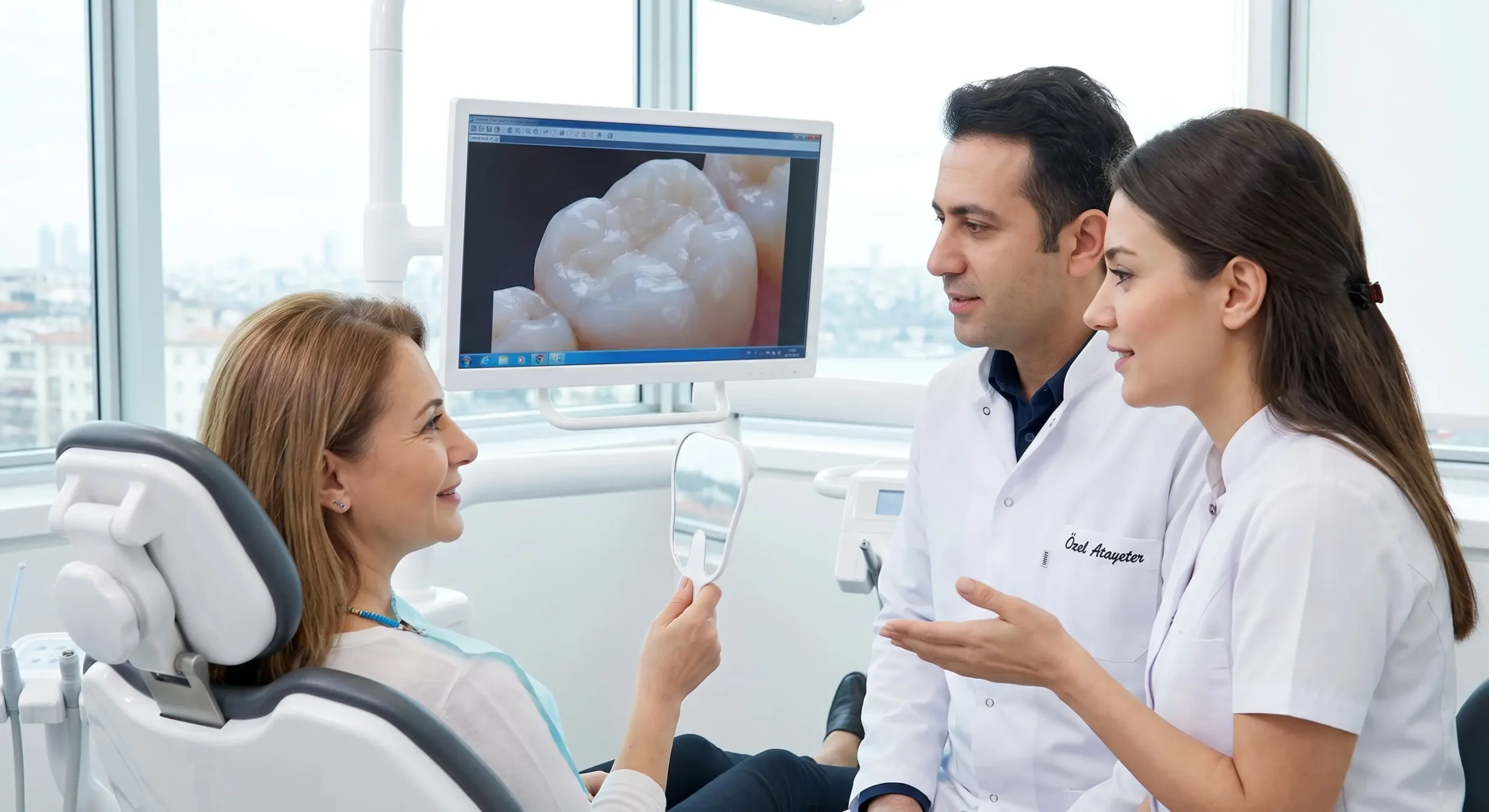
A dental filling is one of the most common dental treatments used to restore tooth structure that has been damaged by decay or other factors and return the tooth to proper function. Today, thanks to different filling materials, especially composite fillings, results that closely resemble the natural appearance of teeth can be achieved. However, some patients may experience sensitivity or pain after treatment.
At this point, one of the most frequently asked questions is: “Is pain after a dental filling normal?”
Yes, under certain circumstances, pain after a dental filling and sensitivity can be considered normal. Especially during the first few days after the filling procedure, temporary sensitivity to hot, cold, sweet, or hard foods may occur. However, the intensity of the pain, how long it lasts, when it appears, and whether it increases over time are important factors.
Some types of pain may simply be a temporary response of the tooth to the treatment, while others may be associated with a filling that is too high, irritation of the dental nerve, deep tooth decay, or another dental problem.
At Özel Atayeter Oral and Dental Health Polyclinic, in this article, we explain in detail the causes of pain after a dental filling, which symptoms may be considered normal, and when you should consult a dentist.
What Causes Pain After a Dental Filling?
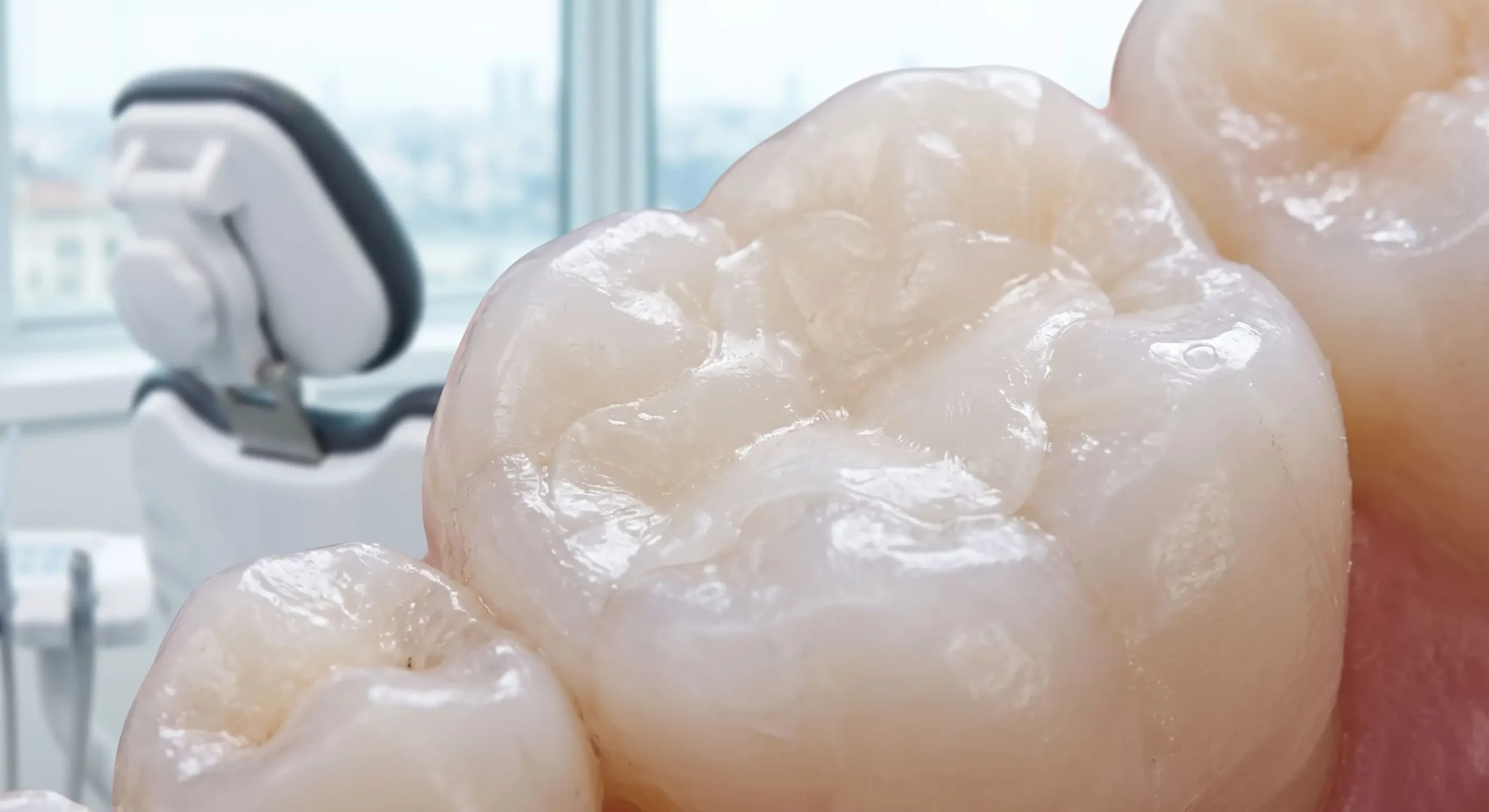
During a filling procedure, decayed or damaged tooth tissue is removed, and the resulting cavity is restored using an appropriate filling material. Since the tooth structure is treated during the procedure, temporary sensitivity may occur afterward.
In cases of deep decay in particular, the filling may be placed very close to the nerve tissue inside the tooth, known as the pulp. In such situations, the tooth may temporarily become more sensitive to external stimuli after treatment.
The main causes of pain after a dental filling include:
- Temporary tooth sensitivity after the filling
- Decay located close to the dental nerve
- A filling that is too high
- Excessive pressure on the tooth during biting or chewing
- Irritation of the dental nerve
- Persistent or recurrent decay beneath the filling
- Temporary sensitivity related to the filling material
- A crack or fracture in the tooth
- Inflammation of the pulp tissue
- Advanced nerve damage that may require root canal treatment
Determining the exact cause among these possibilities can only be done through a dental examination.
Is Pain After a Dental Filling Normal?
Not every type of pain that occurs after filling treatment indicates a serious problem. Mild sensitivity or discomfort that begins shortly after the procedure is often part of the tooth’s temporary response to the treatment.
Especially during the first few days, temporary sensitivity may be felt when drinking cold water, consuming hot foods, or chewing hard foods with the filled tooth.
However, the nature of the pain is an important factor.
Pain after a dental filling that disappears within a short period and gradually decreases day by day is generally not considered a cause for concern. On the other hand, if the pain becomes progressively worse, wakes you up at night, begins spontaneously, or presents as prolonged throbbing pain, the tooth should be evaluated.
Therefore, the answer to the question “Is it normal?” depends on the duration, severity, and accompanying symptoms of the pain.
What Causes Sensitivity After a Dental Filling?
One of the most common complaints after a dental filling is tooth sensitivity.
The dentin layer and nerve tissue inside the tooth may remain sensitive for some time following the procedure. As a result, the patient may experience brief discomfort, particularly when consuming hot or cold foods.
For example, it is possible to feel a few seconds of sensitivity while eating ice cream or drinking cold water with the filled tooth.
This sensitivity may be more noticeable in teeth with deep decay.
However, sensitivity is generally expected to decrease gradually. If it persists for a long time, becomes more severe, or continues even after the triggering stimulus has been removed, it is important to have the tooth evaluated by your dentist.
Why Does It Hurt When Chewing After a Filling?
Another common issue experienced by patients is pain while eating or when closing the teeth together after a filling procedure.
In cases of this type of pain after a dental filling, one possibility that should be considered is that the filling may be too high.
If the filling sits slightly above the tooth’s natural bite level, the filled tooth may receive more pressure than normal when the upper and lower teeth come together.
Patients often describe this situation as:
“When I close my teeth, the filled tooth seems to touch first.”
or
“It does not hurt normally, but it becomes painful when I bite down while eating.”
In such a case, the dentist can check the bite level of the filling and make the necessary adjustments.
However, it is not correct to assume that all chewing pain is caused by a high filling. The nerve tissue of the tooth, surrounding tissues, or other dental conditions may also cause similar symptoms.
What Happens If a Filling Is Too High?
After a filling is completed, the relationship between the upper and lower teeth is checked. For this purpose, the dentist generally asks the patient to close their teeth and perform certain jaw movements.
However, in some cases, the patient may not fully notice that the filling feels high during the procedure because the effects of local anesthesia are still present.
If the filling is too high, symptoms may include:
- Pain while biting
- Sensitivity during chewing
- A feeling of pressure on the tooth
- The filled tooth touching before the other teeth
- Discomfort when clenching the teeth
In such situations, rather than waiting for the filling to wear down on its own, it is more appropriate to consult a dentist.
Is Throbbing Pain After a Dental Filling Normal?
Mild, short-term discomfort and intense throbbing pain should be evaluated differently.
In particular, persistent, spontaneous, or nighttime pain after a dental filling with a throbbing character may indicate a problem involving the pulp, the nerve and blood vessel tissue inside the tooth.
If the decay was very deep, the dental nerve may already have been severely affected before treatment. Even if the decay is removed and the tooth is filled, damage to the pulp may not always be reversible.
In such cases, different treatment options, including root canal treatment, may need to be considered.
However, the presence of pain alone does not necessarily mean that root canal treatment is required. The final decision should be made by a dentist based on clinical examination, the patient’s symptoms, and, when necessary, radiographic evaluation.
Is Sensitivity to Hot and Cold Normal After a Filling?
Sensitivity to hot and cold may occur after a filling procedure.
In particular, consuming cold drinks or hot foods may cause temporary discomfort that lasts for a few seconds.
The important point is how long the pain continues after the stimulus has been removed.
For example, sensitivity that disappears quickly after drinking cold water is not evaluated in the same way as severe pain that continues for several minutes.
If your sensitivity to hot and cold becomes progressively stronger or continues for a prolonged period, it is recommended that you consult your dentist.
Can Pain Be More Severe After a Deep Filling?
Yes. The deeper the decay, the closer the treatment area is to the dental nerve.
At the center of the tooth is a living tissue called the pulp, which contains nerves and blood vessels.
Advanced decay can come very close to the pulp. Even if the nerve is not directly exposed after the decay is removed, the tooth may remain sensitive for some time.
For this reason, pain after a dental filling and sensitivity to hot and cold may be more noticeable after deep fillings compared with more superficial fillings.
However, the way the pain progresses is also important. Symptoms that gradually decrease may be a positive sign, whereas pain that becomes progressively worse may require another examination.
How Long Does Pain After a Dental Filling Last?
The duration of sensitivity after a filling may vary from person to person.
The depth of the decay, the type of filling material used, the condition of the tooth before treatment, and the individual’s sensitivity level can all influence the process.
Some people may not experience any sensitivity at all, while others may have mild sensitivity for several days. Sensitivity after deep fillings may sometimes last longer.
Rather than focusing only on a specific number of days, it is more important to consider how the symptoms are changing over time.
Mild sensitivity that decreases every day should not be evaluated in the same way as pain that becomes more severe, begins to throb, and interferes with daily activities.
If pain after a dental filling continues for a long time or becomes progressively worse, a dental check-up should not be delayed.
Why Does a Tooth Hurt When Pressure Is Applied After a Filling?
If pain occurs when pressure is applied to the filled tooth or when chewing food, there may be several possible causes.
One important possibility is that the filling is too high.
In addition, sensitivity in the tissues surrounding the root of the tooth, irritation of the pulp tissue inside the tooth, or another existing dental problem may also cause pain during chewing.
For this reason, it is not appropriate to attempt to correct the filling yourself simply because you believe it may be slightly high.
Your dentist can evaluate the contact points between the teeth using special bite paper and a clinical examination.
What Can Be Done to Reduce Pain After a Dental Filling?
Following your dentist’s instructions after filling treatment may help make the recovery period more comfortable.
During the first few days, avoiding extremely hot or cold foods and drinks may be helpful for people who experience sensitivity.
It may also be preferable to avoid chewing very hard foods on the side where the filling was placed.
Regular oral hygiene should still be continued. Having a filling does not mean that the tooth can no longer develop decay. New decay may form in the natural tooth structure surrounding the filling over time.
Therefore, it is important to:
- Brush your teeth regularly
- Use fluoride toothpaste
- Clean between the teeth
- Limit the consumption of sugary foods and drinks
- Attend regular dental check-ups
If pain medication is needed, the person’s existing medical conditions, current medications, and other individual factors should be taken into consideration. Therefore, rather than using medication without professional advice, it is more appropriate to follow the recommendations of your dentist or another qualified healthcare professional.
When Should You See a Dentist for Pain After a Dental Filling?
Not every case of sensitivity after a filling is an emergency. However, some symptoms may require further evaluation.
It is recommended that you consult your dentist in the following situations:
- The pain becomes worse instead of improving over time
- Severe and persistent pain develops
- Tooth pain begins at night or wakes you from sleep
- Prolonged throbbing pain occurs
- Pain continues for a long time after contact with hot or cold foods
- Significant pain occurs when pressure is applied to the tooth
- You feel that the filling may be too high
- Swelling develops around the tooth or surrounding tissues
- The filling breaks or comes out
- Swelling develops in the face
- Fever or other symptoms affecting general health occur
Dental evaluation should not be delayed, particularly if severe swelling, signs of infection, or rapidly worsening symptoms are present.
Can a Filled Tooth Develop Decay Again?
Yes. A tooth that has been filled can develop decay again in the future.
The filling material itself does not decay, but new cavities can develop in the natural tooth structure surrounding the filling.
Especially when oral hygiene is insufficient, bacterial plaque may accumulate around the edges of the filling and eventually lead to problems known as secondary or recurrent decay.
Wear, fracture, or loss of proper adaptation between the filling and the tooth over time may also increase the risk.
For this reason, regular dental check-ups should not be completely discontinued after receiving a filling.
Does Pain After a Filling Mean Root Canal Treatment Is Needed?
No.
Not every case of pain after a dental filling means that root canal treatment is necessary.
Some types of sensitivity may appear temporarily after treatment and disappear over time.
However, if irreversible damage has occurred to the dental nerve, root canal treatment may become necessary.
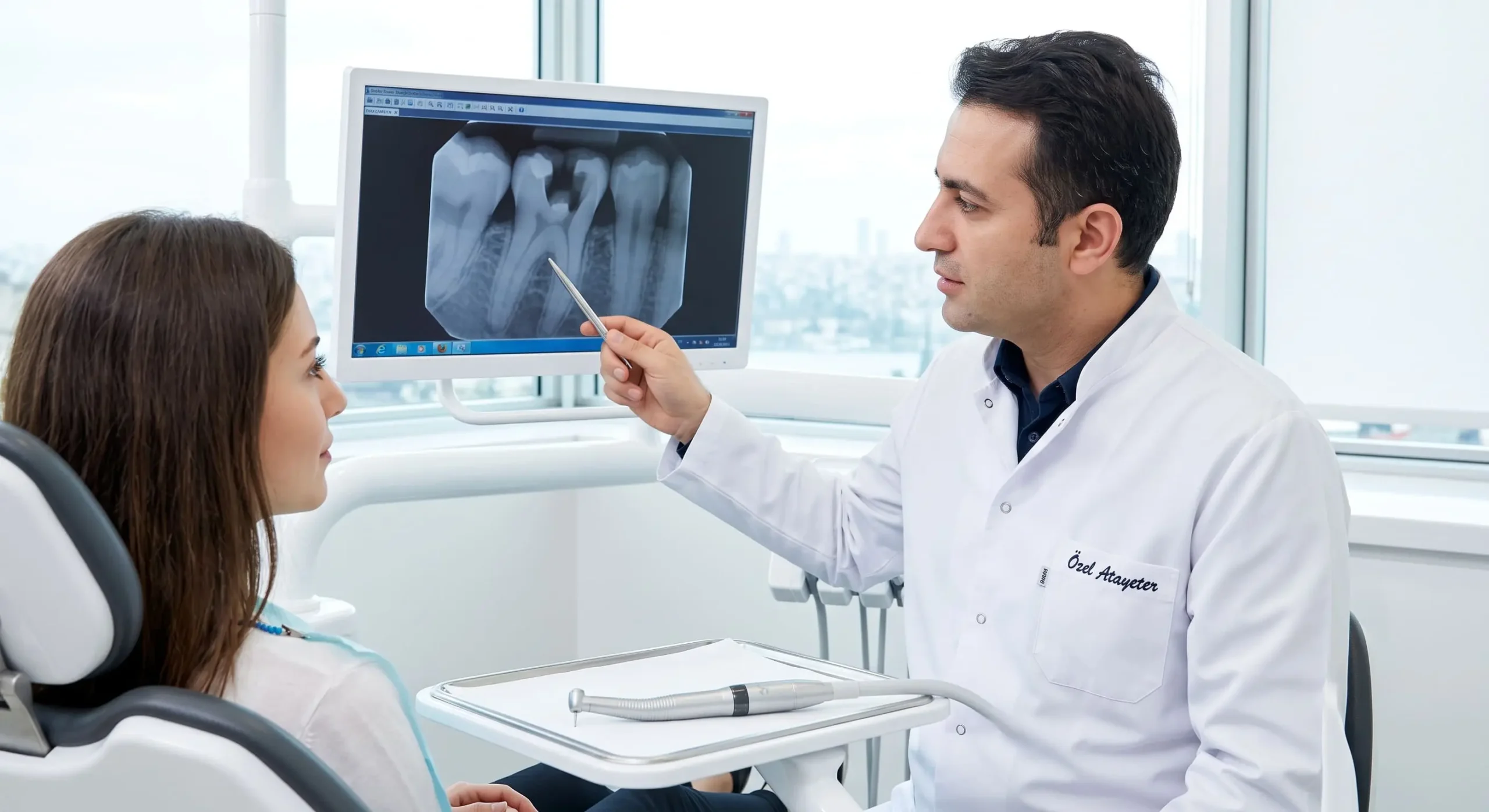
To determine whether root canal treatment is required, the dentist may evaluate:
- The type of pain
- The duration of the pain
- Reactions to hot and cold
- Sensitivity during biting and percussion
- The existing restoration
- The depth of the decay
- Radiographic findings
All of these factors are evaluated together.
For this reason, it is not appropriate to diagnose yourself based only on symptoms found online.
Can Pain After a Filling Go Away on Its Own?
Mild pain after a dental filling caused by temporary sensitivity may gradually decrease over time.
However, the important factor is whether the pain consistently improves.
For example, if mild sensitivity that appears immediately after treatment becomes noticeably less severe within several days, it may generally be monitored.
On the other hand, if the pain becomes stronger each day, turns into continuous throbbing, or makes it difficult to eat or sleep, waiting for it to disappear on its own may not be appropriate.
In this situation, the filling and the affected tooth should be examined again.
Why Does a Filled Tooth Hurt at Night?
Tooth pain that appears at night or becomes severe enough to wake a person from sleep should be evaluated carefully.
When a person lies down, changes in blood pressure around the head may make certain types of tooth pain feel more noticeable. In addition, inflammation of the pulp tissue can lead to spontaneous and throbbing pain.
Severe nighttime pain that begins after a filling procedure, particularly in teeth with deep decay, may require the condition of the dental nerve to be reassessed.
Why Does an Old Filled Tooth Start Hurting?
Pain after a dental filling does not occur only shortly after a new filling is placed.
A tooth that was filled months or even years ago may also begin to hurt.
Possible causes include:
- New decay developing beneath the filling
- Fracture of the filling
- A gap developing around the edge of the filling
- A crack in the tooth
- Damage or irritation involving the dental nerve
- Gum problems
- Teeth clenching or grinding
For this reason, if a tooth that was filled a long time ago suddenly begins to hurt, it is not possible to determine the cause by looking only at the existing filling.
A detailed dental examination is required.
What Should You Pay Attention to After a Dental Filling?
To help fillings last longer and maintain good dental health, regular oral hygiene should be continued.
It is important to brush your teeth at least twice a day using an appropriate technique, clean between the teeth with dental floss or suitable interdental cleaning tools, and attend regular dental check-ups.
At the same time, biting or cracking very hard foods with the teeth may damage both the filling and the natural tooth structure.
In particular, habits such as chewing ice, cracking hard-shelled foods with the teeth, or using the teeth for purposes other than their normal function should be avoided.
Frequently Asked Questions
Is tooth sensitivity normal after a filling?
Short-term and mild sensitivity may occur after filling treatment. Temporary discomfort may be experienced particularly with hot, cold, or chewing. However, if the pain gradually becomes worse, a dental examination is recommended.
Is pain when biting down normal after a filling?
Although mild sensitivity may occur immediately after treatment, noticeable pain when biting may be caused by several factors, including a filling that is too high. Dental evaluation is recommended.
How many days does pain after a dental filling last?
The exact duration varies depending on the individual and the depth of the filling. The important factor is whether the sensitivity gradually decreases. Persistent or worsening pain should be evaluated by a dentist.
Why does throbbing pain occur after a filling?
In cases of deep decay, the dental nerve may have been affected. If throbbing is persistent, begins spontaneously, or becomes particularly severe at night, the condition of the pulp should be evaluated by a dentist.
How can you tell if a filling is too high?
You may feel that the filled tooth touches before the other teeth when you close your mouth, or you may experience pain only in that tooth while chewing. A definitive assessment should be made by a dentist.
Can a filled tooth receive root canal treatment?
Yes. If irreversible damage has occurred in the nerve tissue of a filled tooth, root canal treatment may be performed following evaluation by a dentist.
Do Not Ignore Pain After a Dental Filling
In conclusion, pain after a dental filling does not always mean that the filling has failed or that a serious problem is present.
Temporary hot and cold sensitivity and mild discomfort may occur after a filling procedure. Particularly after deep fillings, the tooth may require some time to adapt to the treatment.
However, professional evaluation is important if the pain becomes more severe, continues for a long period, wakes you from sleep at night, becomes throbbing, causes intense pain when pressure is applied to the tooth, or is accompanied by swelling.
If you are experiencing pain after a dental filling, rather than trying to determine the cause based solely on your symptoms, it is more appropriate to have the tooth examined by your dentist so that a suitable treatment plan can be created.
At Özel Atayeter Oral and Dental Health Polyclinic, oral and dental health evaluations, filling checks, and treatment options appropriate to each patient’s current condition can be planned following a dental examination.
Remember, early evaluation may help identify dental problems before they progress and may contribute to preserving as much of the natural tooth structure as possible.
This article is for general information only; please consult your dentist for diagnosis and treatment.