







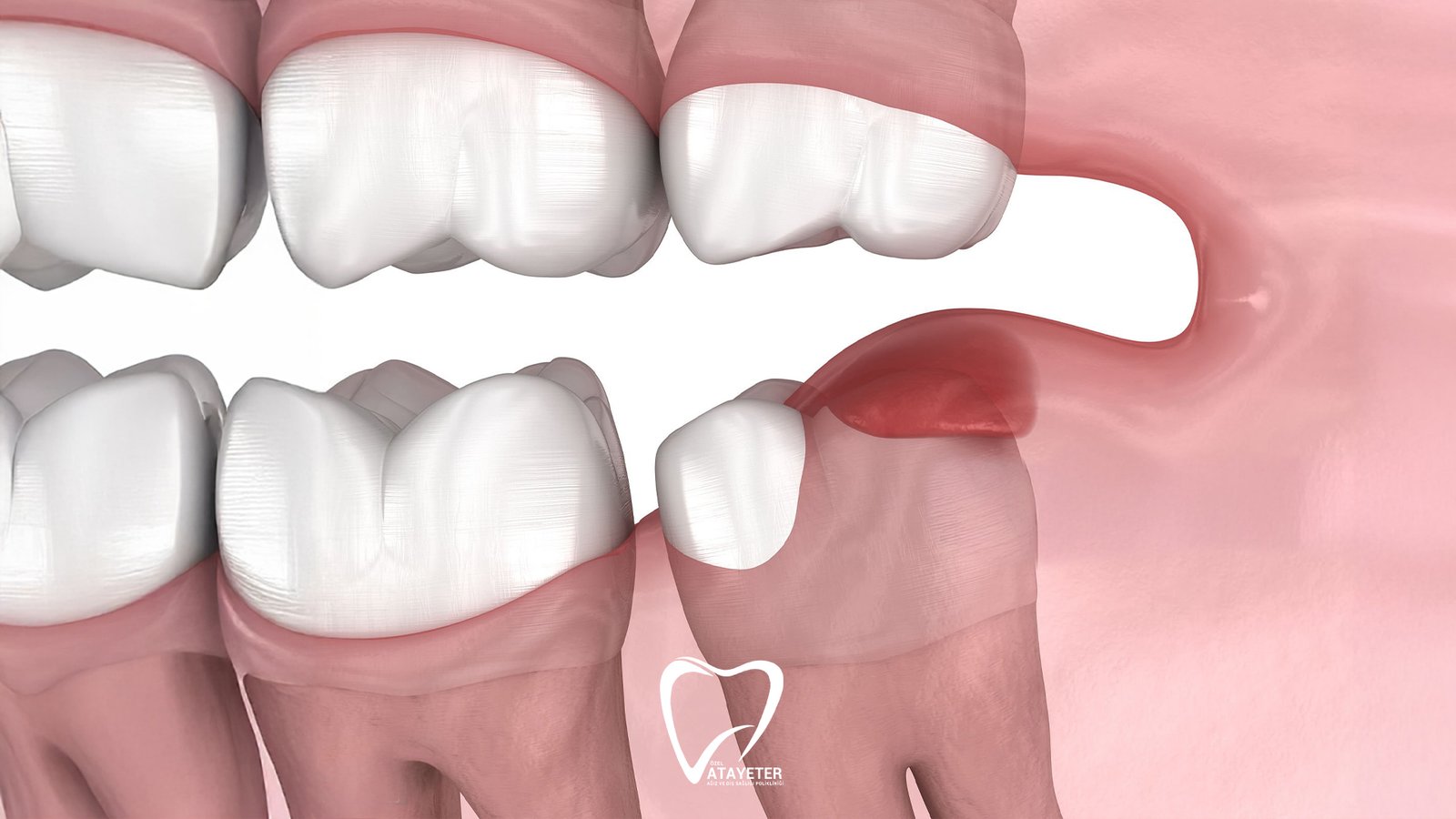
What is an Impacted Tooth?
Have you ever had that feeling that “something just doesn’t sit right” in your mouth? It’s not always easy to explain, but while chewing you might notice a slight discomfort, or sometimes a random pressure on one side of your jaw… and other times, everything seems completely normal until a routine dental check up suddenly reveals something unexpected. One of the most common findings in situations like this is an impacted tooth.
In fact, many people live with this condition without even realizing it. Because an impacted tooth doesn’t always make itself obvious. It can stay hidden inside the jaw for years without causing any symptoms. But in some cases, it slowly starts to make its presence known with pain, swelling, or pressure in the jaw area, and that’s when it begins to affect daily life.
In simple terms, an impacted tooth is a tooth that should normally erupt into the mouth but gets stuck inside the jawbone or gum tissue instead. It basically “wants to come out” but cannot find enough space. This most commonly happens with wisdom teeth, since they are the last teeth to erupt and there is often not enough room left in the jaw. However, it’s not only limited to wisdom teeth; canine teeth and other teeth can also become impacted.
What’s interesting is that an impacted tooth doesn’t always cause problems. Some people may never notice it throughout their lives. But in others, it can gradually start putting pressure on nearby teeth, shifting them, or even leading to pain and infection over time. That’s why even something that seems “harmless” at first can still be important to keep under observation.
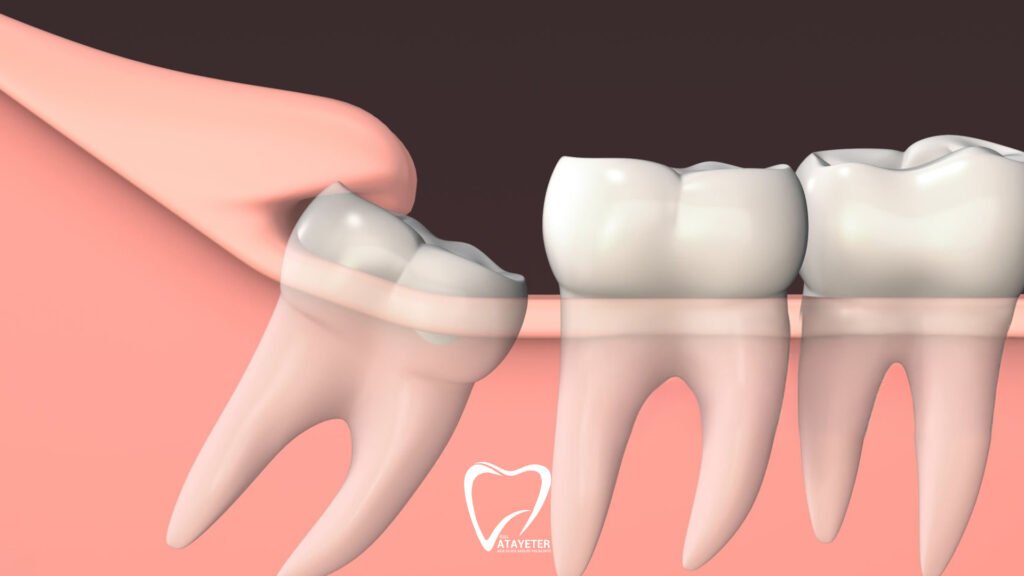
Most people first find out they have an impacted tooth during a dental X ray. Because from the outside, everything can look completely normal. No visible decay, no obvious problem… but the X ray tells the real story and clearly shows that the tooth is trapped inside the jawbone.
Why Does an Impacted Tooth Occur?
There are several reasons why an impacted tooth may develop, but the most common one is quite simple: lack of space in the jaw. Today’s eating habits and jaw development are slightly different compared to the past, so many people naturally have smaller jaw structures. However, the number of teeth stays the same, which means some teeth simply don’t have enough room to erupt and remain trapped inside.
Another reason is the tooth trying to come out in the wrong direction. Instead of erupting straight, it may grow at an angle or sideways, which prevents it from reaching its proper position. In some cases, baby teeth fail to fall out on time, blocking the path of the permanent tooth and causing it to stay stuck in the jaw.
Genetic factors also play a significant role. If jaw structure issues or similar dental conditions are common in the family, the same situation can be seen in the next generation as well. In a way, it’s partly inherited.
Wisdom teeth are the most commonly affected teeth in this regard. Since they erupt at the very back of the jaw, most people simply don’t have enough space left for them, which is why they often become partially or fully impacted.
Symptoms of an Impacted Tooth
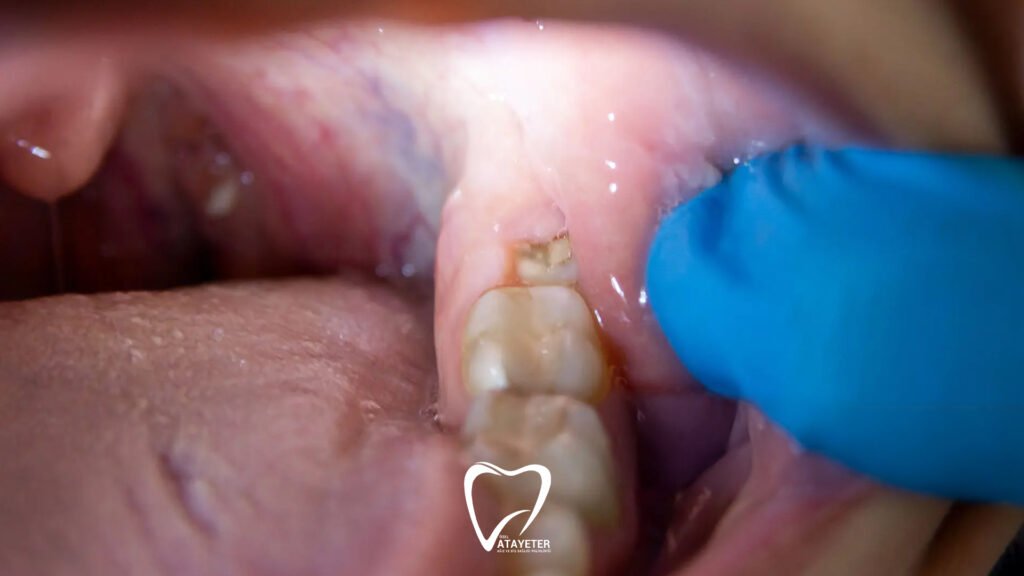
Is an Impacted Tooth Dangerous?
“I have an impacted tooth but I don’t feel any pain, is it still a problem?” This is actually one of the most common questions dentists hear. Because naturally, people think if there is no pain, there is no issue. But with impacted teeth, things are not always that straightforward.
If the tooth is completely silent, not causing any damage to surrounding tissues, and positioned safely according to X rays, it may simply be monitored over time. Immediate treatment is not always necessary. But the important question is what might happen in the future.
Over time, impacted teeth can lead to certain problems. Infections may develop around the tooth, which can eventually cause pain and swelling. In some cases, it can put pressure on nearby teeth, affecting their alignment or increasing the risk of decay in adjacent areas.
In rarer cases, cysts may form around the impacted tooth. If left unnoticed, these can even affect the surrounding bone structure. The risk is generally higher when the tooth is positioned at an angle inside the jaw.
So while an impacted tooth does not always cause immediate problems, it also shouldn’t be assumed that it will never cause any issues at all.
How is an Impacted Tooth Treated?
There is no single standard treatment for impacted teeth; everything depends on the condition of the tooth. In some cases, it does not need to be removed and can simply be monitored over time.
If the impacted tooth is not causing pain, infection, or pressure on nearby teeth, the dentist may recommend regular check ups instead of immediate intervention. This way, the condition is monitored and any potential problem can be detected early.
However, in many cases, the most common treatment is surgical extraction. This is especially frequent with wisdom teeth. The procedure is performed under local anesthesia, meaning the patient does not feel pain during the operation. The gum is gently opened, the tooth is carefully removed, and the area is cleaned.
After the procedure, mild swelling, tenderness, or discomfort for a few days is completely normal. However, this is usually well managed with medication and proper aftercare, and healing happens quite quickly.
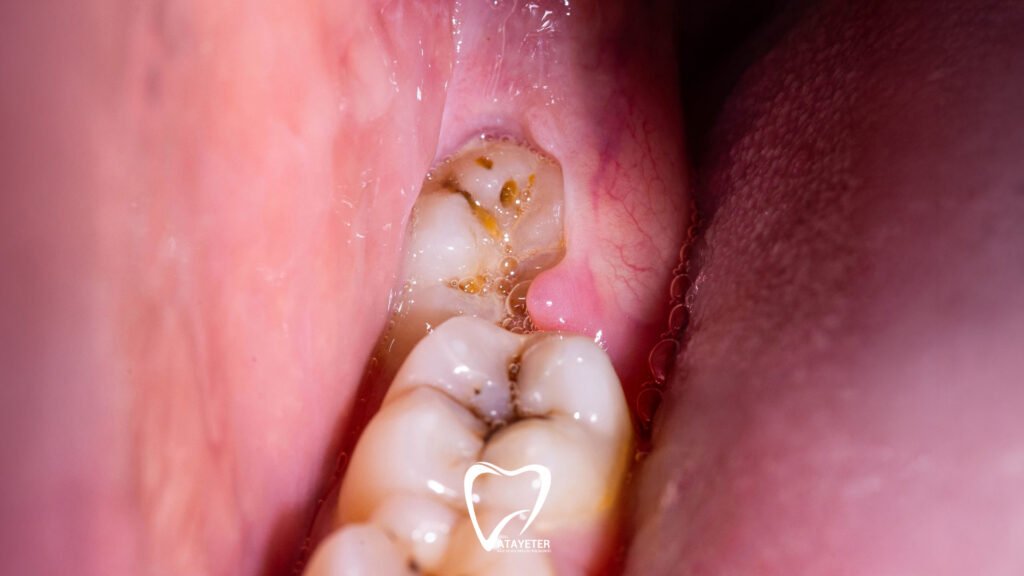
Is Impacted Tooth Extraction Difficult?
When people hear “impacted tooth extraction,” they often immediately think it must be a difficult procedure. But this really depends on the position of the tooth. Some impacted teeth are closer to the gum surface and can be removed quite easily, while others are deeper in the jawbone and may take a bit longer.
However, it is safe to say that modern dentistry techniques have made this procedure much more comfortable than it used to be. It is no longer something to be afraid of, as it is performed in a controlled and safe way.
Thanks to local anesthesia, there is no pain during the procedure. Most patients only feel pressure or movement, nothing more. The real concern about “painful experience” is usually unnecessary. After the procedure, mild swelling or sensitivity for a few days is normal and typically resolves quickly.
What Happens If an Impacted Tooth Is Not Removed?
This really depends on the specific situation of the tooth. But if left unchecked, it may eventually lead to some complications. These can include recurring infections, jaw pain, crowding of nearby teeth, or increased risk of cavities. In some cases, cyst formation may also occur.
This is why dentists often emphasize regular check ups, especially for wisdom teeth. Because when detected early, many potential problems can be prevented before they become more serious.
Comments are closed