







How to Relieve Wisdom Tooth Pain
Wisdom tooth pain… If you’re going through it right now, I don’t even need to explain how frustrating it can be. It usually starts as a mild sensitivity; you might think, “maybe something is stuck.” But that slight discomfort can quickly turn into a deep, throbbing pain. It doesn’t just stay in your tooth either it can radiate to your ear, lock your jaw, and sometimes even spread to your head. You try to ignore it during the day, but at some point, it becomes the only thing you can focus on.
Even the simplest things start to feel difficult. You avoid chewing on that side, flinch when you drink something hot or cold, and hesitate to fully open your mouth while talking. And then there’s the night… It’s like the pain gets stronger on purpose. You lie down thinking, “it’ll pass,” but it doesn’t. Sometimes it becomes so persistent that it even wakes you up from sleep.
The hardest part is that wisdom tooth pain often appears out of nowhere. One day everything is fine, and the next, you find yourself in front of the mirror holding your cheek. Swelling may occur, you might not be able to fully open your mouth, and even swallowing can feel uncomfortable. All of this can be exhausting, both physically and mentally.
But here’s something that might bring a bit of relief: you’re definitely not alone. Wisdom teeth cause problems for many people at some point in their lives. Most of the time, they don’t have enough space to come out properly, get stuck under the gums, or grow at the wrong angle. When that happens, pain, pressure, and sometimes infection become almost unavoidable.

Why Do Wisdom Teeth Cause Pain?
Understanding why wisdom teeth cause pain actually makes it a bit easier to accept the situation. Most people initially think, “why does it hurt this much?” But the truth is, wisdom teeth are the most likely teeth to cause problems in the mouth.
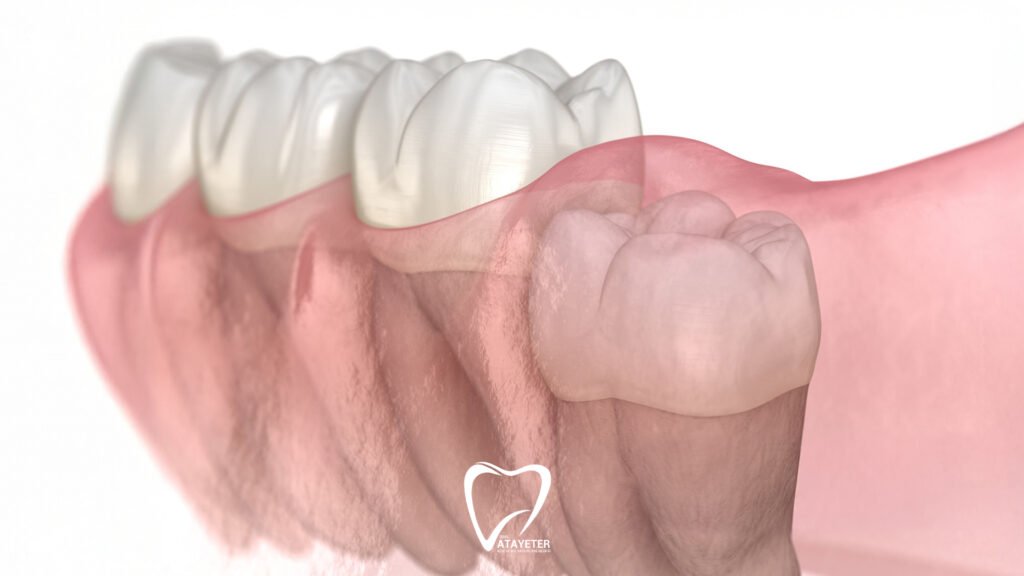
Think of it this way… These teeth usually try to come in between the ages of 17 and 25, when the jaw has already mostly developed. But in many people, there simply isn’t enough space. When there’s no room, the tooth may get stuck, grow crooked, or remain trapped under the gum. And that’s exactly when the pain begins.
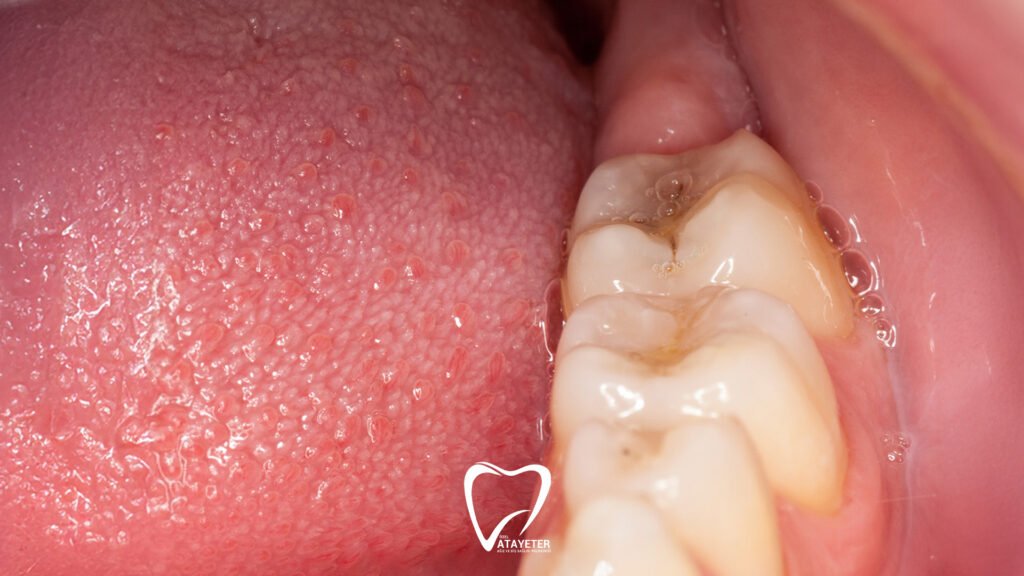
One of the most common situations is partial impaction. That means part of the tooth comes out, but the rest stays under the gum. This creates the perfect environment for bacteria. Food gets trapped there, and cleaning it becomes nearly impossible… The result? Swelling, sensitivity, and increasing pain.
Another issue is gum infection. Cleaning the back area is already difficult, and when a partially erupted tooth is involved, things get even more complicated. Food builds up, the gum becomes inflamed, and over time the pain becomes more noticeable. Sometimes it’s not just pain you may also experience difficulty opening your mouth or even a bad taste.
Sometimes the wisdom tooth tries to come out at the wrong angle. Instead of growing straight, it pushes against the neighboring tooth. This doesn’t just affect one tooth it can create a spreading pain that feels like it’s radiating throughout the area.
How to Relieve Wisdom Tooth Pain
Saltwater Rinse
Sometimes the simplest methods are the most effective. Rinsing with warm saltwater can gradually reduce the sensitivity in that area. Especially if there’s early inflammation, this can feel like a small moment of relief. It’s easy to do, and when done regularly, you can clearly notice the difference.
Cold Compress
If the pain is accompanied by swelling, applying cold from the outside can be very helpful. That cool sensation on your cheek helps ease the throbbing pain inside. Even if you’re unsure at first, after a few minutes you’ll notice the pressure starting to decrease. It’s a small step, but it makes a big difference.
Pain Relievers
There are moments when the pain becomes really hard to tolerate… That’s when painkillers can help you get some relief. But it’s important to see them as temporary support, not a solution. They help you manage the moment, but they don’t fix the underlying issue. So it’s best to use them carefully and avoid making it a habit.
Keeping the Area Clean
This is probably one of the most overlooked yet most important points. Cleaning that back area is difficult, but the more care you take, the fewer problems you’ll face. Gently brushing and using mouthwash when needed really makes a difference. Many people try to poke around the area for relief, but that usually makes things worse.
Avoid Hard and Irritating Foods
What you eat can directly affect your pain. Biting into something hard or consuming very hot foods can suddenly increase sensitivity. For a few days, choosing softer and lukewarm foods can really help. It may seem like a small change, but it can significantly reduce the intensity of the pain.
Does Every Wisdom Tooth Need to Be Removed?
This is probably the most common concern, and it’s completely understandable… You might be wondering, “Do I have to get mine removed too?” The truth is, not every wisdom tooth needs to be extracted. If it has come out properly, can be cleaned easily, and doesn’t cause any discomfort, it can usually be left as it is.
However, there’s another side to this… Wisdom teeth often don’t come in smoothly. If the tooth is impacted, frequently causes swelling and pain, or puts pressure on the neighboring tooth, extraction becomes the most practical and healthy option. Similarly, if decay has progressed and saving the tooth is unlikely, your dentist will usually recommend removal. So the decision is always based on the specific condition of the tooth.
Now, the part most people worry about… Nowadays, wisdom tooth extraction is not as scary as it used to be. With local anesthesia, you won’t feel any pain during the procedure. You might feel a bit of pressure, but it’s brief. After the procedure, with a bit of care for a few days, the recovery process is usually quite smooth.
Is Pain Normal After Extraction?
Yes, it can happen. But there’s no need to worry this is completely normal and temporary. Your body is going through a healing process, and this can show itself as mild discomfort.
Usually, there is some noticeable soreness in the first 24 hours. After that, you’ll feel it gradually decrease day by day. For most people, significant relief begins within 2–3 days, and within about a week, the area is largely healed. So it’s not as long or difficult a process as it might seem.
The most important thing here is to follow your dentist’s instructions. Applying cold packs, taking prescribed medications regularly, and being careful in the first few days really makes a difference. Small details like avoiding smoking and staying away from hot foods can significantly impact how smoothly you recover.
Comments are closed