







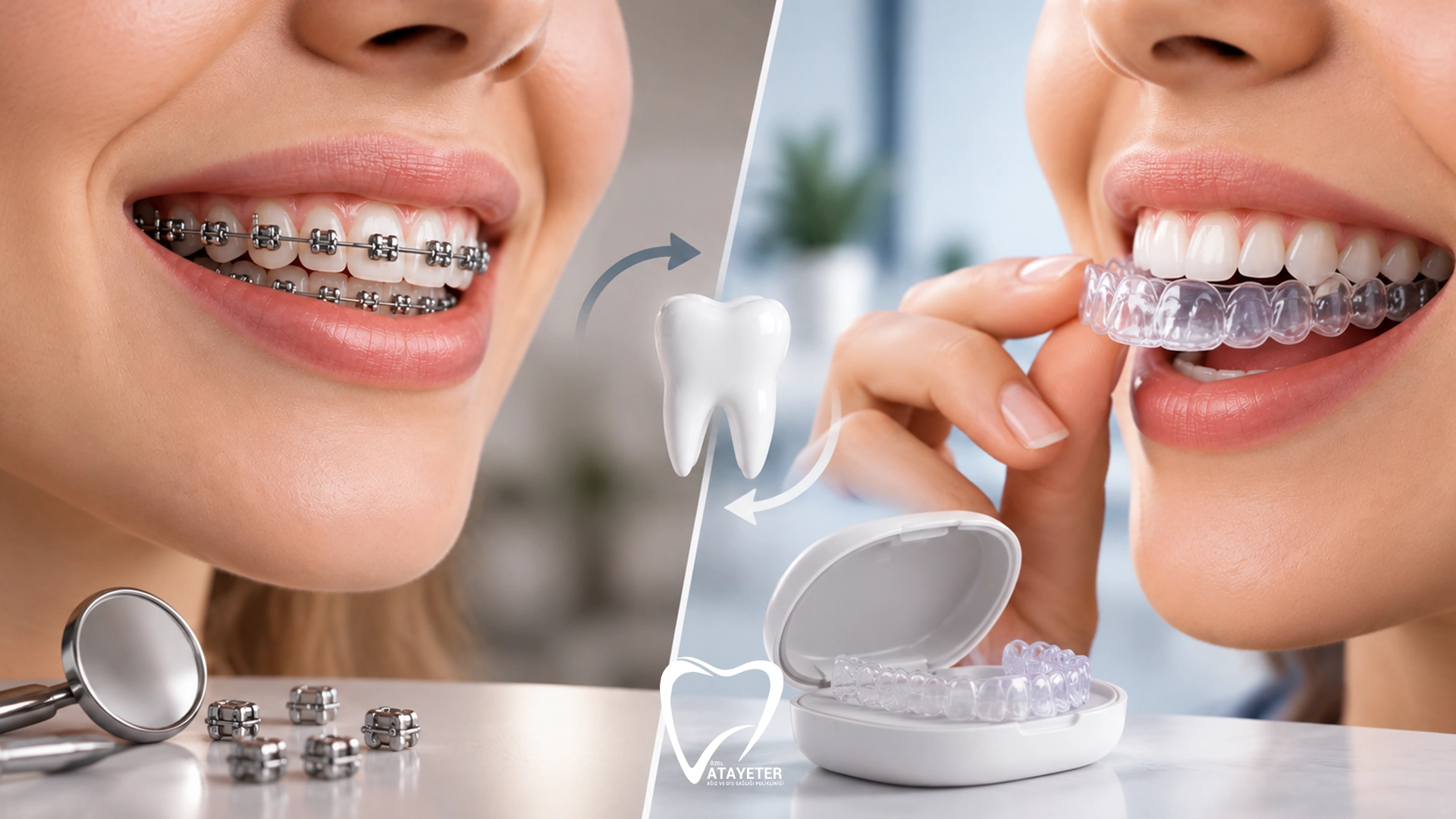
Clear Aligners vs Braces: Which Is Better and Who Are They Suitable For?
Properly aligned, healthy, and aesthetically balanced teeth are among the most important elements of an attractive smile. However, crowded teeth, gaps between teeth, bite problems, and irregular jaw relationships can affect both appearance and oral health. With the development of modern orthodontic treatments, patients now have several options for correcting these problems. Traditional braces and clear aligners are among the most widely used methods.
One of the most frequently researched topics among people considering orthodontic treatment is clear aligners vs braces. Although both methods aim to move teeth into appropriate positions, they differ in their application methods, daily use, appearance, and ability to perform certain tooth movements.
Clear aligner treatment is particularly popular among people who wish to maintain a more natural appearance throughout their orthodontic treatment. Traditional braces, on the other hand, have been used successfully for many years and can be effective in treating a wide range of orthodontic problems. However, the most appropriate treatment should not be determined solely by aesthetic expectations.
A personalized orthodontic treatment plan should be developed after evaluating the current positions of the teeth, jaw structure, bite relationships, patient age, oral health, and ability to comply with treatment requirements.
In this comprehensive guide prepared for Atayeter Dental Clinic, we explore the differences between clear aligners and braces, their advantages and disadvantages, treatment durations, factors affecting costs, and the situations in which each method may be preferred.
Clear Aligners vs Braces: Which Is Better?
The question of clear aligners vs braces: which is better? does not have a single answer that applies to everyone. Each person has a different dental structure, orthodontic condition, and set of treatment expectations.
Clear aligners are custom-made, transparent orthodontic appliances that fit over the teeth and are replaced at specified intervals. Braces, meanwhile, move the teeth using brackets attached to the tooth surfaces and orthodontic wires.
Mild to moderate crowding, gaps between teeth, and certain bite problems may be treated with clear aligners. However, fixed orthodontic appliances may provide a more predictable option for some complex tooth movements or severe bite abnormalities.
Nevertheless, advancements in digital treatment planning and auxiliary orthodontic techniques have expanded the range of cases that may be treated using clear aligners. Therefore, making a definitive treatment decision based solely on the visible appearance of the problem would not be appropriate.
During an orthodontic evaluation, the alignment of the teeth, root positions, bite relationships, and other relevant clinical findings are examined. Appropriate treatment options are then determined according to the patient’s individual needs.
What Is Clear Aligner Treatment?
Clear aligner treatment is a modern orthodontic method designed to move teeth gradually toward their planned positions.
This treatment uses transparent aligners custom-made to fit the patient’s dental structure. The aligners fit over the teeth and apply controlled forces to produce the planned tooth movements.
Before treatment begins, the patient’s teeth may be recorded using digital intraoral scanners or suitable impression techniques. The information collected is then used to create a personalized treatment plan.
During the planning process, the desired tooth positions and the movements required to achieve them are evaluated. A series of aligners is subsequently manufactured according to the treatment plan.
One of the most important characteristics of clear aligners is that they are removable. Patients can take them out while eating and performing their daily oral hygiene routine.
However, to ensure that treatment progresses as planned, aligners generally need to be worn for approximately 20–22 hours per day, with many treatment protocols aiming for nearly 22 hours. The exact daily wear time should be determined according to the orthodontist’s recommendations.
Advantages of Clear Aligner Treatment
The main advantages of clear aligner treatment include:
- Their transparent appearance makes them less noticeable in everyday life.
- They can be removed during meals, providing greater flexibility when eating.
- They can be removed when brushing and flossing.
- They can achieve effective tooth movements in suitable cases.
- They allow personalized digital treatment planning.
- Because they do not contain fixed brackets or wires, they may reduce certain types of soft tissue irritation.
These characteristics can make clear aligners an attractive alternative, particularly for individuals who place importance on their appearance in social and professional settings.
Disadvantages of Clear Aligner Treatment
Although being removable is an important advantage, it also increases the patient’s responsibility throughout treatment.
Failing to wear the aligners for the recommended number of hours may prevent treatment from progressing as planned or extend its duration.
Aligners must also be removed before meals, stored appropriately, and cleaned regularly.
For certain complex orthodontic problems, additional appliances, auxiliary procedures, or alternative treatment approaches may be necessary.
Furthermore, clear aligners are not completely invisible. Small tooth-colored attachments placed on the teeth may also be noticeable in some patients.
What Is Braces Treatment?
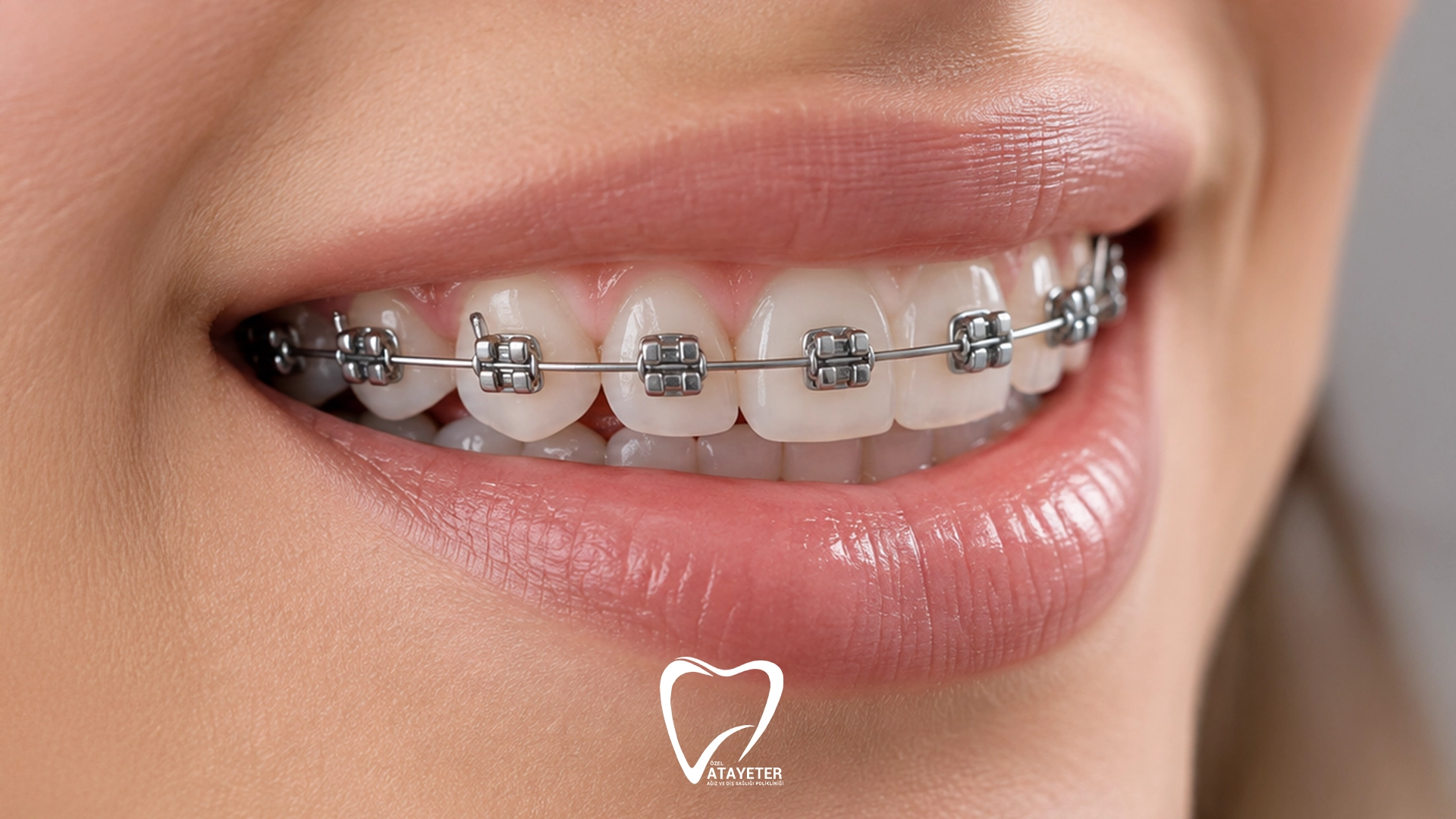
Braces treatment is an orthodontic method that uses brackets and orthodontic wires to move teeth into suitable positions.
Brackets are attached to the tooth surfaces, while orthodontic wires apply controlled forces that gradually move the teeth.
Traditional braces can be used to treat a wide range of orthodontic problems, from mild crowding to complex bite abnormalities.
Throughout treatment, regular appointments are conducted by an orthodontist. Wire changes, force adjustments, and additional orthodontic procedures may be performed when necessary.
Braces are fixed orthodontic appliances that cannot be removed by the patient. Therefore, they continue working throughout everyday activities.
What Are the Different Types of Braces?
Different bracket systems can be used in orthodontic treatment.
Metal braces: One of the most commonly used fixed orthodontic systems. Their durable structure allows them to be used in a wide range of orthodontic cases.
Ceramic braces: An option that uses tooth-colored brackets, making them potentially less noticeable than traditional metal braces.
Lingual braces: Fixed orthodontic appliances attached to the inner surfaces of the teeth. They are less visible from the outside but may not be suitable for every patient.
The choice of braces depends on the characteristics of the orthodontic problem, aesthetic expectations, and the individual treatment plan.
7 Key Differences Between Clear Aligners and Braces
When evaluating clear aligners vs braces, it is important to examine the different characteristics of both treatment methods in detail.
1. Differences in Aesthetic Appearance
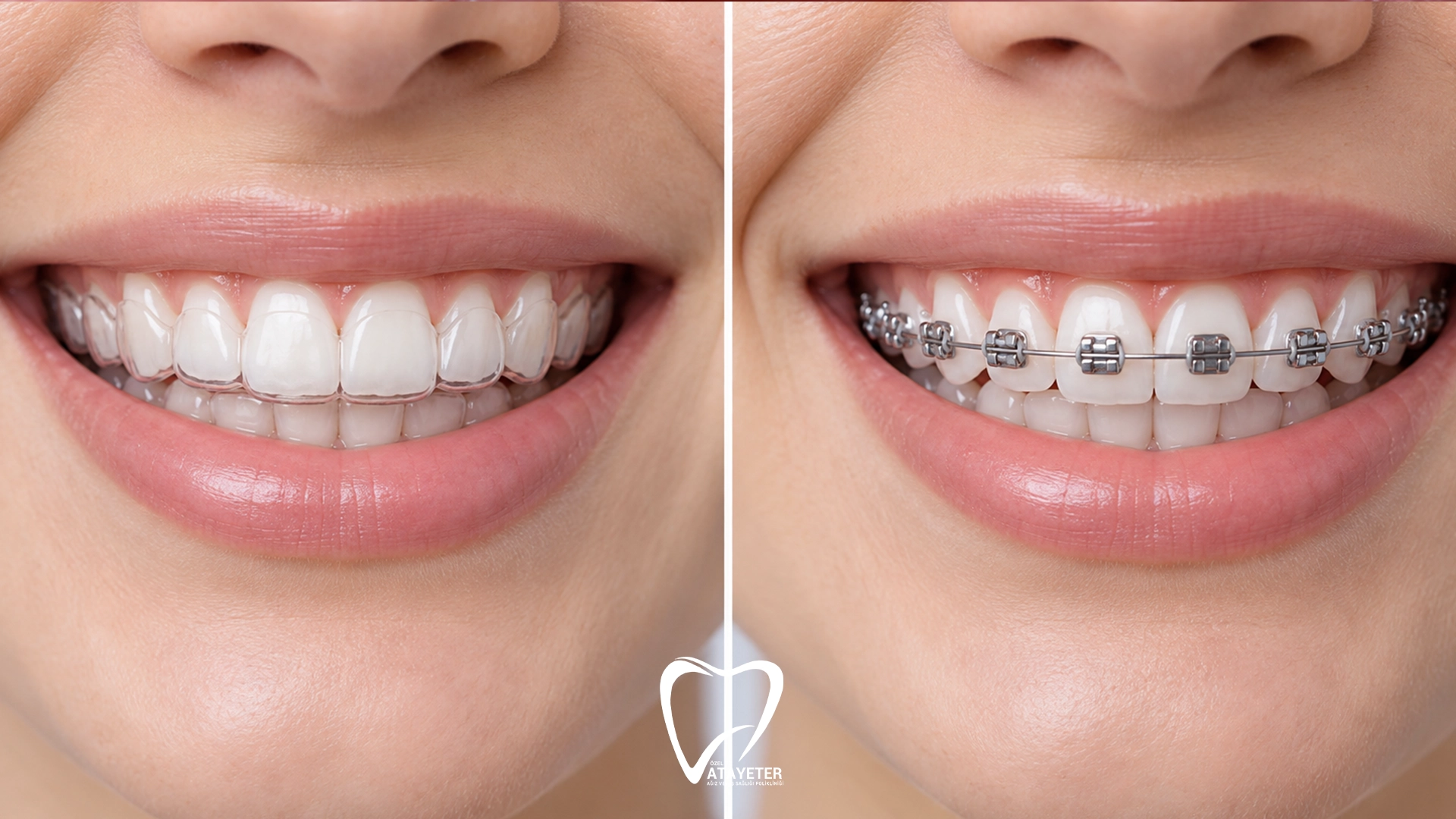
One of the most noticeable differences between clear aligners and braces is their appearance during treatment.
Clear aligners can largely preserve the natural appearance of teeth thanks to their transparent structure. They may be particularly suitable for individuals who are active in professional life, frequently attend meetings, or prefer their orthodontic treatment to be less noticeable.
With traditional metal braces, brackets and wires are more visible inside the mouth.
However, ceramic and lingual braces may provide alternative options for patients who have aesthetic concerns.
Therefore, while clear aligners generally offer an advantage in terms of appearance, less visible fixed orthodontic systems are also available.
2. Differences in Treatment Duration
One of the most common questions among people planning orthodontic treatment is: Clear aligners vs braces: which works faster?
Treatment duration depends on factors such as the severity of crowding, the tooth movements required, bite problems, and the patient’s compliance with treatment instructions.
In some mild orthodontic cases, clear aligner treatment may be completed in a relatively short period. However, more complex cases may require additional aligner sets and modifications to the treatment plan.
Braces may provide more direct control over certain tooth movements.
For this reason, it would be inaccurate to claim that clear aligners are always faster or that braces always provide results in a shorter period.
Treatment duration should be determined after a personalized orthodontic evaluation.
3. Differences in Comfort and Pain
Both treatment methods apply forces to move the teeth, which may cause pressure, sensitivity, or mild discomfort, particularly during the initial stages.
Because clear aligners do not contain brackets and wires, they may reduce certain types of mechanical irritation affecting the inner surfaces of the cheeks and lips.
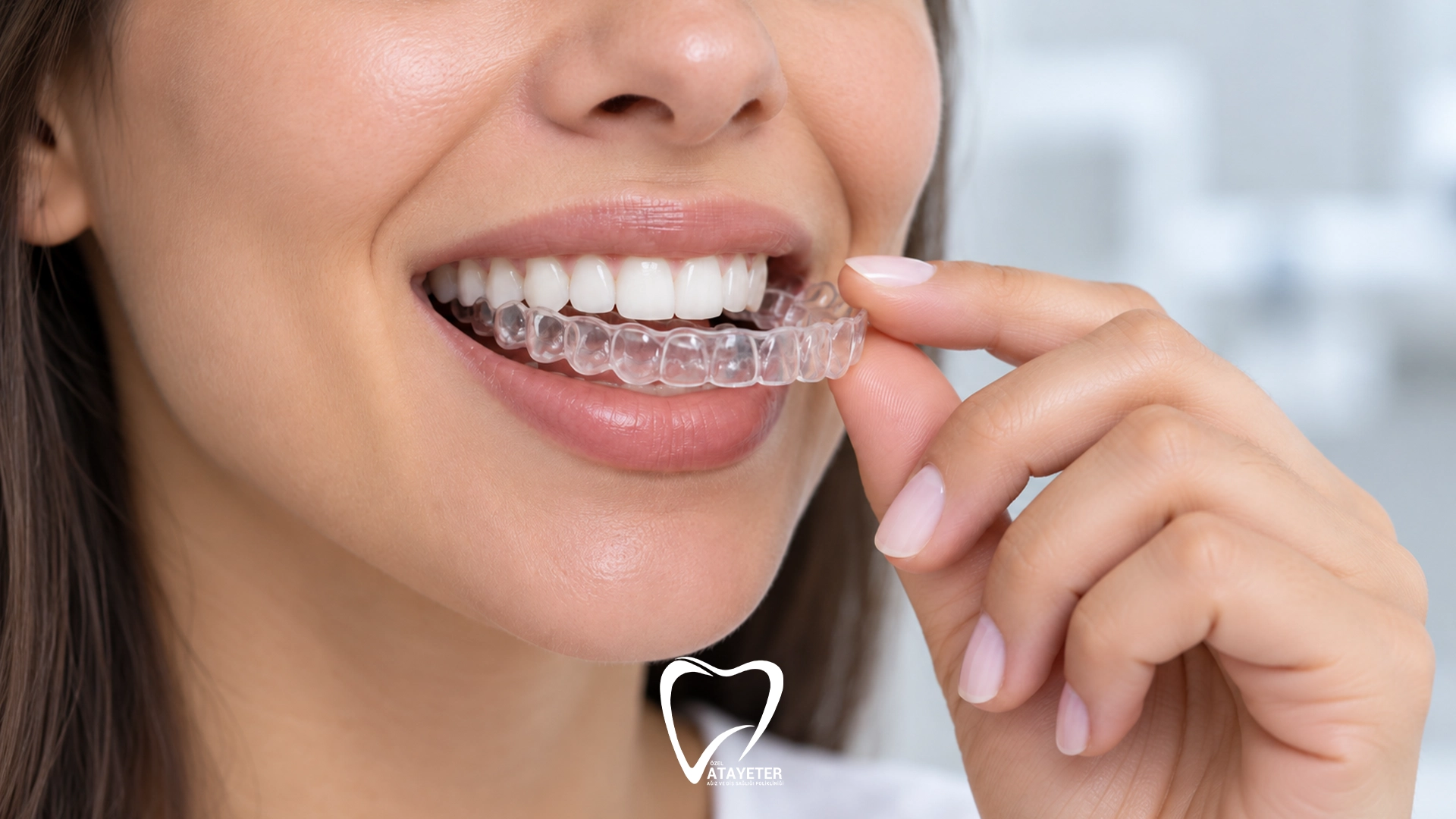
However, patients may experience pressure or sensitivity when switching to a new set of aligners.
With fixed braces, contact between brackets, wires, and the soft tissues of the mouth may cause irritation. An adjustment period is particularly common during the first few days of treatment.
Since pain tolerance and individual responses to tooth movement vary, neither method can be described as completely painless for every patient.
4. Differences in Eating and Dietary Habits
One of the main advantages of clear aligners is that they can be removed while eating.
This allows patients to maintain their usual dietary habits, provided they follow their orthodontist’s recommendations.
However, aligners must be removed during meals, and the teeth should be cleaned before the aligners are reinserted. Drinking sugary or hot beverages while wearing aligners may also cause problems.
With braces, patients need to be more careful when eating because the brackets and wires remain fixed to their teeth.
Very hard, sticky, or difficult-to-chew foods may damage brackets or other orthodontic components.
Therefore, clear aligners may provide greater flexibility for individuals who prefer fewer dietary restrictions.
5. Differences in Oral Hygiene
Maintaining proper oral hygiene is extremely important during orthodontic treatment.
Because clear aligners can be removed, brushing and flossing may be easier than with fixed braces.
However, the aligners themselves must also be cleaned using appropriate methods. Insufficient cleaning may contribute to unpleasant odors and hygiene problems.
With braces, food particles and plaque can accumulate around brackets and wires.
As a result, patients may need orthodontic toothbrushes, interdental brushes, and specialized cleaning techniques.
Poor oral hygiene with either treatment method may increase the risk of dental cavities and gum problems.
6. Differences in Patient Compliance and Daily Discipline
Daily habits are an important consideration when deciding between clear aligners vs braces.
For clear aligner treatment to progress successfully, patients must wear their aligners for the number of hours recommended by their orthodontist.
Removing the aligners too frequently or failing to wear them long enough may negatively affect the planned tooth movements.
With braces, the appliances remain fixed to the teeth and cannot be removed by the patient.
This may make fixed orthodontic treatment worth considering for individuals who might struggle to maintain a consistent aligner-wearing routine.
However, patients with braces must still follow oral hygiene recommendations, take care when eating, and attend scheduled orthodontic appointments.
7. Differences in the Orthodontic Problems They Can Treat
Clear aligners and braces can be used to treat different types of orthodontic problems.
Clear aligners may be effective in suitable cases involving crowded teeth, gaps between teeth, and certain bite abnormalities.
Braces may be preferred for complex tooth movements, significant rotations, and some advanced orthodontic conditions.
However, this distinction is not absolute. Modern orthodontic techniques and auxiliary procedures have made it possible to treat certain complex problems using clear aligners as well.
The suitability of either method depends on a detailed assessment of the patient’s teeth and jaw structure.
Clear Aligners vs Braces: Comparison Table
| Feature | Clear Aligners | Braces |
|---|---|---|
| Appearance | Less noticeable | More visible, especially metal braces |
| Removability | Removable | Generally fixed |
| Daily use | Requires consistent patient compliance | Remains attached to the teeth |
| Eating | Removed during meals | Certain foods require caution |
| Oral hygiene | May be easier because aligners can be removed | Additional cleaning tools may be necessary |
| Comfort | No bracket-related irritation | Brackets and wires may cause irritation |
| Treatment suitability | Depends on case characteristics | Suitable for a wide range of orthodontic problems |
| Treatment duration | Varies by patient | Varies by patient |
| Cost | Depends on the treatment plan | Depends on the system and treatment plan |
This comparison is intended for general information. The final treatment decision should be made following a professional orthodontic examination.
Who Is Clear Aligner Treatment Suitable For?
Clear aligner treatment may be considered for individuals with suitable orthodontic problems who can consistently comply with wearing removable appliances.
Adults and some younger patients who are particularly concerned about aesthetic appearance may be interested in clear aligner treatment.
Conditions that may be treated with clear aligners include mild to moderate crowding, gaps between teeth, certain tooth rotations, and selected bite abnormalities.
However, having one of these conditions does not automatically mean that clear aligners will be appropriate.
The positions of tooth roots, jaw relationships, bone support, and the characteristics of the necessary tooth movements must also be evaluated.
Patients who can wear their aligners for the recommended number of hours each day may find it easier to comply with the planned treatment.
Who Is Braces Treatment Suitable For?
Braces are an effective orthodontic treatment option that can be considered for different levels of dental irregularity.
Fixed orthodontic systems may be preferred, particularly when certain complex tooth movements are required.
Braces may be more suitable for severe crowding, specific bite abnormalities, or cases requiring precise control over tooth movements.
Fixed appliances may also offer advantages for patients who might struggle to wear removable aligners consistently.
However, braces should not be considered the only solution for every complex orthodontic problem.
In some cases, alternative orthodontic appliances, auxiliary procedures, or surgical evaluation may form part of the treatment plan.
The most appropriate answer to clear aligners vs braces depends on the nature of the orthodontic problem and the treatment objectives.
Clear Aligners vs Braces: Which Treatment Is Faster?
People considering orthodontic treatment often want their treatment to be completed as quickly as possible.
However, the fastest treatment is not necessarily the most appropriate one.
Tooth movements must be performed in a controlled manner and within appropriate biological limits.
While clear aligner treatment may be completed relatively quickly in some mild cases, fixed braces may provide more suitable movement control in certain complex cases.
During clear aligner treatment, failing to follow wear instructions, aligners not producing the planned movements, or the need for additional refinement aligners may extend treatment duration.
Similarly, broken brackets, missed appointments, and oral hygiene problems can negatively affect the progress of braces treatment.
Therefore, an orthodontic examination and personalized treatment planning are necessary to provide a realistic estimate of treatment duration.
Clear Aligners vs Braces: Which Is More Affordable?
The question clear aligners vs braces: which is more affordable? is frequently researched by patients comparing orthodontic treatment options.
Orthodontic treatment costs vary depending on several factors.
Factors that may affect the price include:
- The severity of dental crowding and bite abnormalities.
- The estimated treatment duration.
- The characteristics of the aligner or bracket system used.
- The number of aligners required and any additional refinement stages.
- The need for auxiliary orthodontic appliances or procedures.
- Retention procedures following active treatment.
- Clinical assessment and personalized treatment planning.
In some cases, clear aligner treatment may cost more than conventional metal braces. However, this is not necessarily true for every treatment plan.
Ceramic brackets, lingual orthodontic systems, and different treatment requirements may influence the overall cost comparison.
Therefore, patients should not make their decision based solely on the initial treatment price.
It is also important to evaluate the treatment scope, follow-up appointments, additional procedures, and whether post-treatment retention is included in the overall cost.
Is Clear Aligner Treatment Painful?
During clear aligner treatment, patients may experience pressure or mild sensitivity, particularly when transitioning to a new aligner set.
This occurs because the aligners apply controlled forces to move the teeth.
For many individuals, this sensitivity is temporary, although its intensity may vary.
The edges of clear aligners may also cause discomfort to the tongue or cheeks in some patients.
If pain becomes severe, progressively worsens, or persists for an extended period, the patient should contact their orthodontist.
Patients should avoid changing their prescribed aligner-wearing schedule without professional advice.
Does Getting Braces Hurt?
Attaching orthodontic brackets to the tooth surfaces is generally not a painful procedure.
However, pressure and sensitivity may develop during the days following the placement of orthodontic wires.
Discomfort may be particularly noticeable when chewing firm foods.
Contact between the brackets and the inner surfaces of the lips and cheeks may also cause irritation during the initial adjustment period.
Orthodontic wax or other care methods recommended by the orthodontist may help reduce this discomfort.
Pressure and sensitivity associated with braces generally decrease over time.
However, severe pain or a broken orthodontic appliance requires professional evaluation.
What Should Be Done Before Clear Aligner or Braces Treatment?
Before beginning orthodontic treatment, the health of the teeth and gums should be evaluated.
During this stage, the dentist examines the mouth for cavities, gum disease, plaque accumulation, and other problems that may affect treatment planning.
Dental radiographs, intraoral photographs, digital scans, and impressions may be obtained when necessary.
During the orthodontic evaluation, the alignment of the teeth, relationships between the jaws, and bite characteristics are analyzed.
Existing oral health problems should be brought under control before orthodontic treatment begins.
For example, patients with active gum disease may require an assessment of their periodontal condition before orthodontic tooth movement is initiated.
The patient’s expectations and daily habits should also be considered when preparing the treatment plan.
This allows the development of an appropriate treatment approach from both aesthetic and functional perspectives.
Clear Aligners vs Braces for Adults: Which Should Be Preferred?
When planning orthodontic treatment for adults, several factors must be considered, including aesthetic expectations, gum health, and existing dental restorations.
People who are particularly active in professional environments may prefer appliances that are less noticeable during treatment.
For this reason, clear aligners may be an attractive option for adult patients.
However, some adults may have severe crowding, bite problems, or other complex orthodontic needs.
In such cases, braces or alternative orthodontic approaches may be more appropriate.
Evaluating gum health and bone support before orthodontic treatment is especially important in adult patients.
Orthodontic treatment can also be performed in adulthood when periodontal conditions are healthy and suitable.
Therefore, treatment selection should not be based solely on a person’s age.
Clear Aligners vs Braces for Children and Teenagers
Orthodontic treatment decisions for children and teenagers are closely related to dental development and jaw growth.
Clear aligners may be suitable for some younger patients, while fixed braces or other orthodontic appliances may be preferred in certain situations.
Evaluating jaw relationships during growth and development is particularly important.
The ability to wear removable appliances consistently should also be considered when choosing treatment.
Whether a child can wear their aligners for the prescribed number of hours may be a determining factor in treatment compliance.
With braces, the requirements for daily compliance are different, but attention must still be paid to oral hygiene and dietary habits.
The most suitable orthodontic method for children and adolescents should be determined after a professional orthodontic evaluation.
Clear Aligners vs Braces: Which Provides Longer-Lasting Results?
The question clear aligners vs braces: which provides longer-lasting results? cannot be answered based solely on the orthodontic appliance used.
After orthodontic treatment, retention may be necessary to maintain the teeth in their new positions.
Retention treatment may involve removable retainers or fixed retention wires attached to the back surfaces of the teeth.
These appliances are intended to reduce the risk of teeth moving again after active orthodontic treatment has been completed.
If retainers are not used as recommended, teeth may gradually shift and become misaligned again.
Therefore, patients should follow the retention plan prescribed by their orthodontist after both clear aligner and braces treatment.
Factors influencing long-term treatment success include the initial positions of the teeth, the movements performed, oral health, and compliance with retention instructions.
Consequently, neither treatment method can be considered universally more permanent for every patient.
What Should You Pay Attention to After Orthodontic Treatment?
Completing orthodontic treatment does not mean that oral care and dental appointments are no longer necessary.
After treatment, it is important to maintain the new positions of the teeth and continue protecting oral health.
During this period, retainers should be worn according to the dentist’s or orthodontist’s recommendations.
Regular brushing, interdental cleaning, and maintaining healthy gums are essential for long-term oral health.
Patients with fixed retention wires should also have the condition of these wires and the hygiene of the surrounding areas checked regularly.
Removable retainers should be cleaned appropriately, protected from excessively hot water, and stored in suitable cases when not in use.
If new tooth movements or problems with the retention appliances are noticed after treatment, an orthodontist should be consulted.
Frequently Asked Questions About Clear Aligners and Braces
Clear Aligners vs Braces: Which Is Better?
Both methods can provide effective orthodontic results in suitable patients.
Clear aligners may offer advantages in appearance and removability, while braces may be more appropriate for certain complex tooth movements.
The best decision should be made following an orthodontic examination.
Are Clear Aligners as Effective as Braces?
In suitable cases, clear aligner treatment can achieve goals similar to those of braces treatment.
However, not all orthodontic problems are the same.
Some complex tooth movements may require fixed appliances or additional treatment techniques.
How Many Months Do Clear Aligners Take to Straighten Teeth?
The duration of clear aligner treatment depends on the severity of dental irregularities and the movements required.
Some mild cases may be completed within a few months, while more comprehensive treatments may take longer than a year.
The exact duration depends on the personalized treatment plan.
How Many Years Does Braces Treatment Take?
The duration of braces treatment varies according to the characteristics of the orthodontic problem.
Many orthodontic treatments may take approximately one to two years, although shorter or longer periods may be necessary.
Patient compliance and regular follow-up appointments can also influence treatment duration.
How Many Hours a Day Should Clear Aligners Be Worn?
Clear aligners generally need to be worn for approximately 20–22 hours daily.
Many treatment protocols aim for 22 hours of daily use.
However, patients should follow the specific wearing schedule recommended by their orthodontist.
Can You Eat While Wearing Clear Aligners?
Clear aligners should normally be removed before eating.
After meals, the teeth should be cleaned before the aligners are reinserted.
This helps protect the aligners and maintain proper oral hygiene.
Do Clear Aligners Affect Speech?
Some patients may notice temporary changes in the pronunciation of certain sounds during the first few days of wearing clear aligners.
Speech generally becomes more natural as the patient adjusts to the appliances.
If speech difficulties persist, an orthodontist should be consulted.
Can Braces Damage Teeth?
Orthodontic treatments that are properly planned and monitored are generally considered safe.
However, inadequate oral hygiene, uncontrolled gum problems, or certain biological factors may contribute to unwanted complications.
Regular orthodontic appointments are therefore important.
Can Clear Aligner Treatment Be Performed at Any Age?
Clear aligner treatment may be considered for suitable children, teenagers, and adults.
However, age alone does not determine treatment suitability.
Oral health, dental development, and the characteristics of the orthodontic problem must also be evaluated.
Clear Aligners vs Braces: Which Is Less Painful?
Clear aligners may reduce certain types of soft tissue irritation caused by brackets in some patients.
However, both methods involve tooth movement and may cause temporary sensitivity.
The amount of discomfort varies from person to person.
Can Teeth Become Crooked Again After Clear Aligner Treatment?
Yes. Teeth may gradually shift if appropriate retention treatment is not provided or if patients do not follow retention recommendations.
This can also happen after braces treatment.
Using retainers as prescribed by the orthodontist is important for maintaining treatment results.
Clear Aligners vs Braces: Which Is Cheaper?
Treatment costs vary according to the orthodontic system selected, case complexity, treatment duration, and additional procedures required.
Therefore, it is not possible to claim that one method is always more affordable for every patient.
Conclusion: Clear Aligners vs Braces — Which Should You Choose?
The answer to clear aligners vs braces depends on the patient’s orthodontic needs, oral and dental health, aesthetic expectations, and daily lifestyle habits.
Clear aligner treatment may offer several advantages, including a less noticeable appearance, a removable design, and easier access to teeth during daily oral hygiene.
Braces remain an important treatment option because of their fixed structure and suitability for a wide range of orthodontic problems.
Both methods have their own advantages and limitations. Therefore, the decision should be based not only on appearance or cost but also on the characteristics of the orthodontic condition and long-term oral health.
As discussed in this guide prepared for Atayeter Dental Clinic, a comprehensive evaluation of the teeth and jaws is necessary to develop an appropriate orthodontic treatment plan.
Individuals experiencing crowded teeth, gaps between teeth, or bite abnormalities may benefit from an orthodontic consultation to learn about suitable treatment options.
It is important to remember that orthodontic treatment is not solely intended to create a more attractive smile. Improving functional dental relationships, maintaining oral health, and supporting long-term treatment outcomes are also essential goals.
Atayeter Dental Clinic is a healthcare facility where individuals can seek professional dental assessments and obtain information about suitable treatment options.
To achieve a healthy, balanced, and aesthetically pleasing smile, the orthodontic treatment method should be selected according to each patient’s individual needs.
Comments are closed