







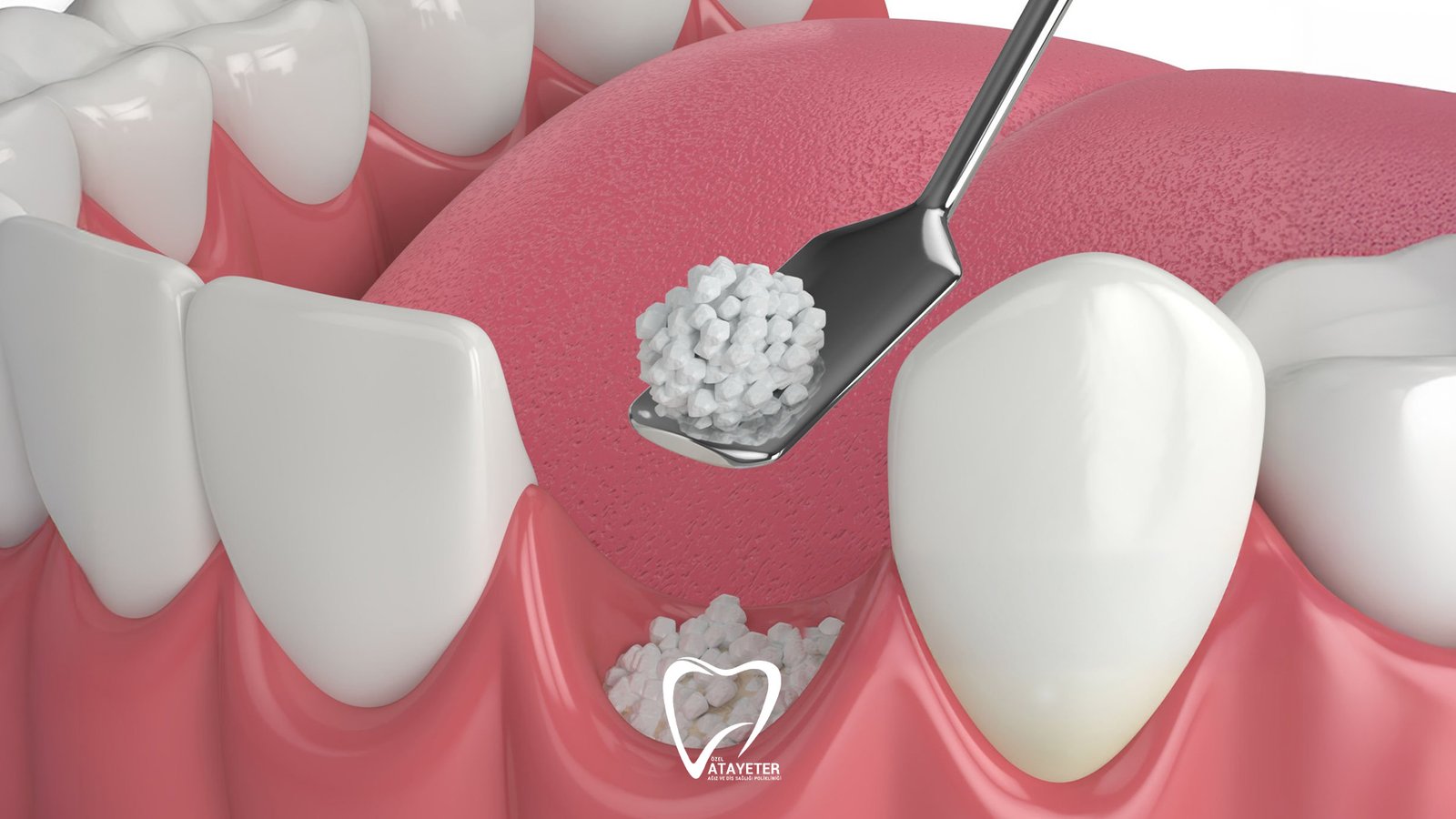
What Is Bone Grafting Treatment? A Quiet but Very Important Procedure
When we experience a dental problem, the treatments that usually come to mind are more “visible” procedures such as fillings, root canal treatment, or crowns. However, behind a healthy smile lies a structure that often goes unnoticed but is just as important as the teeth themselves: the jawbone. This bone structure holds our teeth in place and provides them with strength and balance. When it weakens or begins to resorb, even the strongest teeth can be put at risk. Bone grafting treatment is a special procedure that targets this hidden problem and aims to protect your oral health in the long term.
The term bone grafting treatment may sound unfamiliar or even a bit intimidating at first. In reality, however, it is a controlled and carefully planned procedure designed to support the body’s natural structure. Conditions such as tooth loss, long-standing gum disease, trauma, or bone resorption that occurs over time after tooth extraction can cause the jawbone to lose its original volume. This can make future implant treatments more difficult or prevent dentures from fitting properly. Bone grafting treatment aims to support the lost bone tissue and create a stronger foundation in the mouth.
In fact, many of us live with bone loss without even realizing it. After a tooth extraction, we may think, “the gap will eventually close,” without knowing that the bone tissue in that area is slowly shrinking. Over time, this can affect not only that specific area but also neighboring teeth and the overall jaw structure. Bone grafting treatment is an important step precisely to stop this silent process and strengthen the jawbone once again.
What Is Bone Grafting Treatment?
Bone grafting treatment is a specialized dental procedure used to compensate for bone loss in the jaw and to strengthen the affected area again. It is most commonly needed after tooth extractions or in individuals who have lived with missing teeth for a long time. This is because the jawbone works together with the teeth; the tooth root applies regular pressure to the bone, helping it maintain its vitality. When a tooth is lost, this natural stimulation disappears, and the bone tissue gradually begins to lose volume, a process known as resorption.
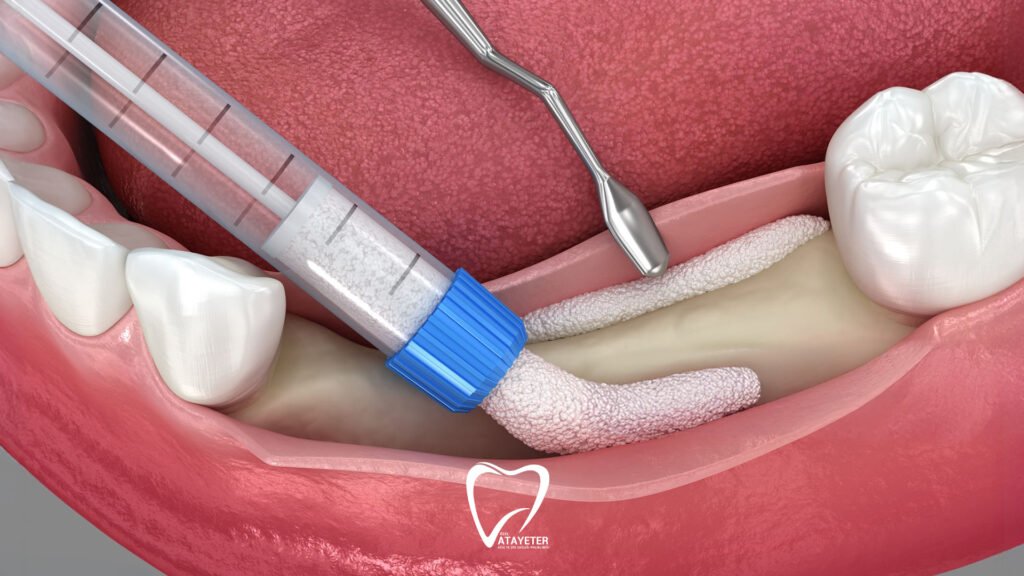
This is exactly where bone grafting treatment comes into play. The bone graft material used in this procedure is a special biomaterial that helps the bone regenerate itself. It is not used to create an exact copy of the lost bone; rather, it guides the body’s own bone cells to the area and encourages them to work. In a way, it acts as a guide that tells the body, “new bone should form here.”
The main goal of bone graft application is to restore volume and strength to the jawbone. This creates a solid foundation for future treatments such as dental implants and helps maintain the natural balance of the oral structure. Bone loss is not limited to one area; over time, it can affect tooth alignment, jaw structure, and even facial contours.
Why Does Bone Loss Occur?
Bone loss often progresses silently, and most people do not notice it in their daily lives. Since there is usually no pain or obvious complaint, everything may seem fine—until one day, when implant treatment is considered and the dentist says, “there is not enough bone in this area.” In fact, this is the late realization of a process that has been ongoing for a long time.
One of the most common causes of bone loss is living with missing teeth for an extended period. When the gap left after a tooth extraction is neglected, the jawbone gradually loses its function. Gum disease is another major factor that accelerates this process. Especially in advanced periodontal problems, bone tissue slowly becomes damaged. In addition, tooth loss due to trauma or impact, infections, and poorly fitting dentures or bridges can also contribute to bone resorption.
The jawbone is actually a very active structure; it stays strong thanks to the pressure it receives from tooth roots. When a tooth is extracted, this natural stimulation disappears, and because the bone is “no longer used,” it gradually begins to lose volume. Since this process happens slowly, most people remain unaware of it.
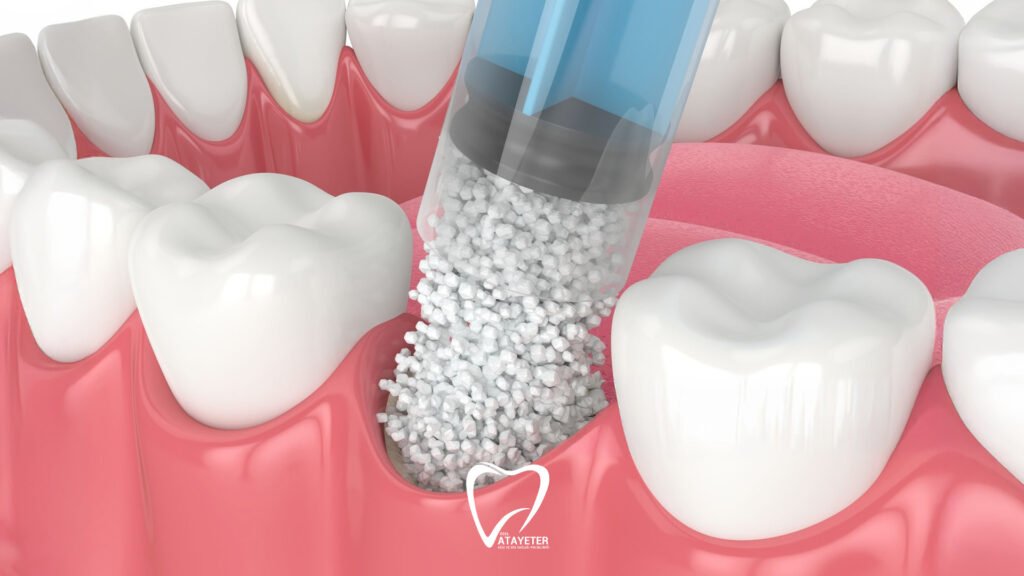
What Does Bone Graft Material Do?
Bone graft material does not create “new bone” on its own; its primary role is to prepare a suitable environment for the body to rebuild its own bone. This applied material works like a guide. The body begins to produce its own bone cells around the graft material, and over time, this structure integrates with the natural bone tissue. As the process continues, the bone graft material gradually gives way to real, living bone.
This makes it possible to restore the bone volume needed, especially in areas planned for implant placement. When adequate bone support is provided, the implant can anchor much more securely, increasing the success of the treatment. At the same time, supporting the jawbone and gum tissue helps prevent future collapse and loss of shape. This is important not only for health but also for aesthetics, as it helps preserve a natural facial appearance and smile.
Another important benefit of bone grafting treatment is that it helps dental restorations last longer. A strong bone structure allows both dentures and implants to be used safely for many years.
When Is Bone Grafting Treatment Applied?
Bone grafting treatment is not a procedure that is automatically applied to every patient; it is usually preferred when specific needs arise. One of the most common situations is implant planning. If there is insufficient bone support in the area where an implant is planned, achieving a healthy and long-lasting result becomes difficult. In such cases, bone grafting is used to strengthen the area and create a solid foundation.
Another common application is after tooth extraction. Following extraction, the resulting gap can lead to bone loss over time. To control this process from the very beginning, bone graft material can be applied immediately after extraction, significantly reducing bone resorption. In advanced gum disease, where bone tissue has been damaged, this treatment can also be used to restore lost support.
In the upper jaw, especially in the back regions close to the sinuses, bone height may be insufficient when planning implants. In such cases, bone graft material is used during sinus lifting procedures to increase the necessary bone volume. Of course, every oral structure and every need is different.
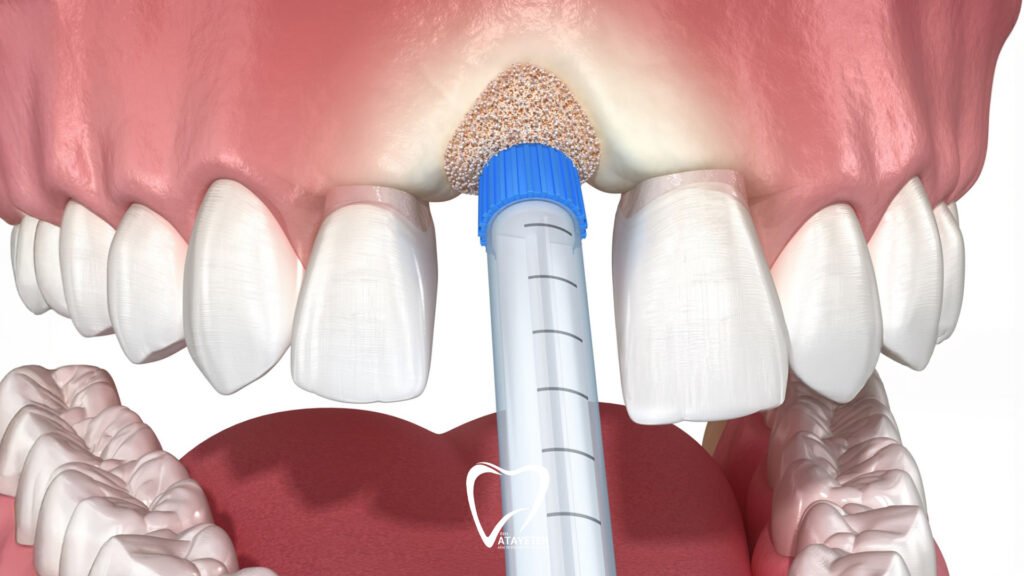
How Is Bone Grafting Treatment Performed?
Bone grafting treatment is generally performed with patient comfort as a priority. The procedure is usually carried out under local anesthesia, meaning no pain is felt during the treatment. The patient may only perceive the dentist’s intervention as a mild pressure or touch, showing that the process is not as difficult as it may seem.
Before starting the treatment, the area to be treated is carefully prepared and cleaned. Then, the planned amount of bone graft material is placed precisely into the area where bone is missing. In some cases, this material is covered with a special membrane to keep it stable and protected. This membrane shields the graft from external factors while also supporting new bone formation. Finally, the gum tissue is closed, and the procedure is completed.
Bone Grafting Treatment Costs
Bone grafting treatment costs cannot be expressed with a single standard price. This is because the cost is shaped entirely by the individual’s oral structure and the scope of the required procedure. Factors such as the amount of bone loss, the size of the area to be treated, the type of bone graft material used, and whether the procedure is performed alone or together with another treatment all influence the final cost.
In some patients, a minimal application in a very small area may be sufficient, while in others, more extensive support may be needed. Additionally, whether bone grafting is performed in the same session as a tooth extraction or requires separate planning before implant treatment can also affect both the process and the cost. For this reason, relying on hearsay or fixed prices found online can often be misleading.
The most accurate cost information is determined after a detailed examination and the necessary imaging. This allows a treatment plan tailored to your needs to be created and provides a clear roadmap without unexpected surprises..
Comments are closed