







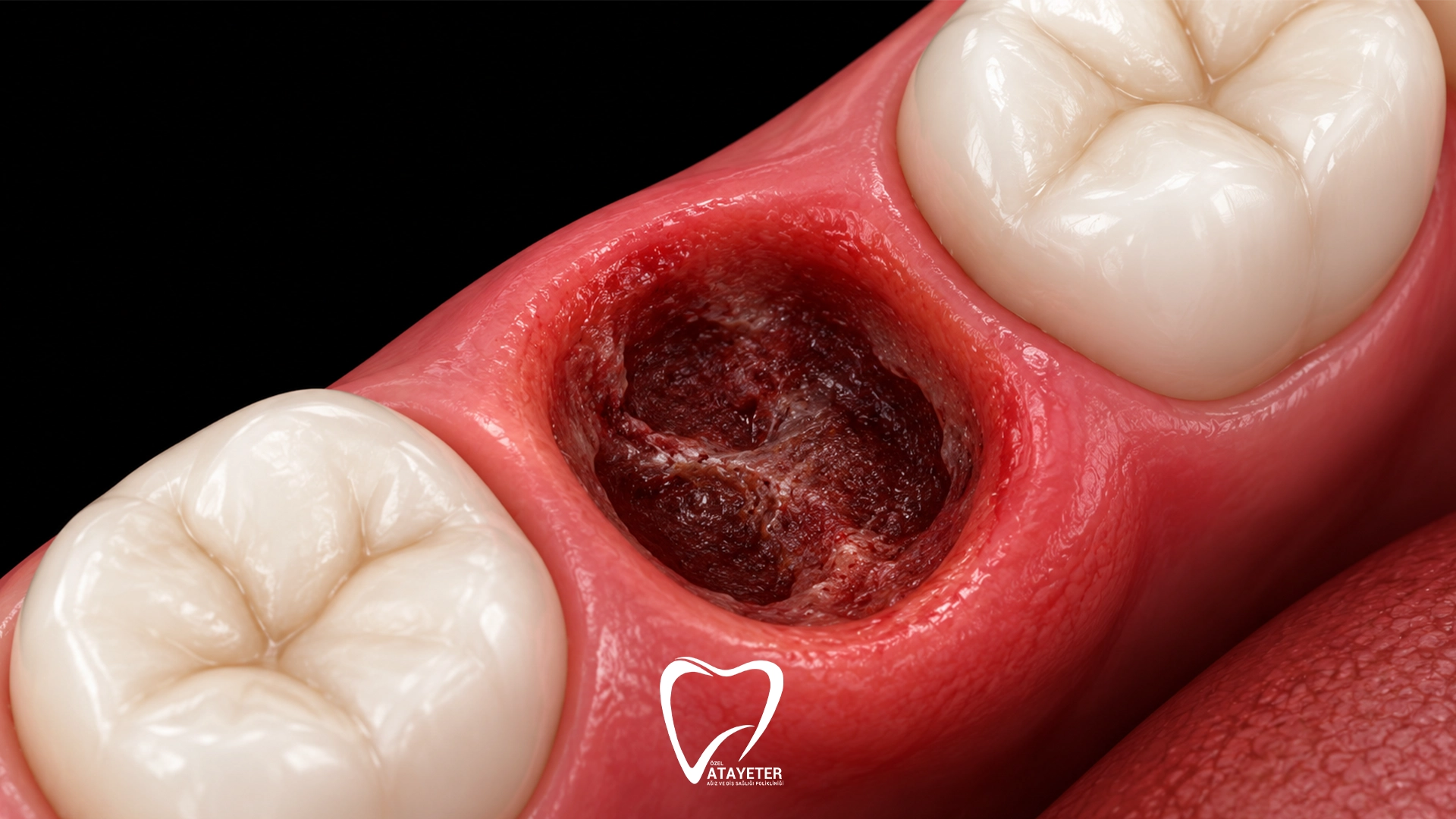
After tooth extraction, the healing process proceeds without complications in most patients. However, in some cases, a painful condition may develop because the blood clot that should form in the extraction site is lost too early, dissolves, or does not form adequately. Commonly known as dry socket, and referred to in dentistry as alveolar osteitis or alveolitis, this condition may present with severe pain that typically begins a few days after tooth extraction.
For this reason, it is important for people who have undergone tooth extraction to know the answers to questions such as what is dry socket, why it occurs, what its symptoms are, and when it is necessary to see a dentist.
In this comprehensive guide prepared for Atayeter Dental Clinic, we will examine in detail what is dry socket, the symptoms of alveolitis, the causes of dry socket, treatment options, and the points that should be considered after tooth extraction.
This content is intended for general informational purposes only. If you experience severe or progressively worsening pain after tooth extraction, you should consult a dentist for a personal evaluation.
What Is Dry Socket?
Dry socket is a painful healing complication that may occur after tooth extraction. When a tooth is removed, a blood clot forms in the socket where the tooth used to be. This clot helps protect the bone and nerve endings in the extraction area and is a natural part of the healing process.
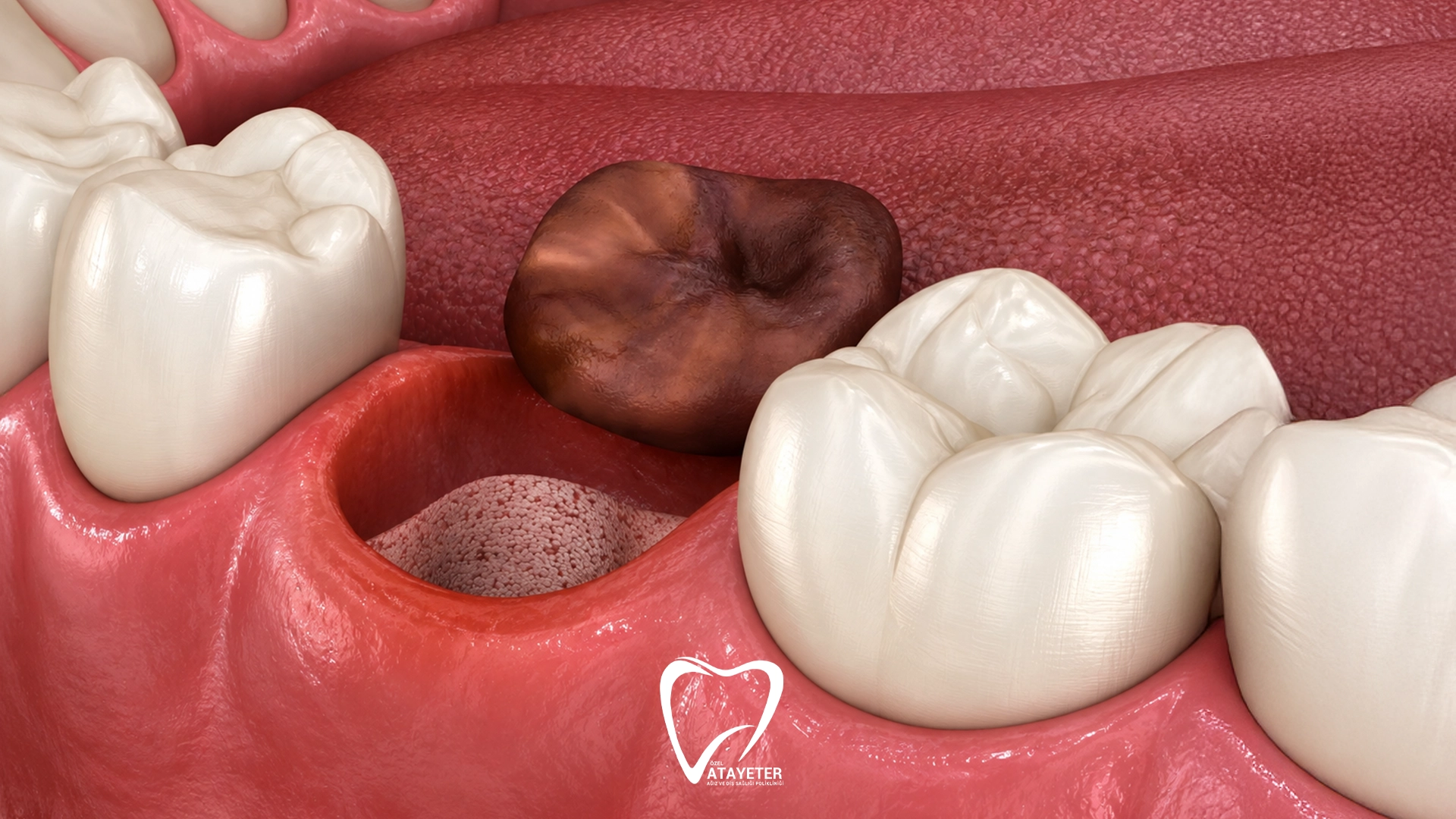
However, in some cases, this blood clot may fail to form, break down too early, or become dislodged from the extraction site.
As a result, the bone and sensitive tissues inside the socket may become more exposed to external factors. This can lead to intense and uncomfortable pain.
Medically known as alveolar osteitis, dry socket usually develops a few days after tooth extraction.
It is one of the complications that can occur more frequently after wisdom tooth extractions.
What Is Alveolitis?
The term alveolitis is related to the alveolus, the bony socket in which the tooth was located.
When the healing process that begins in this area after tooth extraction is disrupted for various reasons, alveolar osteitis may develop.
The commonly used term dry socket essentially refers to this condition.
However, not every case of pain after tooth extraction means that alveolitis has developed.
A certain degree of tenderness and pain may be considered normal after tooth extraction. In dry socket, however, the pain usually becomes more pronounced than expected during the normal healing process and may increase over time instead of decreasing.
How Does Dry Socket Develop?
After a tooth is extracted, the body naturally forms a blood clot in the extraction area.
This clot has several important functions.
First, it helps prevent the bone in the extraction site from being exposed. It also creates a suitable environment for the healing process to begin.
The area then gradually heals with the formation of new tissue.
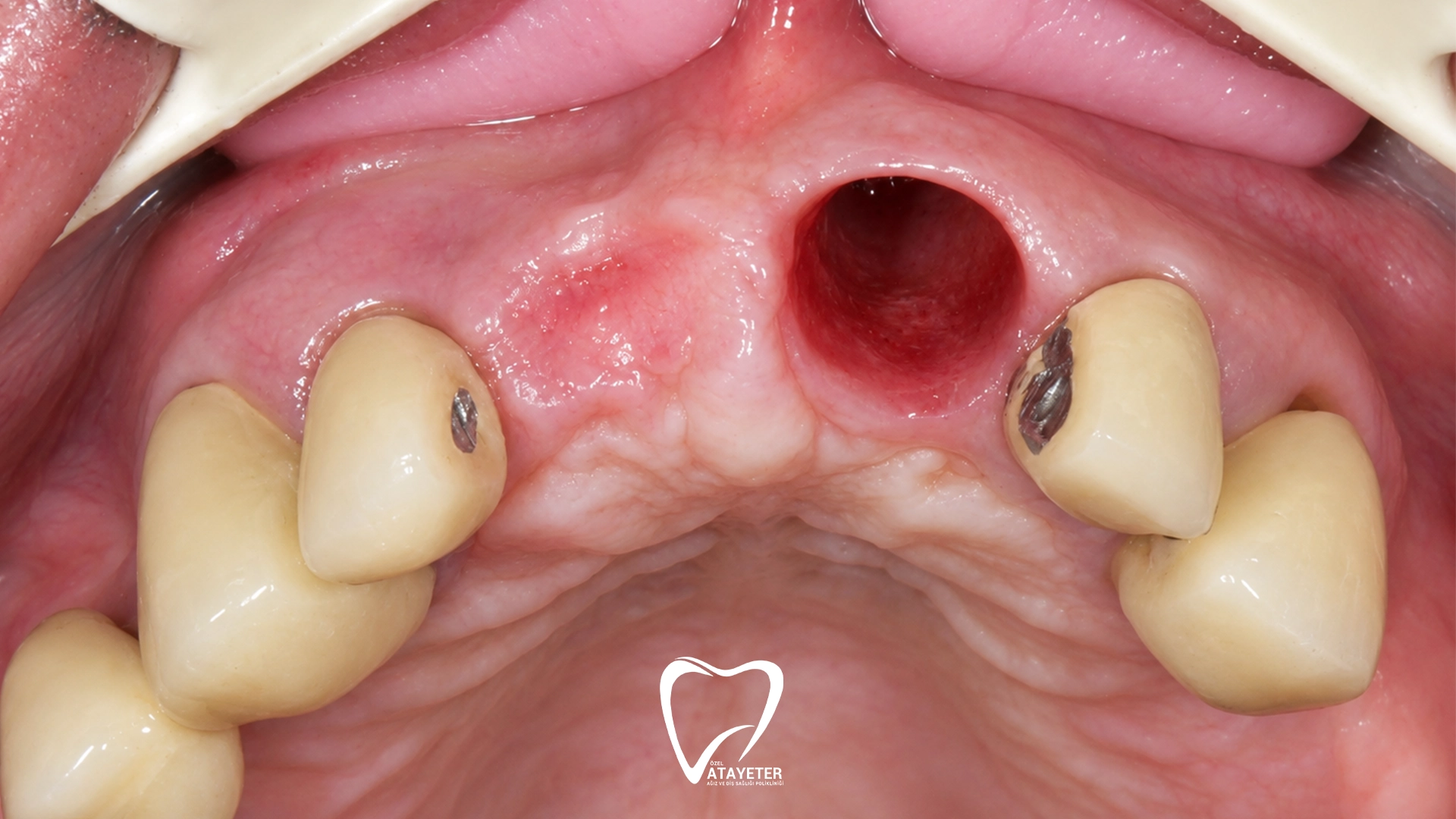
However, if the blood clot is lost too early or does not form adequately, the bone surface inside the socket may become exposed.
This may create conditions that contribute to the development of dry socket.
What Are the Symptoms of Dry Socket?
Dry socket symptoms may vary from person to person. However, the most characteristic finding is usually pain that begins or becomes progressively more severe a few days after tooth extraction.
The most common symptoms may include:
- Severe pain that begins a few days after tooth extraction,
- Pain that progressively worsens,
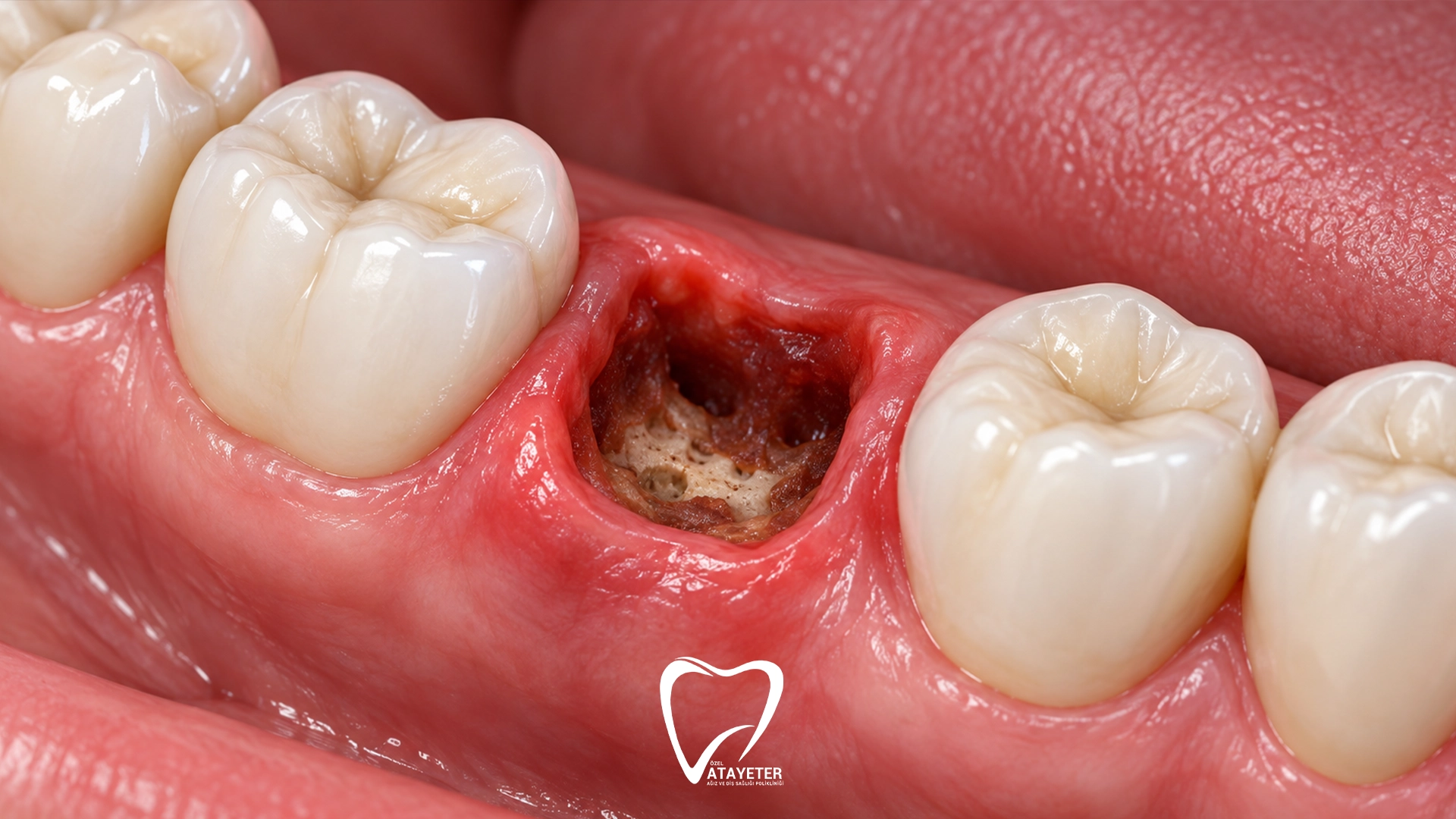
- An empty-looking extraction socket,
- Absence of a visible blood clot in the socket,
- Visible exposed bone,
- Pain radiating to the ear, temple, or jaw,
- An unpleasant taste in the mouth,
- Bad breath,
- Marked tenderness in the extraction area.
If your pain initially decreases after tooth extraction but then begins to worsen significantly after a few days, it is important to contact your dentist.
What Does Dry Socket Pain Feel Like?
Pain is one of the most important symptoms of dry socket.
After a normal tooth extraction, pain generally tends to decrease over time. When dry socket develops, however, the opposite pattern may occur.
A patient may feel relatively better on the first day, while the pain becomes more severe on the second, third, or following days.
The pain may not be limited to the extraction area.
Especially after lower jaw tooth extractions, pain may radiate to the ear, temple, or other areas of the jaw.
Some patients may describe the pain as throbbing, deep aching, or persistent discomfort.
However, it is not appropriate to diagnose dry socket based only on the character of the pain.
A definitive evaluation should be made by a dentist.
How Many Days After Tooth Extraction Does Dry Socket Appear?
Dry socket usually does not develop immediately after tooth extraction.
In most cases, symptoms become noticeable within a few days after the extraction.
For example, a person may experience normal healing symptoms during the first few days and then notice that the pain becomes significantly worse.
For this reason, changes in the healing process should be monitored carefully, especially during the first week after tooth extraction.
However, the exact timing may vary from patient to patient.
What Causes Dry Socket?
There is no single cause of dry socket. Various factors that affect the protection of the blood clot in the extraction site may increase the risk.
Some of these factors include:
Smoking
Smoking and other tobacco products can negatively affect the healing of oral tissues.
In addition, the suction movement created while smoking may disturb the blood clot in the extraction site.
For this reason, smoking after tooth extraction is considered one of the important risk factors for dry socket.
Repeatedly Touching the Extraction Area
After tooth extraction, patients may feel tempted to check the socket with their tongue out of curiosity.
However, repeatedly touching the extraction area may negatively affect the healing process.
Touching the socket with a finger may also introduce bacteria into the area.
Forceful Spitting
Spitting forcefully immediately after tooth extraction may change the pressure inside the mouth.
For this reason, it is important to follow your dentist’s instructions, especially during the first few hours.
Vigorous Rinsing
Rinsing the mouth vigorously immediately after tooth extraction may dislodge the blood clot.
Therefore, your dentist’s recommendations regarding when and how to rinse should be followed.
Traumatic or Difficult Tooth Extractions
Some tooth extractions are more complex than others.
In particular, the removal of impacted or partially impacted wisdom teeth may require a more extensive surgical procedure.
In such cases, the healing process should be monitored carefully.
Can Dry Socket Occur After Wisdom Tooth Extraction?
Yes. Dry socket is one of the complications that can occur after wisdom tooth extraction.
Lower wisdom teeth, in particular, may sometimes need to be removed surgically.
The size of the extraction area, the extent of the surgical procedure, and the patient’s individual risk factors may influence the likelihood of developing dry socket.
However, this does not mean that every patient who has a wisdom tooth removed will develop alveolitis.
Following your dentist’s postoperative recommendations may help support a healthy healing process.
How Is Dry Socket Diagnosed?
A definitive diagnosis of dry socket is made by a dentist.
Your dentist may examine the extraction area and evaluate the condition of the blood clot, the appearance of the socket, and the surrounding tissues.
The timing and character of the pain may also be important in diagnosis.
In some cases, additional evaluation may be required to make sure the pain is not caused by another condition.
For this reason, it is not advisable to try to diagnose dry socket at home simply by looking at the area in a mirror.
How Is Dry Socket Treated?
Dry socket treatment may be planned to reduce the patient’s pain and support the healing process of the extraction area.
The content of the treatment may vary depending on the patient’s condition.
The dentist will first evaluate the extraction site.
If necessary, food particles or other debris that has accumulated inside the socket may be carefully removed.
In some cases, a special dressing or medicated material may be placed in the area.
Appropriate pain relief may be recommended to help control discomfort.
The treatment method should be determined by the dentist according to the patient’s clinical condition.
Are Antibiotics Used for Dry Socket?
One of the common misconceptions is that every patient with dry socket needs antibiotics.
Antibiotics may not be necessary in every case of dry socket.
Whether antibiotics are required should be determined by the dentist based on the patient’s clinical findings.
It is not appropriate to start antibiotics on your own.
In particular, you should not use antibiotics that were previously prescribed for another illness or leftover medications kept at home.
Antibiotics should only be used when considered necessary by a healthcare professional and exactly as directed.
Can Dry Socket Be Treated at Home?
If dry socket is suspected, trying to solve the problem using only home remedies is not recommended.
Incorrect home treatments may further irritate the extraction area.
In particular, avoid placing any of the following into the socket:
- Alcohol,
- Cologne,
- Aspirin,
- Herbal oils,
- Cotton,
- Various chemical substances.
Such applications may irritate the oral tissues.
If dry socket is suspected, the most appropriate step is to consult a dentist.
Can Dry Socket Heal on Its Own?
The body’s natural healing process may continue over time. However, because dry socket can cause severe pain, it is important for patients to be evaluated by a dentist.
Treatment provided by a dentist may help control pain and allow the extraction area to heal more comfortably.
For this reason, severe pain should not be ignored for a long time with the thought that it will simply go away on its own.
How Long Does Dry Socket Last?
The healing period can vary from patient to patient.
Many factors may affect the process, including the location of the tooth, the complexity of the extraction, the patient’s general health, smoking habits, and attention to oral care.
With appropriate treatment and care, symptoms may begin to decrease over time.
Rather than relying on a fixed timeline, it is more appropriate to follow your dentist’s recommendations for follow-up care.
Is Dry Socket an Infection?
Dry socket and post-extraction infection are not the same condition.
Alveolar osteitis is mainly associated with disruption of the healing process in the extraction socket.
However, different oral infections may also cause pain after tooth extraction.
For this reason, it may not be possible for a person to determine the exact cause of pain on their own.
If symptoms such as fever, significant facial swelling, pus, or a worsening general condition occur, a dentist should be consulted.
What Should You Do to Reduce the Risk of Dry Socket?
There is no guaranteed way to completely eliminate the risk of dry socket after tooth extraction.
However, certain measures can help support healing of the extraction site.
Follow Your Dentist’s Instructions
The personalized recommendations given to you after tooth extraction should always take priority.
Care instructions may vary depending on the type of extraction.
Avoid Smoking
Smoking, tobacco, and nicotine products may negatively affect the healing process.
Your dentist can provide personalized guidance on how long you should avoid smoking.
Do Not Touch the Extraction Area
Avoid checking the socket with your tongue or finger.
Protecting the blood clot is especially important during the first few days.
Avoid Very Hard Foods
During the early period after tooth extraction, it may be helpful to avoid very hard, sharp, or abrasive foods that could irritate the extraction site.
Avoid Excessively Hot Foods and Drinks
Immediately after the procedure, foods and drinks at a suitable temperature may be preferred instead of very hot ones.
Do Not Neglect Oral Hygiene
Maintaining oral hygiene is important.
However, you should follow your dentist’s instructions on how to clean the extraction site.
What Should You Consider After Tooth Extraction?
The first few hours after tooth extraction are important for healing.
You may need to keep the gauze in place for the period recommended by your dentist.
Avoiding food until the numbness has worn off may reduce the risk of accidentally biting your lip or cheek.
It may also be recommended to avoid straining the extraction area and excessive physical activity during the first few days.
If medication has been prescribed, it should be used according to the dose and duration specified by your dentist.
What Is the Difference Between Dry Socket and Normal Tooth Extraction Pain?
Pain and tenderness may be expected after a normal tooth extraction.
However, these symptoms are generally expected to decrease over time.
In dry socket, the pain may become more pronounced after a few days.
The pain may also radiate to the ear or nearby areas.
However, diagnosis cannot be made based only on pain severity.
Your dentist should examine the extraction site.
Can Dry Socket Cause Bad Breath?
Some cases of dry socket may be associated with an unpleasant taste or bad breath.
However, bad breath alone is not a sign of dry socket.
Poor oral hygiene, gum disease, or other oral health problems may also cause unpleasant odor.
If bad breath after tooth extraction is accompanied by severe pain, it may be helpful to visit your dentist for an evaluation.
Who Is at Greater Risk of Developing Dry Socket?
Dry socket may occur after any tooth extraction, but certain factors may increase the risk.
These include:
- Smoking and tobacco use,
- Difficult or surgical tooth extractions,
- Trauma to the extraction site,
- Failure to follow post-extraction care instructions,
- A previous history of dry socket.
However, having one of these risk factors does not necessarily mean that a person will definitely develop dry socket.
Can You Brush Your Teeth After Dry Socket?
Oral hygiene should not be completely discontinued after tooth extraction.
However, the extraction area may need to be protected from direct and aggressive brushing.
The other teeth can usually be cleaned carefully.
For cleaning the socket and using mouthwash, follow the personal recommendations given by your dentist.
When Should You See a Dentist?
A certain amount of pain and tenderness may occur after tooth extraction.
However, it is advisable to seek professional evaluation if you experience any of the following:
- Pain that progressively worsens,
- Pain radiating to the ear or other areas of the jaw,
- Unpleasant odor from the extraction site,
- Bad taste in the mouth,
- Severe or difficult-to-control pain,
- Increasing facial swelling,
- Fever,
- Persistent bleeding,
- An unusual appearance of the extraction site.
If you are experiencing severe pain, you should consult a dentist rather than trying to diagnose yourself using information found online.
Frequently Asked Questions About Dry Socket
What is dry socket?
Dry socket is a painful complication associated with the failure of the protective blood clot to form properly in the extraction socket or its premature loss after tooth extraction.
Is dry socket dangerous?
Dry socket is generally a condition that causes significant pain and should be evaluated by a dentist. If you have symptoms, professional assessment is recommended.
On which day does dry socket usually appear?
Symptoms usually become noticeable within a few days after tooth extraction. However, the timing may vary from person to person.
How is dry socket treated?
Treatment is planned after the dentist evaluates the extraction area and performs any necessary procedures. Applying random medications or substances at home is not recommended.
Can dry socket pain radiate to the ear?
Yes. In some patients, the pain may radiate to the ear, temple, or other areas of the jaw.
Can dry socket happen again?
A previous history of dry socket is one of the factors that may be considered during future tooth extractions. Therefore, if you have experienced alveolitis in the past, it may be helpful to inform your dentist before another extraction.
Is dry socket contagious?
No. Dry socket is not a condition that spreads from person to person.
Can painkillers be used for dry socket?
Painkillers recommended by your dentist may be used. You should not take medications prescribed for another person or different painkillers on your own.
Can you eat after developing dry socket?
You can continue eating, but soft foods at an appropriate temperature that do not irritate the extraction area may be preferred. Follow your dentist’s instructions for personalized advice.
How can dry socket be prevented?
Although there is no method that can guarantee complete prevention of dry socket, avoiding smoking, not disturbing the extraction area, and following your dentist’s postoperative instructions may support the healing process.
Post-Extraction Follow-Up at Atayeter Dental Clinic
Tooth extraction is not a process that ends simply when the tooth is removed from the mouth. Regular monitoring of healing after the extraction is also important for oral health.
At Atayeter Dental Clinic, the patient’s oral and dental condition can be evaluated before tooth extraction, and an appropriate treatment plan can be created.
After the extraction, patients may be given personalized recommendations regarding protection of the area, nutrition, oral hygiene, and follow-up care.
If several days have passed after tooth extraction and your pain is increasing instead of decreasing, evaluation for dry socket may be necessary.
In this situation, it is better to contact your dentist rather than trying to treat the symptoms on your own.
Conclusion: What Is Dry Socket (Alveolitis)?
Dry socket is a painful complication associated with the loss, breakdown, or inadequate formation of the blood clot that normally forms in the extraction socket after tooth removal.
One of the most noticeable symptoms is pain that appears a few days after extraction and gradually becomes more severe.
An unpleasant taste, bad breath, and pain radiating to the ear or nearby areas may also occur.
Following your dentist’s recommendations after tooth extraction, avoiding smoking, and protecting the extraction area from trauma may help support the healing process.
Although it is important to know the answer to the question what is dry socket?, personal diagnosis and treatment should always be provided by a dentist.