







What Is a Dental Lesion? Why Does It Occur?
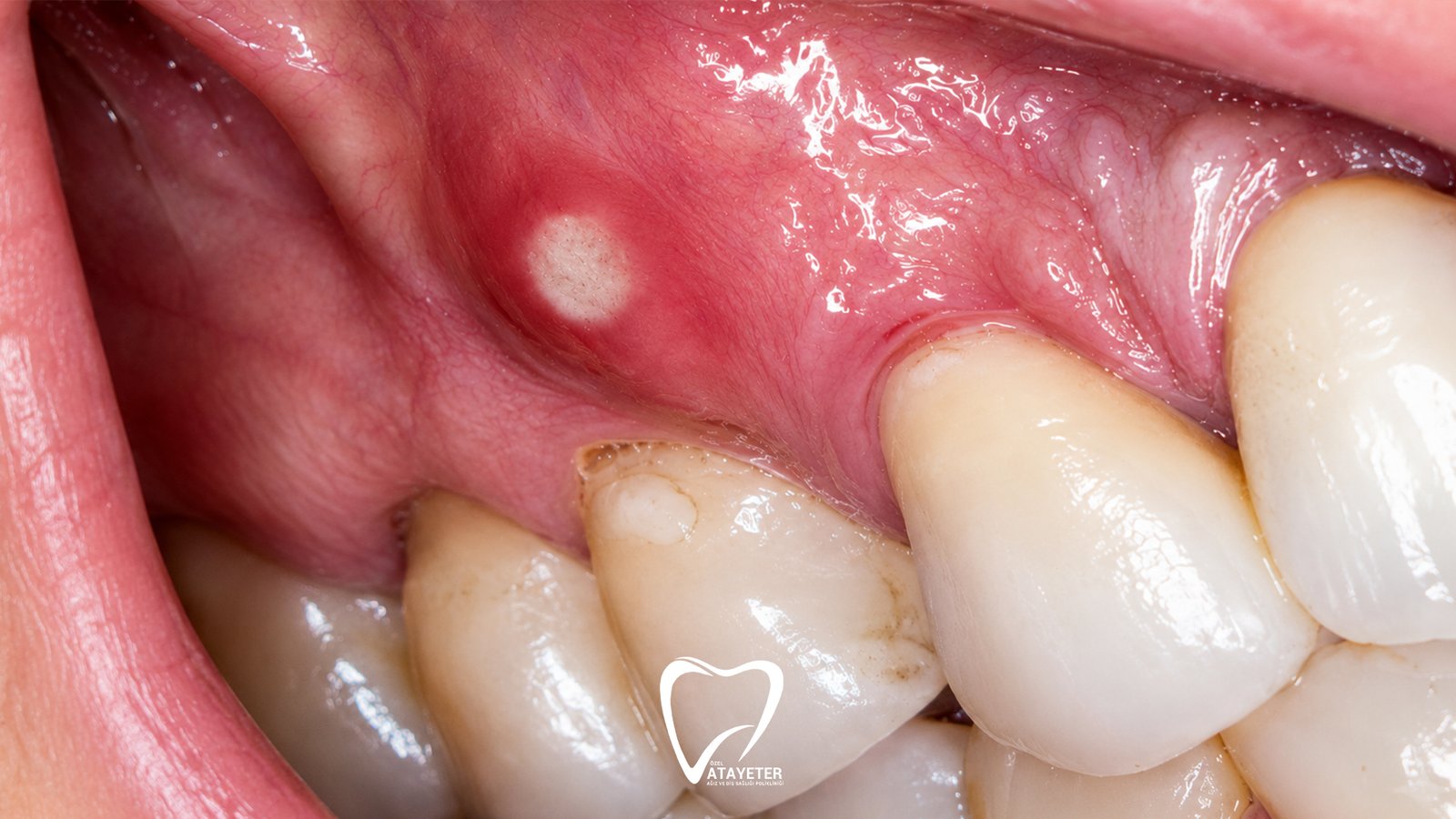
There are some words related to dental health that can make us feel a little uneasy the moment we hear them. “Dental lesion” is one of those terms. Especially after a dental X ray, hearing your dentist say, “There seems to be a lesion in this area,” can naturally cause concern. Since it is not a word we use often in daily life, it may sound serious, complicated, and even a little frightening.
However, a dental lesion does not always mean something bad or irreversible. In simple terms, it refers to an area in the tooth or surrounding tissues that looks different from normal. This area may sometimes be noticed at the tip of the tooth root, around the gums, or within the jawbone. So, the word lesion is not a diagnosis on its own; it is more like a finding that needs to be examined carefully by a dentist.
Dental lesions can develop for different reasons. Advanced tooth decay, trauma to the tooth, cracks, old fillings losing their fit over time, problems after root canal treatment, or infections that go unnoticed for a long period may all play a role. Lesions seen especially at the tip of the tooth root are often related to damage in the living tissue inside the tooth, known as the pulp. The tooth contains nerves and blood vessels. When this structure is damaged, an infection may develop and gradually move toward the root tip.
On X rays, this condition is usually seen as a dark area. What many people describe as “a lesion at the tooth root” or “inflammation under the tooth” may actually be the surrounding bone tissue reacting to an infection. Some people may experience pain, swelling, sensitivity, or discomfort while chewing, while some lesions may progress silently for a long time without causing any symptoms. This is why regular dental check ups and X ray evaluations are so important.
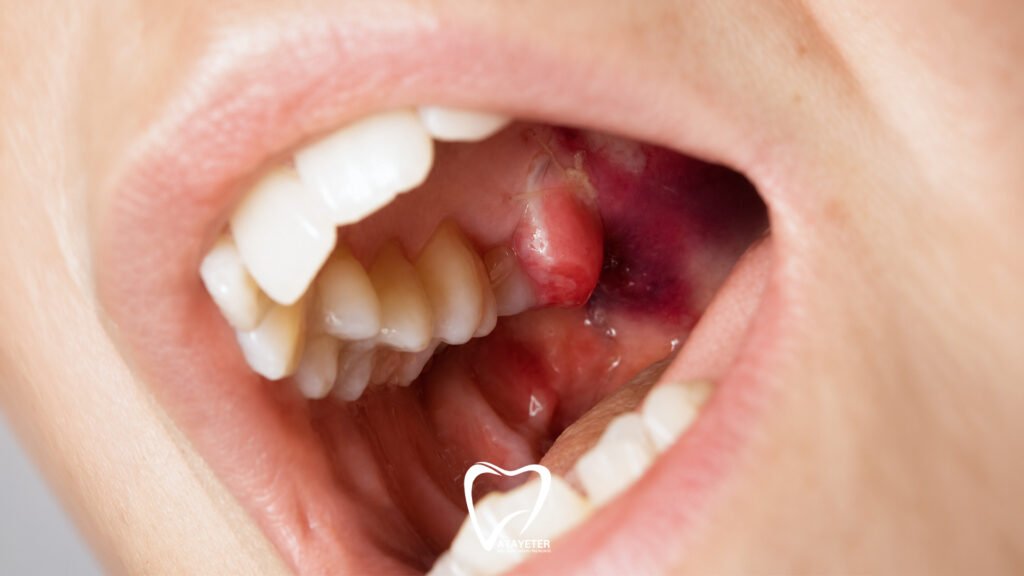
When people hear the term dental lesion, they may immediately think that the tooth will need to be extracted or that a serious procedure is required. But this is not always the case. What matters most is where the lesion is located, how large it is, why it has developed, and the overall condition of the tooth. The dentist evaluates the clinical examination and imaging results together to decide on the most suitable approach. In some cases, root canal treatment, renewal of a previous root canal treatment, or follow up may be enough, while in other cases different treatment options may be considered.
Why Does a Dental Lesion Occur?
It is not always possible to point to a single reason for the formation of dental lesions. The structure of the tooth, oral hygiene habits, previous dental treatments, and even a trauma that happened years ago can all be part of the process. That is why, when a dental lesion is detected, the important thing is not only to look at the image but also to understand why that image has appeared.
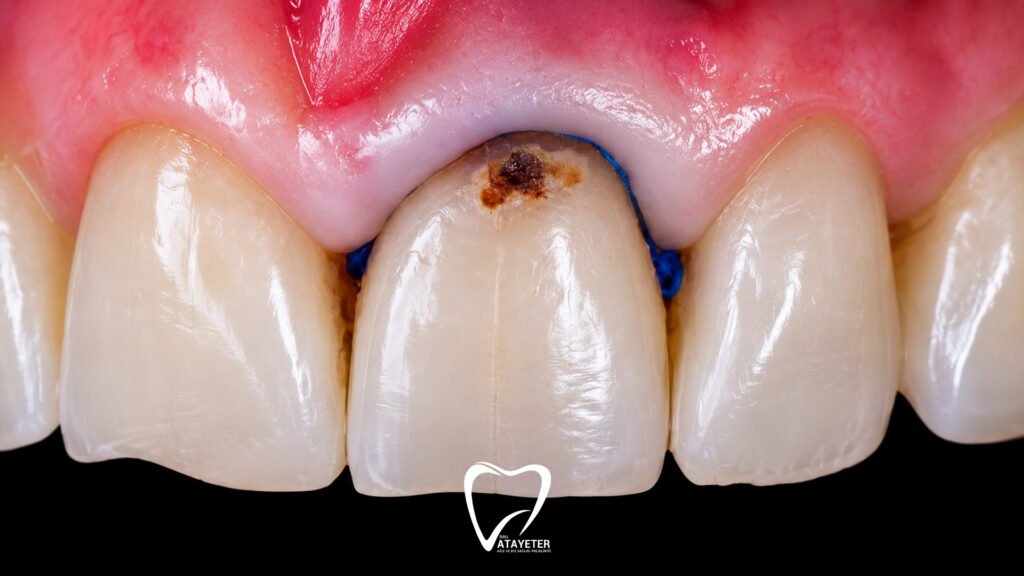
One of the most common causes of dental lesions is advanced tooth decay. A cavity that seems small and harmless at first can move deeper into the tooth if it is not treated in time. When decay reaches the nerve and blood vessel tissue inside the tooth, an infection may develop there. This infection may sometimes show itself with severe pain, hot and cold sensitivity, or discomfort while chewing. But this is not always the case. In some situations, a lesion may form at the tooth root without the person feeling any pain at all. This shows why dental check ups should not be done only when there is pain, but regularly.
Another factor that can lead to a dental lesion is trauma. A blow to the tooth may not always cause symptoms right away. For example, a fall during childhood, an impact during sports, or a hard hit to the tooth may seem harmless at the time. However, over time, the tooth may lose its vitality and a problem may develop at the root tip. Sometimes this is noticed months or even years later. That is why, when your dentist asks whether the tooth has ever been hit or injured before, this information can be very valuable for planning treatment.
Lesions may also appear over time in teeth that have previously had root canal treatment. Root canal treatment is an important procedure used to help keep the tooth in the mouth. However, in some cases, bacteria may remain in the canal system, a crack may develop later, an old filling may start leaking, or a previous restoration may lose its function over time. As a result, a new problem may occur around the root tip. In such cases, a person may experience pain, pressure, or a lesion visible on an X ray in a tooth that was treated before.
Some lesions may also be related to gum disease or may be confused with gum problems. When the bone and gum tissues surrounding the tooth lose their health, pockets, bone loss, and infected areas may develop around the tooth. This can create an image on the X ray that resembles a lesion around the tooth root. For this reason, it is not right to make a final decision based only on an X ray. An oral examination, the vitality of the tooth, gum measurements, and the patient’s complaints should all be evaluated together.
Does a Dental Lesion Cause Symptoms?
Dental lesions do not always cause symptoms. In fact, many people find out about them during a routine dental check up or after an X ray is taken. That is why the idea of “If I have no pain, there is no problem” is not always true. Some lesions can progress silently for a long time.
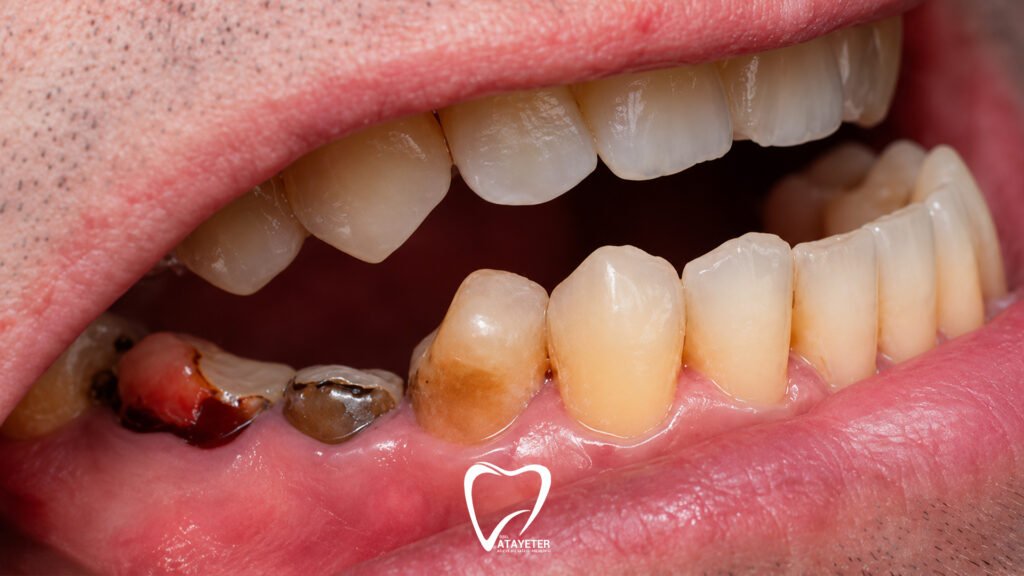
When symptoms do appear, they may include pain while chewing, sensitivity when pressure is applied to the tooth, discomfort with hot or cold, swelling in the gums, a bad taste in the mouth, darkening of the tooth color, or a small drainage opening on the gum. If the infection turns into an abscess, the pain may become more severe and throbbing. Swelling in the face, cheek, or neck, fever, bad odor, and tenderness in the lymph nodes may also occur.
If there is noticeable swelling in the face or neck, or if swallowing or breathing becomes difficult, it is important to seek medical care without delay.
Another important point to keep in mind is that pain may sometimes decrease on its own. A person may think, “The pain is gone, so it must have healed.” However, the disappearance of pain does not always mean that the problem is over. Sometimes the pain decreases because the nerve tissue inside the tooth has lost its vitality, while the infection may still continue at the root tip. For this reason, recurring pain, gum swelling, and lesions seen on X rays should not be ignored.
How Is a Dental Lesion Diagnosed?
The first step in understanding a dental lesion is a dental examination. The dentist first listens to the patient’s complaints, then carefully checks the tooth, gums, and surrounding tissues. After that, X ray images are used to examine the tooth root, bone structure, and the area where the lesion is located.
In some cases, a small dental X ray may be enough. When more detailed information is needed, panoramic X rays or three dimensional imaging methods may be used. These images help the dentist understand the size and location of the lesion, as well as its relationship with the surrounding tissues.
During the examination, some tests may also be performed to evaluate whether the tooth is still vital. Hot and cold sensitivity, pain when the tooth is gently tapped, gum measurements, and the condition of old fillings or crowns may all be checked.
Because not every dark area seen on an X ray means the same thing. Understanding why the lesion has formed is very important when deciding on the right treatment. For this reason, diagnosis is not made by looking at the image alone; the examination findings and the patient’s complaints are evaluated together.
How Is a Dental Lesion Treated?
The treatment plan for dental lesions is not the same for everyone. The cause of the lesion, its size, whether the tooth is still vital, and the condition of the surrounding tissues all help determine the treatment approach. That is why a detailed examination is performed first, and then the X ray findings and the patient’s complaints are evaluated together.
If the lesion is caused by an infection inside the tooth, root canal treatment may be considered. The aim of root canal treatment is to clean the infected tissues inside the tooth, shape the root canals properly, and seal these areas with special filling materials. In this way, the source of infection is addressed and an effort is made to help the tooth remain healthy in the mouth.
If a lesion has developed again in a tooth that has previously had root canal treatment, the root canal treatment may need to be renewed. In this procedure, the old canal filling is removed, the canals are cleaned again, and the tooth is refilled according to its condition. While this process can sometimes be completed in a single session, in some cases, follow up over several appointments may be necessary.
Not every lesion disappears immediately after treatment. Especially when the bone tissue around the root tip is involved, healing may take time. For this reason, the dentist may request X ray follow ups at certain intervals. These controls help monitor whether the lesion is shrinking and whether the surrounding tissues are showing signs of healing.
In some cases, root canal treatment alone may not be enough. If the lesion is large, does not show signs of healing, or requires a surgical approach at the root tip, different treatment options such as apical resection may be considered. If the tooth can no longer be preserved, extraction may become an option. However, this decision should only be made after a detailed examination and imaging evaluation.
When a dental lesion is noticed, the best step is not to postpone the situation and to consult a dentist. Early evaluation can increase the chance of preserving the tooth and may help prevent the infection from progressing. If you have pain, swelling, sensitivity, or a lesion seen on an X ray, you can schedule a dental examination without delay.
Comments are closed