







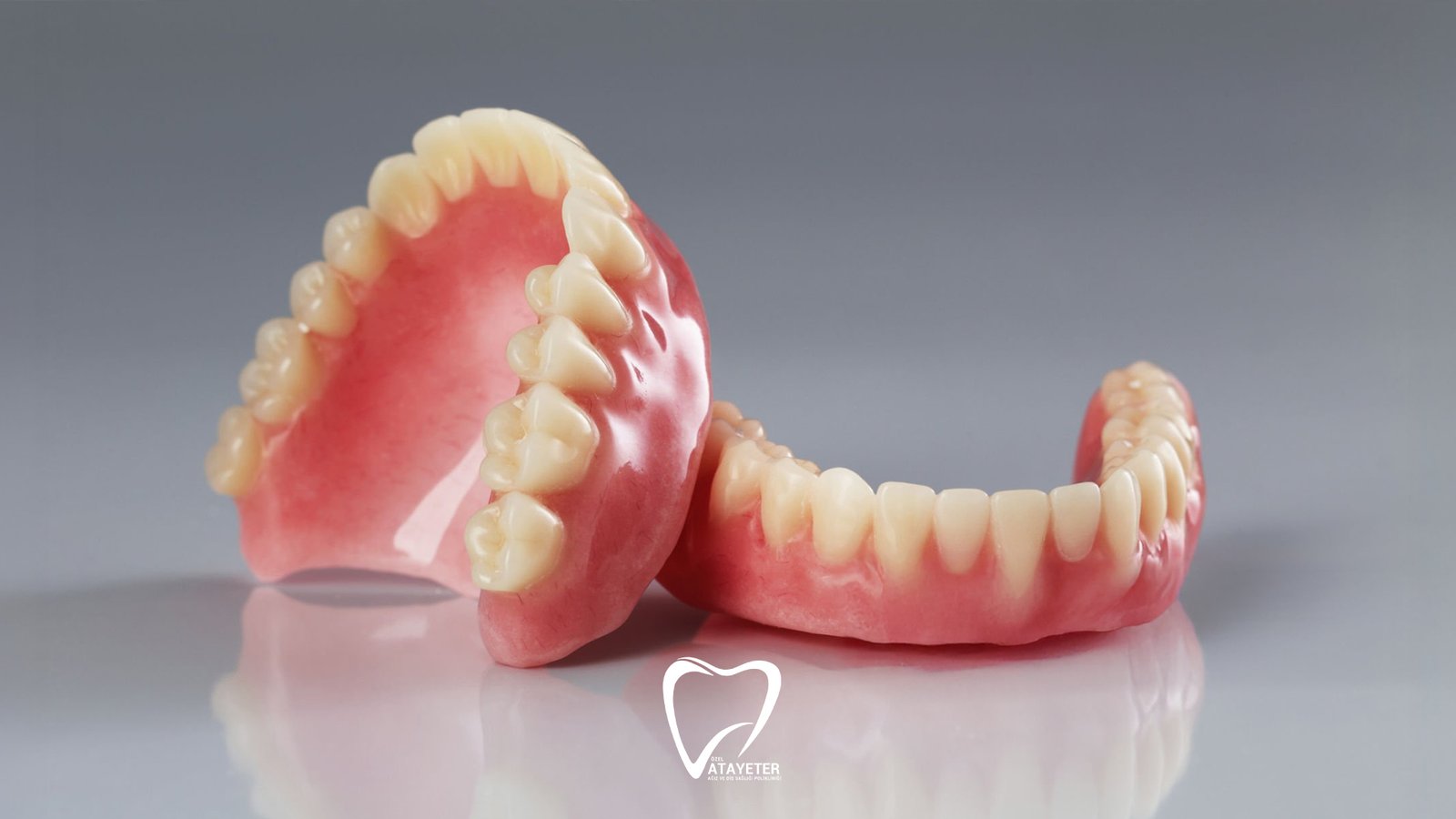
What Is a Dental Prosthesis? What Are the Types?
Tooth loss is often perceived at first glance as merely an aesthetic deficiency. The gap we notice when looking in the mirror may be the most disturbing part for many people. However, the reality goes much deeper than that. A missing tooth can gradually change chewing habits, make it difficult to pronounce certain sounds while speaking, and even affect the way a person expresses themselves. Feeling the need to cover one’s mouth while smiling, not being able to speak comfortably in social settings, or avoiding favorite foods… All of these are quiet yet powerful effects of tooth loss.
When a missing tooth is not treated for a long time, the problem does not remain limited to that area alone. Adjacent teeth begin to shift toward the empty space, changes may occur in the jaw structure, and the balance within the mouth is slowly lost. This situation negatively affects both oral health and overall quality of life. At this point, one of the solutions offered by modern dentistry—prosthetic dental treatment—comes into play.
A dental prosthesis is a treatment method designed to replace missing teeth and restore comfort both aesthetically and functionally. However, a dental prosthesis does not simply mean “filling a gap.” When properly planned, it helps a person eat comfortably, speak more clearly, and most importantly, feel confident again. Many patients are genuinely surprised by how much of a difference prosthetic dental treatment makes in their daily lives.
What Is a Dental Prosthesis?
A dental prosthesis refers to artificial dental applications designed to restore oral functions by replacing natural teeth lost due to decay, trauma, gum disease, or various health issues. It should not be considered merely an aesthetic solution. Prosthetic teeth play a crucial role in maintaining healthy chewing function, which is one of the most basic needs of daily life.
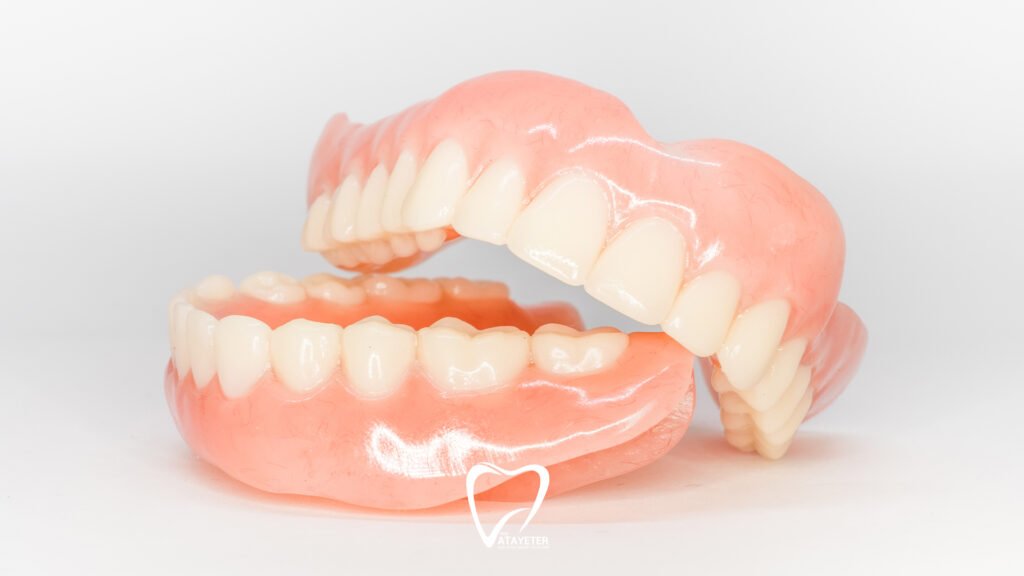
Dental prosthesis applications can be preferred both for individuals missing a single tooth and for those who have lost all of their teeth. The treatment plan is prepared individually according to the patient’s oral structure, number of missing teeth, and expectations. In this way, a result that is both natural-looking and comfortable to use can be achieved.
The primary purpose of dental prostheses is not only to fill gaps between teeth. Helping the person eat without difficulty, pronounce words more clearly while speaking, and feel more confident in social life are also among the key benefits of this treatment. Especially in long-term tooth loss, changes in jaw structure and facial contours can be significantly balanced with appropriate prosthetic treatment.
Why Do We Need a Dental Prosthesis?
The main reason for needing a dental prosthesis is usually tooth loss. However, tooth loss does not occur due to a single cause. Problems that progress unnoticed over time or sudden incidents can lead to the loss of one or more teeth. In many cases, this process develops slowly, and people may not realize the seriousness of the issue until the tooth is lost.
One of the most common causes of tooth loss today is advanced decay that progresses without treatment. In addition, gum diseases—especially progressive conditions such as periodontitis—can weaken the surrounding tissues and result in tooth loss. Trauma and accidents are also significant factors that can cause even a completely healthy tooth to be lost suddenly.
Furthermore, teeth clenching and grinding, known as bruxism, can seriously damage teeth without the person even being aware of it. Over time, cracks, wear, and eventually tooth loss may occur. Untreated infections can also affect both the tooth and the surrounding bone, making the tooth impossible to save. With aging, a decrease in bone density and reduced tooth strength are natural processes that can also contribute to tooth loss.
Regardless of the cause, leaving a missing tooth untreated for a long time does not simply mean having an empty space in the mouth. Over time, other teeth shift toward this gap, chewing balance is disrupted, and noticeable changes can occur in facial features.
What Are the Types of Dental Prostheses?
Dental prosthesis treatments are planned in different ways because every individual’s oral structure and needs are different. The most suitable type of prosthesis is determined by considering the number of missing teeth, the condition of existing teeth, and the patient’s expectations. The most commonly preferred types of dental prostheses are as follows:
Fixed Prosthesis
Fixed prostheses are dental restorations that cannot be removed by the patient and are permanently placed in the mouth by the dentist. They are most commonly applied in the form of crowns and bridges.
Dental crowns are placed over damaged teeth that do not require extraction.
Bridge prostheses are applied by taking support from adjacent healthy teeth in cases of one or more missing teeth.
Fixed prostheses are among the most preferred solutions thanks to their ease of use and natural tooth-like feel.
Removable Prosthesis
Removable prostheses are appliances that patients can insert and remove themselves. They are generally a suitable alternative for individuals with multiple missing teeth.
Partial prostheses are used when there are still some natural teeth present in the mouth.
Complete prostheses are preferred when all teeth have been lost.
A short adaptation period may be required at first, but when properly made, they significantly ease daily life.
Implant-Supported Prostheses
These prostheses are placed on implants inserted into the jawbone during implant treatment. They can be planned as fixed or removable and are among the most preferred methods today due to their aesthetics and comfort.
Advantages of Dental Prostheses
Dental prostheses go beyond simply filling the gap caused by missing teeth and significantly improve quality of life. They allow for more comfortable chewing and clearer speech, help preserve facial aesthetics by providing a more natural appearance, prevent neighboring teeth from shifting, indirectly support digestion, and help individuals feel more confident in social life.
Çayırova Dental Prosthesis Prices
Dental prosthesis prices in Çayırova vary depending on the type of prosthesis to be applied, the number of missing teeth, the materials used, and the personalized treatment planning. Since every patient’s oral structure and expectations are different, a standard pricing approach would not be accurate.
In our clinic, dental prosthesis treatments are planned with a focus not only on aesthetics but also on long-term comfort and healthy use. Therefore, the most accurate cost is determined after a detailed examination and clarification of individual needs.
Comments are closed