








Is Dental Tartar Cleaning Harmful?
Among the countless information floating around online regarding our oral health, one of the most confusing questions is undoubtedly this: “Is tartar removal harmful?” We hear this question frequently from our patients.
Some say things like, “It scratches teeth,” others, “It forms more quickly afterward,” and still others, “Teeth become loose after cleaning,” and it’s inevitable that you’ll feel uneasy. Especially if you haven’t been to the dentist in a while, these rumors are enough to keep you putting it off. But let’s clarify this topic today, in honest and understandable terms. What you don’t know can be truly frightening; but when you do, you’ll realize there’s nothing to fear. Let’s get to the bottom of it and examine it together.
What is Dental Calculus?
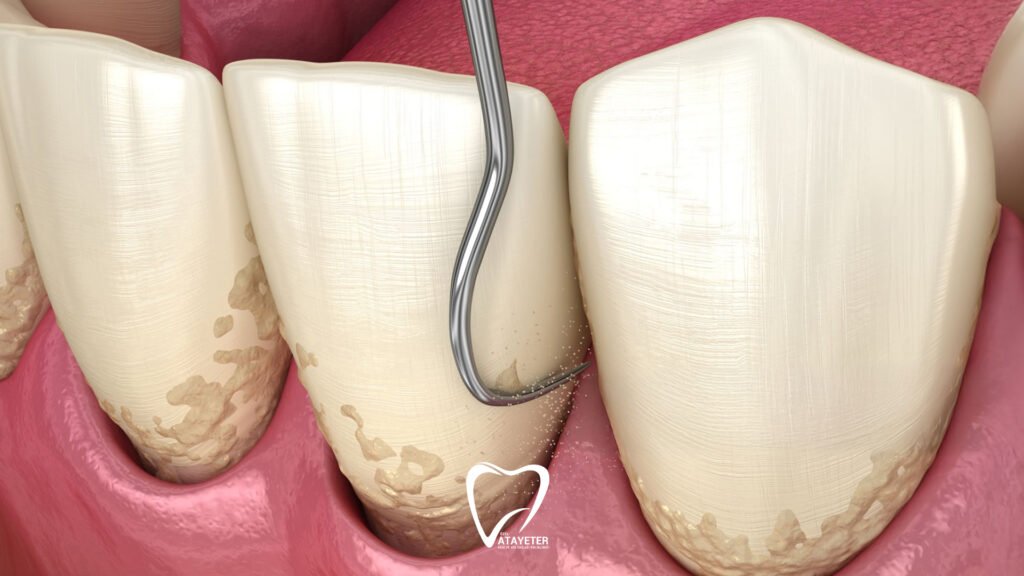
Calcium, or tartar as it’s commonly known, is actually the advanced form of a very simple process. Residues from the food we eat throughout the day, our saliva, and bacteria combine to form a thin, sticky layer on our teeth. We call this plaque. If this plaque isn’t removed with regular and proper brushing, it hardens over time and becomes impossible to remove with ordinary brushing. This hardened structure is called tartar.
Calcium isn’t just an aesthetically unsightly sight; it’s also the silent enemy of oral health. It’s one of the main causes of gingivitis, bad breath, receding gums, and even tooth loss in the future. So, what might initially seem like a “small buildup” can lead to much bigger problems over time. Therefore, knowing what tartar is and taking it seriously is a much more critical step for our oral health than we might think.
So, is tartar removal really harmful?
In short: No, it’s not harmful at all.
In fact, it’s a completely safe procedure that should be performed regularly to maintain oral health.
But let’s delve into this a little more.
1. “Does it scratch the surface of your teeth?”
It’s a common concern, but the answer is clear: No, it doesn’t.
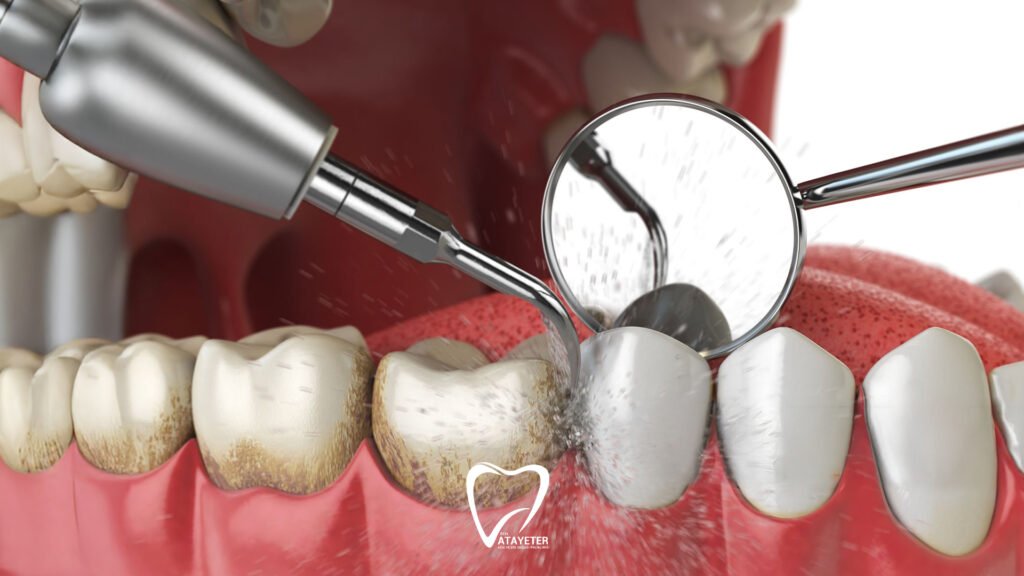
The ultrasonic device dentists use for tartar removal only removes tartar stuck to your teeth through vibration. Its tip is non-cutting, meaning it neither cuts nor scratches the teeth. The only thing that comes into contact and is removed is the hard, rough tartar itself.
There’s also this misconception: Your teeth feel rougher after a cleaning.
In fact, this isn’t a scratch. As the surface covered by tartar for so long disappears, you begin to feel your actual tooth surface for the first time. You think it’s rough, but what you feel is the absence of tartar.
2. The Myth: “Tartar forms faster after a cleaning”
You’ve undoubtedly heard this from people around you. But it’s a completely false belief.
How quickly tartar forms depends on your oral care routine, saliva, the amount of tea and coffee you drink, your smoking habits, and even your genetics.
Cleaning doesn’t accelerate tartar formation.
On the contrary, because the cleaned tooth surface becomes smoother, it becomes harder for plaque to adhere.
In other words, if you practice proper care, tartar formation will actually slow down after cleaning.
3. “Will my teeth become loose when the tartar is removed?”
This is another frequently expressed concern.
Sometimes, tartar accumulates so densely that it appears to be “holding the tooth” because the gums have receded. It’s perfectly normal to feel a gap after cleaning.
But remember:
It’s not the tartar itself that causes the tooth to become loose, but the gum disease caused by the tartar.
In other words, having tartar removed doesn’t weaken the tooth; on the contrary, it’s the best step to stop the progression of existing damage.
How is tartar removal performed?
I know many people put off this process. Often, the reason is fear, and sometimes the worry of “will it hurt?” However, the process is much simpler, faster, and safer than one might think.
Scaling is generally performed as follows:
- First, an ultrasonic device is activated. This device gently removes tartar stuck to the teeth by sending vibrations.
- Special tips are used to reach between teeth and hard-to-reach areas, removing any remaining small deposits.
- The final stage is polishing. This process makes the tooth surface more slippery and smooth, making it more difficult for new plaque to adhere. This means the feeling of cleanliness lasts for a long time after the procedure.
Now, let’s get to the most frequently asked question: Is it painful?
Generally speaking, no. Most people feel only mild pressure during the procedure.
If the gums are severely inflamed, some temporary sensitivity may be experienced.
How Often Should Dental Tartar Be Cleaned?
This varies from person to person, but the general recommendation is:
A checkup and cleaning if necessary is every 6 months.
Can it be needed more often?
Yes. If:
- You are a heavy smoker,
- You consume a lot of tea and coffee,
- You have poor brushing habits,
- Your saliva is highly mineralized, and tartar can form more quickly.
What to Notice After a Tartar Scaling Treatment
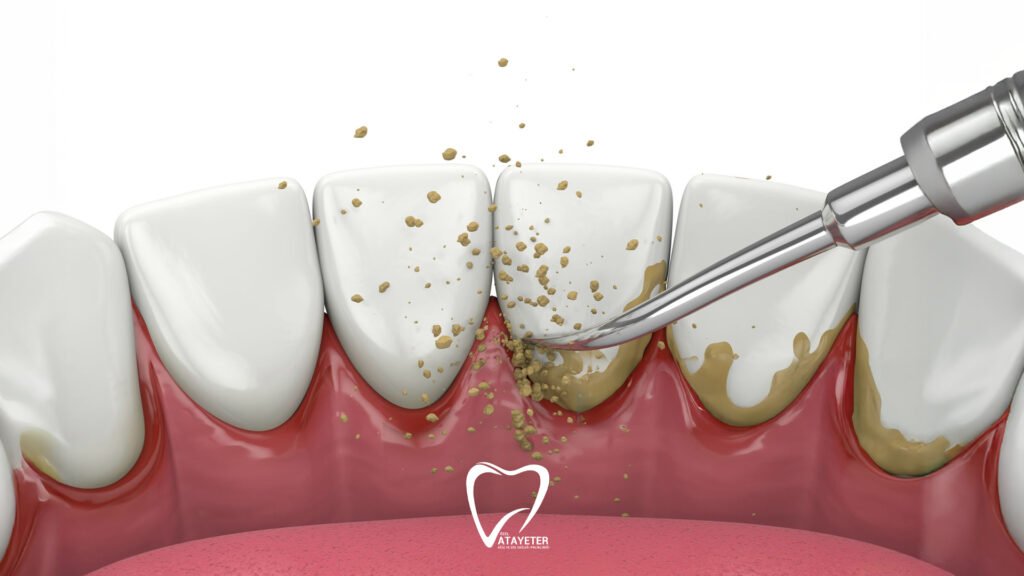
After a tartar cleaning, you’ll experience a noticeable feeling of freshness in your mouth. First, bad breath is significantly reduced because plaque and hardened deposits, the primary sources of bad breath, are eliminated. Your gums will also begin to recover quickly. Any bleeding you experienced before the cleaning will diminish, inflammation will subside, and your gums will take on a healthier, pinker appearance. The smoothness you feel when your tongue touches your teeth is one of the most surprising details after the cleaning.
Furthermore, the aesthetic difference in your smile will be immediately apparent. A cleaner and more organized appearance of your teeth will make you feel more comfortable smiling. In other words, tartar cleaning creates a rapid and positive change not only in terms of your health but also in terms of comfort and self-confidence in your daily life.
Comments are closed