
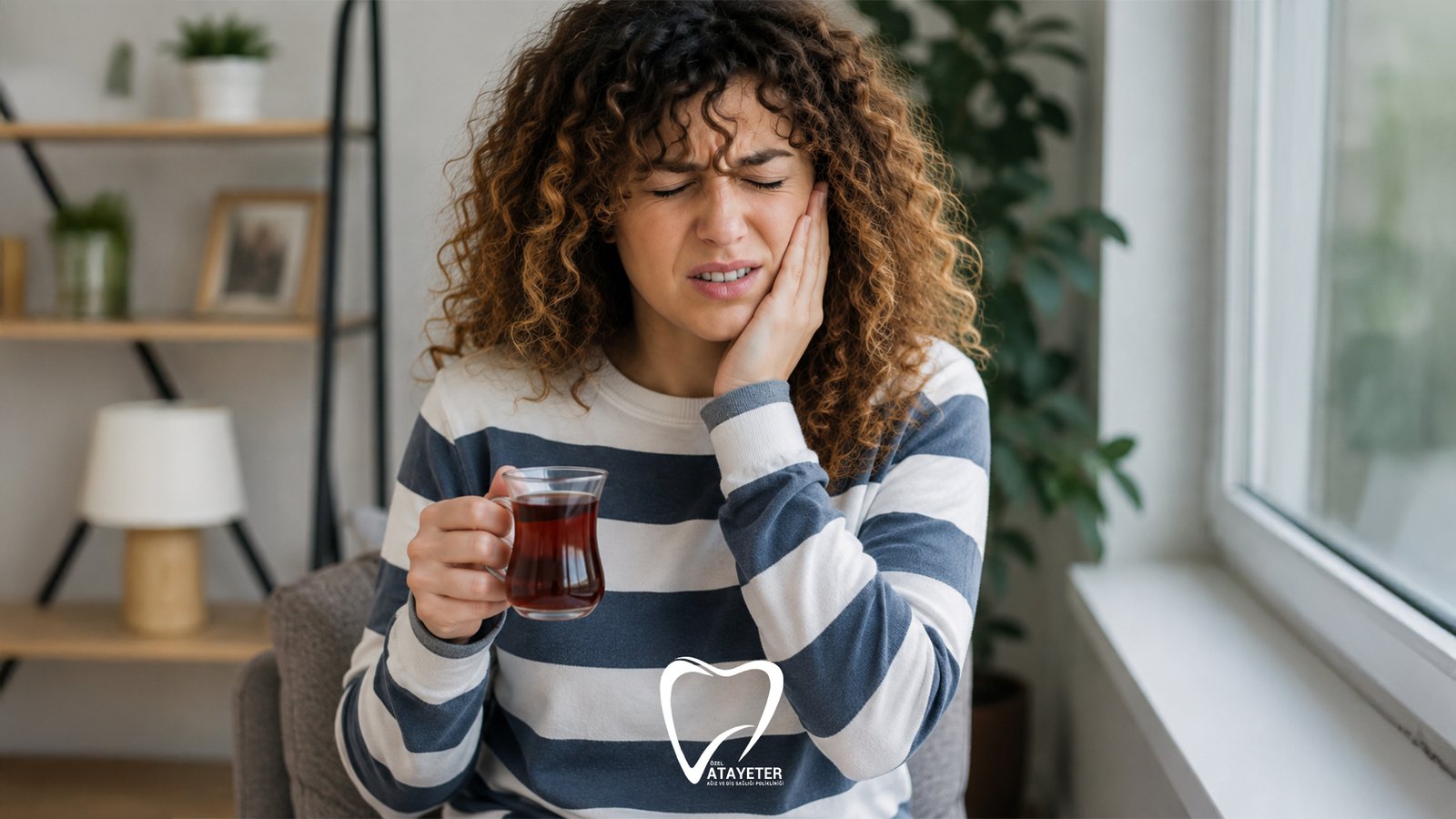
Why Does Tooth Sensitivity Occur and How Is It Relieved?
If you experience tooth sensitivity with hot and cold foods,
learn about the causes of dentin hypersensitivity and the methods
that can help relieve it.
What Is Tooth Sensitivity (Dentin Hypersensitivity)?
Experiencing tooth sensitivity with hot and cold foods is a common
condition that many people encounter in daily life. Known medically as
dentin hypersensitivity, it occurs when the enamel, the outermost
protective layer of the tooth, wears away or the gums recede, exposing
the underlying dentin layer.
The dentin layer contains microscopic tubules that extend toward the
tooth's nerves. When these tubules are exposed, temperature changes can
stimulate the nerves and cause a sharp, aching sensation.

What Causes Tooth Sensitivity?
The answer to the question “Why do my teeth ache in the cold?”
is usually related to weakened tooth enamel or an unprotected
root surface. The main factors that contribute to this condition
are:
- Brushing Too Hard:
Brushing your teeth with excessive force or with a hard-bristled
brush can wear down the enamel over time. - Gum Recession:
Improper oral care or untreated gum disease can expose
the more sensitive root surfaces of the teeth. - Consuming Acidic Foods:
Frequently consumed acidic foods and drinks such as sodas and citrus fruits
can contribute to thinning of the tooth enamel over time. - Teeth Clenching and Grinding:
Bruxism / teeth clenching, which is not related to stress alone,
is among the factors that can contribute to wear on tooth surfaces, the formation of
micro-cracks and, as a result, the development of sensitivity. - Fractured Teeth, Cavities and Worn Fillings:
Tooth decay, a fractured tooth or worn fillings can affect the inner
tissues of the tooth and cause pain and a sensation of sensitivity.
How Is Tooth Sensitivity Relieved?
To relieve tooth sensitivity complaints and protect the tooth structure,
there are some steps you can take at home as well as professional
approaches planned by your dentist.
- Desensitizing Toothpastes:
Regular use of toothpastes specially formulated for sensitive teeth
can help seal the dentin tubules and
relieve the aching sensation. - Choosing the Right Brush and Technique:
Using a soft-bristled toothbrush and brushing with gentle circular
motions helps protect the enamel. - Professional Fluoride Applications:
Fluoride treatments applied by a dentist can help strengthen
the tooth enamel and reduce sensitivity. - Restorative Procedures:
Exposed root surfaces or worn areas can be covered with appropriate general
dental treatments (for example, composite fillings) to protect them
from external factors. - Using a Night Guard:
For people who grind their teeth, custom-made
guards help prevent the teeth from rubbing against each other
and wearing down.

Frequently Asked Questions (FAQ)
What causes tooth sensitivity?
Tooth sensitivity is mainly caused by exposure of the sensitive dentin layer underneath,
due to enamel wear, gum recession, teeth clenching,
an acidic diet or tooth decay.
Does tooth sensitivity go away on its own?
In temporary cases (for example, after a whitening procedure), sensitivity
may decrease over time. However, if it is caused by a physical problem such as enamel wear,
decay or gum recession, it does not go away on its own
and may require treatment by a dentist.
Why do my teeth ache in the cold?
Cold foods and drinks stimulate the nerves through the microscopic tubules
in teeth whose protective enamel layer has weakened or whose
root surface is exposed, causing a sudden sharp ache.
Which toothpaste can be used for sensitive teeth?
Toothpastes containing active ingredients such as potassium nitrate,
especially those labeled “for sensitive teeth”,
can be preferred. Regular use is important to see results.
When should tooth sensitivity be checked by a dentist?
If the sensitivity lasts longer than a few days, is severe, is concentrated
in a single tooth, or negatively affects your daily eating and drinking
habits, you should see a dentist
without delay.
a dental examination is important to identify the underlying cause.
To make an appointment at Atayeter Dental Clinic, you can use
the appointment form.
This article is for general information only; please consult your dentist for diagnosis and treatment.