What Is Tartar
Tartar is a hard layer that forms when dental plaque accumulating on tooth surfaces hardens and mineralizes over time. In dentistry, tartar may also be referred to as “dental calculus.” It can occur especially in areas where the teeth meet the gums and in regions that are more difficult to clean.
Throughout the day, a sticky layer called plaque continuously forms on the teeth. Dental plaque contains bacteria. With regular and effective oral care, much of this plaque can be removed. However, when plaque is not adequately cleaned, it can harden over time and turn into tartar. Once tartar has hardened, it cannot be completely removed by regular tooth brushing or flossing alone and requires professional cleaning.
Tartar should not be considered only as a problem that affects the appearance of the teeth. Continued plaque accumulation on and around tartar can irritate the gum tissues and create a favorable environment for the development of gum disease.
Why Does Tartar Form?
The main cause of tartar formation is dental plaque that accumulates on the tooth surfaces. When teeth are not cleaned thoroughly, plaque continues to build up on the surfaces of the teeth, between the teeth, and especially near the gum line.
If plaque is not removed, it can harden over time and turn into tartar. Therefore, one of the most basic answers to the question “Why does tartar form?” is the accumulation of plaque that has not been effectively removed.
Factors that may contribute to tartar formation include inadequate or irregular tooth brushing, insufficient cleaning between the teeth, neglecting oral care, and repeatedly missing certain areas while brushing.
Tartar accumulation may be more noticeable especially on the inner surfaces of the lower front teeth and in certain areas of the upper back teeth. However, the amount and rate of tartar formation can vary from person to person.

Are Dental Plaque and Tartar the Same Thing?
Although dental plaque and tartar are related, they are not the same thing.
Dental plaque is a sticky biofilm that can continuously form on the teeth. Plaque can be removed through regular tooth brushing and cleaning between the teeth. Tartar, on the other hand, is plaque that has not been removed and has hardened over time.
Once tartar has formed, its surface may become rougher, which can make it easier for new plaque to adhere to the area. Therefore, the goal of oral care is not only to have existing tartar removed but also to keep new plaque buildup under control as much as possible.
What Are the Symptoms of Tartar?
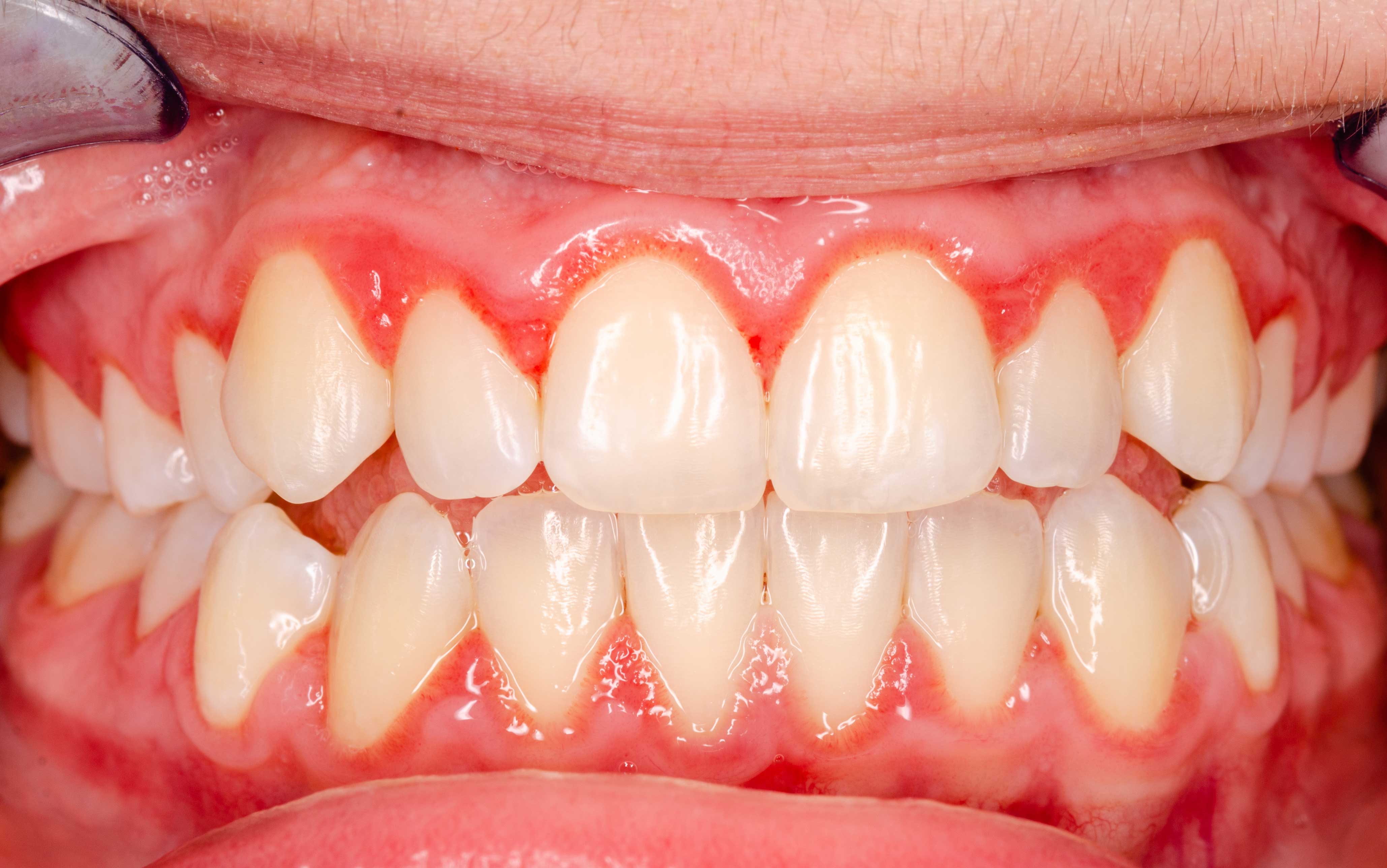
Some people may notice tartar as hard and rough deposits on the tooth surfaces. However, not every tartar buildup can be easily seen by the individual. In particular, tartar located below the gum line may require a dental examination for proper evaluation.
Possible signs associated with tartar may include:
- Hard and rough deposits on tooth surfaces,
- Yellow, brown, or dark-colored areas around the gum line,
- Redness of the gums,
- Swelling or tenderness of the gums,
- Bleeding gums while brushing,
- Bad breath,
- Increased plaque accumulation around the gums.
Not all of these symptoms are necessarily caused only by tartar. In particular, if persistent gum bleeding, swelling, or bad breath is present, a dental examination is necessary to determine the underlying cause.
Is Tartar Harmful?
Tartar formation can make it more difficult to maintain proper oral hygiene. When plaque continues to accumulate on and around tartar, the gum tissues may be affected.
Ongoing plaque and tartar buildup around the gums may contribute to the development of gum inflammation known as gingivitis. Redness, swelling, and bleeding during brushing are among the symptoms that may occur during this process.
If gum disease progresses, the tissues that support the teeth may also be affected. For this reason, long-term tartar buildup should not be considered only from an aesthetic perspective. NIDCR states that plaque that is not removed can turn into tartar and that tartar accumulation may contribute to gum disease.

How Is Tartar Removed?
How is tartar removed? is one of the most frequently searched questions among people who notice tartar on their teeth. Hardened tartar on the tooth surfaces is removed through professional dental cleaning.
During tartar cleaning, hardened deposits on the tooth surfaces are carefully removed by a dentist using appropriate dental instruments and devices. The extent of the treatment may vary depending on the amount of tartar and the current condition of the gum tissues.
If deposits are present not only above the gum line but also below it, a more comprehensive periodontal treatment may need to be planned depending on the individual’s periodontal condition.
The ADA also states that deeper cleaning procedures used in gum disease aim to remove plaque and tartar from below the gum line.
Can Tartar Be Removed at Home?
When answering the question “Can tartar be removed at home?”, it is important to distinguish between plaque and tartar. Regular tooth brushing and cleaning between the teeth play a major role in controlling soft dental plaque. However, once plaque hardens and turns into tartar, it cannot be completely removed with a regular toothbrush.
Hardened tartar needs to be professionally removed. NIDCR states that tartar can only be removed through professional cleaning performed by a dentist or dental professional.
For this reason, trying to scrape tartar off with sharp or pointed tools recommended online is not advisable. Uncontrolled attempts may carry a risk of damaging the gums and surrounding tissues.
The main thing to do at home is not to try to scrape off existing tartar, but to reduce new plaque buildup as much as possible through regular oral care.
How Is Tartar Cleaning Performed?
Before tartar cleaning, the teeth and gums are evaluated. The amount of tartar, the areas where it has accumulated, and the current condition of the gums are taken into consideration.
The hardened deposits on the tooth surfaces are then removed using professional dental equipment. When necessary, additional procedures may be performed to remove plaque and stains from the tooth surfaces.
If more advanced deposits are detected below the gum line or if periodontal disease is present, a treatment plan different from standard tartar cleaning may be required. Since every patient’s oral and dental structure is different, the scope of the procedure may vary from person to person.

Does Tartar Cleaning Hurt?
The level of discomfort felt during tartar cleaning may vary from person to person. The amount of tartar, gum sensitivity, the presence of gum disease, and the individual’s sensitivity level can all affect how the procedure feels.
People with significant gum sensitivity or heavy tartar buildup may experience some sensitivity during the procedure. When necessary, the dentist may consider appropriate methods to improve the patient’s comfort.
What Should Be Considered After Tartar Cleaning?
It is important to continue regular oral care after tartar cleaning. Although professional cleaning removes existing deposits, plaque can begin to form on the teeth again.
Regular tooth brushing and cleaning between the teeth using appropriate methods are essential parts of plaque control. Dental floss or interdental cleaning products suitable for the individual’s dental structure may be used for this purpose.
Can Tartar Form Again?
Yes, tartar can form again after it has been removed. This is because dental plaque continuously forms on the teeth. If plaque is not removed regularly, it can harden again and turn into tartar.
For this reason, oral care should not be neglected after tartar cleaning. Regular tooth brushing, cleaning between the teeth, and attending dental check-ups at intervals recommended by the dentist can help detect new buildup at an early stage.
The rate at which tartar forms again is not the same for everyone. Therefore, rather than giving a single fixed interval for how often tartar cleaning should be performed, it is more appropriate to create a follow-up plan based on the individual’s oral and dental health condition.