







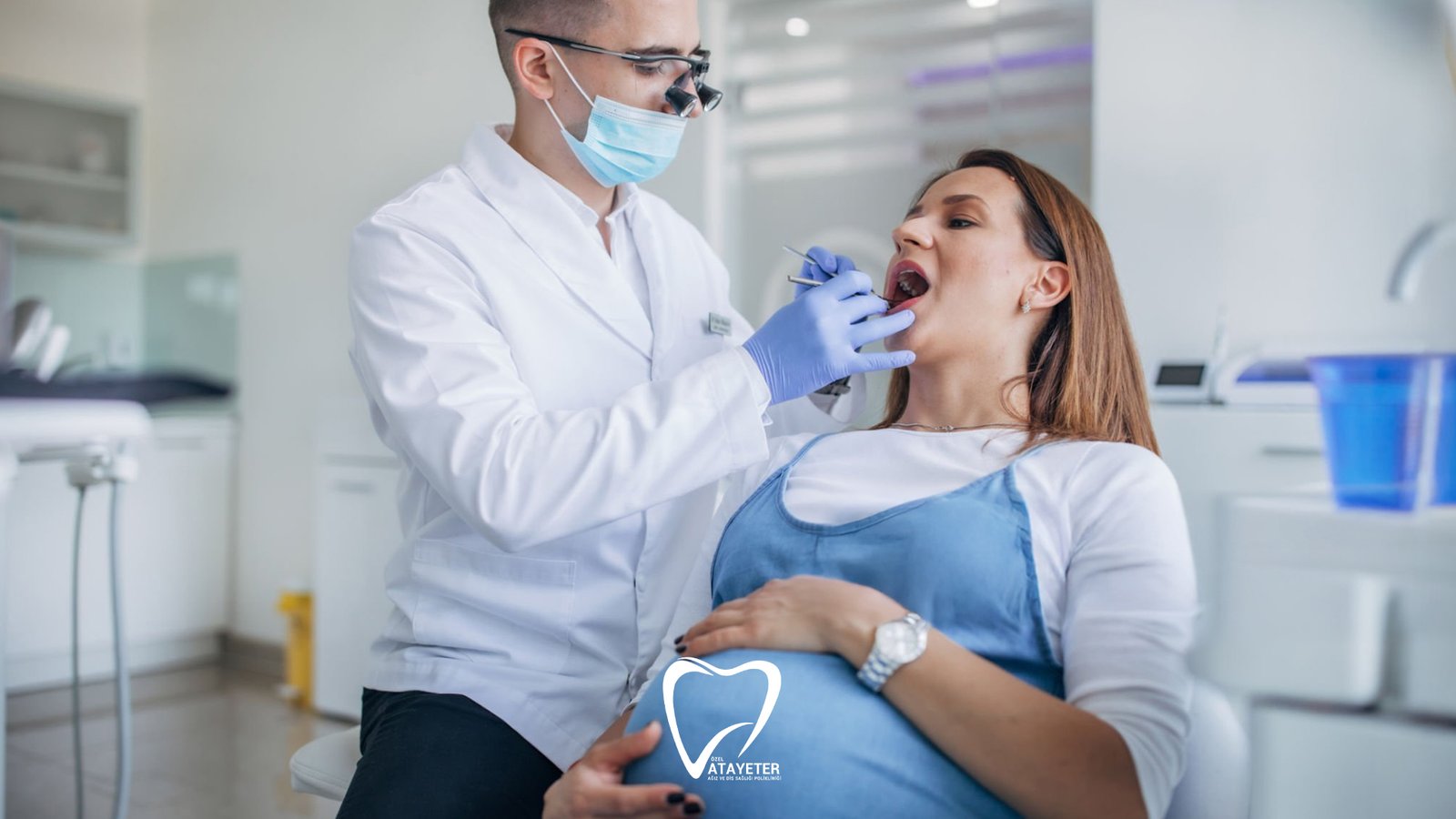
Dental Treatment During Pregnancy
Pregnancy is a truly special time, ushering in a whole new era in a woman’s life, both emotionally and physically. Feeling the tiny miracle in your belly grow each day, even the slightest movement making your insides flutter… Amidst all this excitement, you naturally become more mindful of your own health than ever before. You pay attention to what you eat, how you feel throughout the day, and even every breath you take. But during this time, there’s one area many expectant mothers often neglect: dental and oral health.
The question “Is it safe to have dental treatment during pregnancy?” crosses almost every expectant mother’s mind at least once. While they worry about harming their baby, experiencing toothaches, sensitivity, or cavities can also diminish their quality of life. Furthermore, misinformation they hear further exacerbates these concerns. The truth is, dental treatment during pregnancy is not only safe, but in some cases, it can even become a necessity that shouldn’t be postponed for the health of both mother and baby.
Oral health isn’t independent of the rest of the body. Gum problems, infections, or advanced cavities don’t just bother you; they can also affect your overall health and, indirectly, your baby’s development. Therefore, every effort made to maintain dental care during pregnancy is a small but valuable investment for both mother and baby.
Pregnancy and Oral Health
Pregnancy is a time when your body is completely reprogrammed. Hormones change rapidly, your metabolism functions differently, and sometimes you might even find yourself feeling good one day but in a completely different mood the next. One of the areas affected by these changes is undoubtedly our mouth.
Increased hormone levels, in particular, can cause gums to become more sensitive than usual. Don’t be alarmed if you notice a little bleeding while brushing your teeth one morning; this condition occurs in the vast majority of pregnant women. This condition, known as “pregnancy gingivitis,” can manifest as swelling, redness, tenderness, and occasional bleeding in the gums. It’s usually temporary, but if ignored, it can develop into more serious gum problems.
Furthermore, the nausea and vomiting that are common during pregnancy can negatively impact oral health. Stomach acid is strong enough to erode tooth enamel. If morning sickness is particularly severe, you may notice sensitivity, dullness, or enamel loss over time. Many expectant mothers are tempted to brush their teeth immediately after vomiting, but this can have the opposite effect.
Brushing in an acidic environment can damage the enamel, as the tooth surface is already softened. The best approach is to first rinse your mouth with plenty of water or neutralize the acid with baking soda. Gently brushing your teeth after a few minutes is much healthier.
Is Dental Treatment Possible During Pregnancy?
There’s a common belief that dental treatment is strictly forbidden during pregnancy. Many expectant mothers, even if they experience a toothache, are hesitant to go to the doctor out of fear of harming their baby. However, this belief is untrue. When performed at the right time and with the right methods, dental treatment during pregnancy is both extremely safe and often necessary to protect the health of both mother and baby.
The second trimester of pregnancy, between the 4th and 6th months, is generally considered the most comfortable time for dental procedures. During this time, the baby’s organs have largely completed their development, nausea subsides, and sitting in the dental chair for extended periods becomes more comfortable. In short, it’s both a calmer time for the mother and an ideal time for treatment.
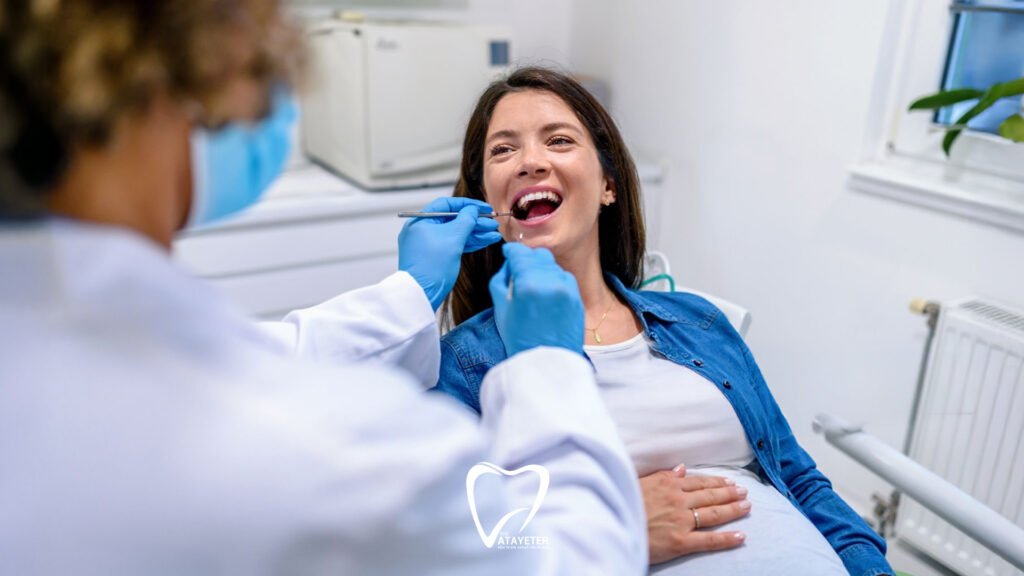
However, not every situation can be postponed until this timeframe. If there’s a serious problem requiring urgent intervention, such as severe pain, a spreading infection, an abscess, or a broken tooth, delaying treatment can pose greater risks. Remember, uncontrolled use of painkillers, allowing the infection to progress, or enduring days of pain can be far more detrimental to both mother and baby.
Can a Tooth Be Extracted During Pregnancy?
One of the most confusing questions during pregnancy is whether a tooth can be extracted. Many expectant mothers choose to endure the pain, wondering, “Will an extraction be harmful?” However, tooth extraction during pregnancy is generally safe as long as the correct anesthesia is used.
If your tooth is no longer salvageable or infected, delaying the extraction can cause the infection to spread. This poses a much greater risk to both mother and baby. In such cases, prompt treatment, pain relief, and infection control are much healthier options.
Communication between your dentist and gynecologist before the extraction ensures that the process is carried out completely safely.
Can Fillings and Root Canals Be Performed During Pregnancy?
Cavities that occur during pregnancy are often caused by hormonal changes, increased stomach acid, or frequent snacking. Fillings can be safely performed during pregnancy as long as safe materials are used. In fact, early intervention can prevent more advanced and painful treatments.
Root canal treatment is often the most rapid pain relief method. If necessary, root canal treatment can be performed during pregnancy. If X-rays are required, a lead apron is used to prevent radiation from reaching the baby. Modern digital X-ray machines use very low doses of radiation, making the procedure safe.
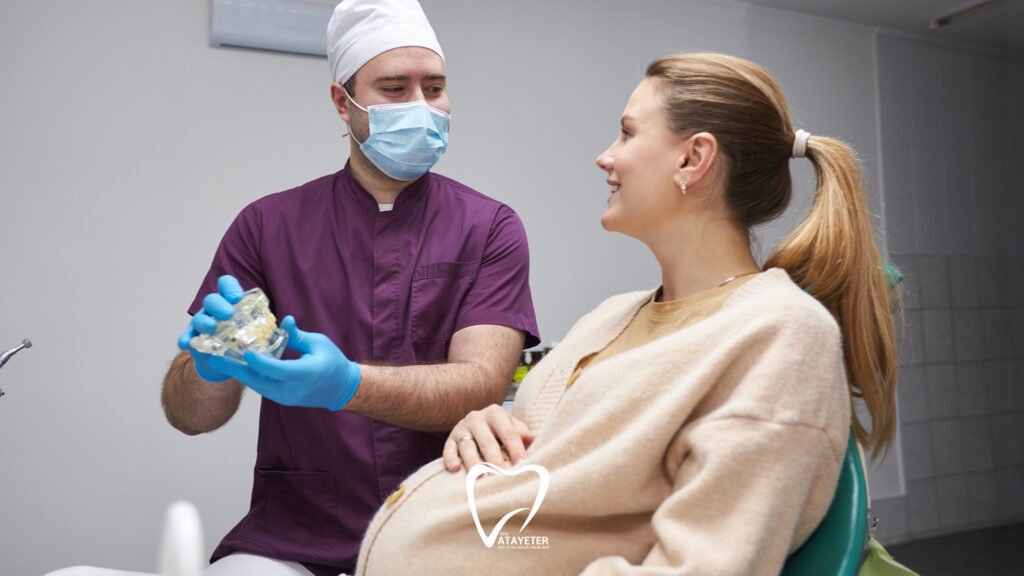
Can X-rays be Taken During Pregnancy?
The topic of X-rays during pregnancy confuses many expectant mothers. The concern, “What if the baby gets hurt?” is perfectly natural. However, today’s modern digital X-ray machines are quite safe in terms of the amount of radiation they emit—in many cases, even lower than the radiation you would be exposed to during a regular airplane flight.
Furthermore, dentists use protective lead aprons for pregnant patients to ensure the baby is completely protected from radiation. Especially in emergency situations, when proper precautions are taken, X-rays can be performed safely and play a critical role in treatment planning. Therefore, when necessary, it’s best to have an X-ray performed under the supervision of a specialist rather than avoiding it.
Comments are closed